



Soft Wool Area Rug
A soft wool area rug brings muted pastel palettes and heavy pile warmth into a room from late nineteenth and early twentieth century looms.
Soft Wool Area Rug
When you search for a soft wool area rug, you encounter hand-knotted and flatwoven carpets originating from Turkish, Persian, Caucasian, and Afghan regions. These pieces date from the late nineteenth century through to the early decades of the twentieth century, encompassing styles such as Oushak, Tabriz, Kazak, and various tribal configurations.
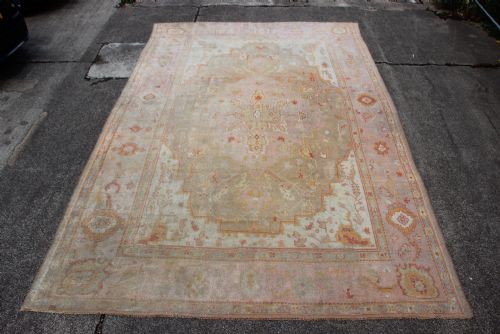
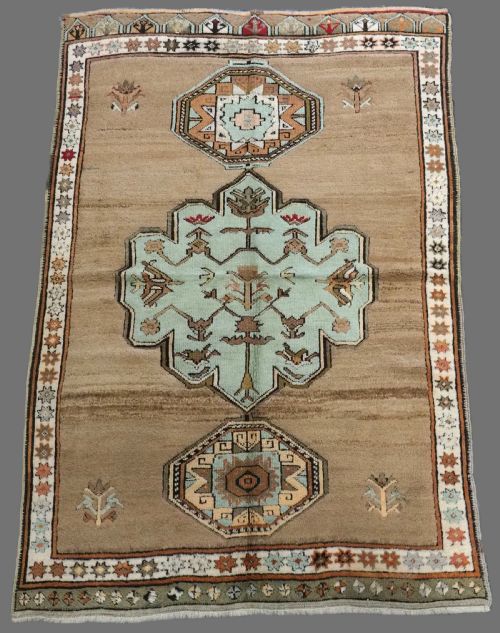
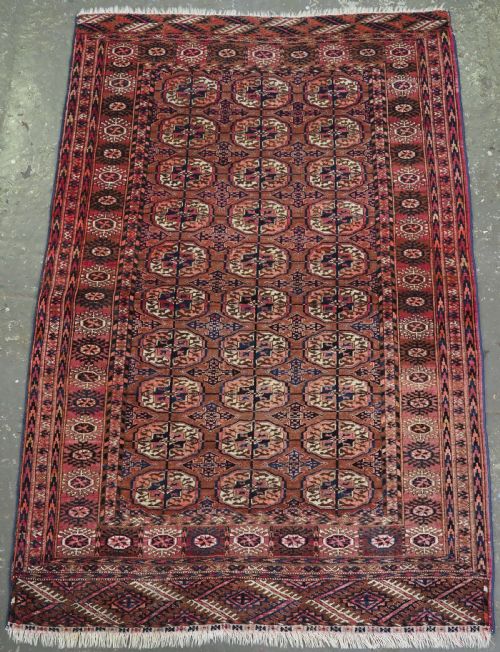
The version you are most likely to meet on this page is a Turkish Oushak or Ushak carpet, frequently noted for faded pastel colours and generous dimensions. Alongside these, smaller village and tribal formats from regions like Shirvan, Konya, and Ersari appear regularly.
Makers utilised traditional designs ranging from large medallions to all-over boteh and geometric patterns, executed within structures that prioritise relaxed, muted tones rather than saturated primary hues.
How they were made
Weavers constructed these carpets using natural wool foundations and piles, occasionally incorporating specialised materials like angora wool, camel wool, and kork wool to achieve specific textures. Cotton frequently served as the warp and weft base for many Persian and Turkish formats, providing structural stability.
Dye techniques relied on natural sources, sometimes resulting in cochineal highlights and faded patinas over decades of light exposure and use. The knotting and weaving methods varied by region, spanning fine urban workshops in Tabriz and Kashan to nomadic tribal encampments in the Caucasus and Anatolia.
Sheep wool from high altitudes retains natural lanolin that smells faintly of ancient pastures when gently warmed.
What varies in quality
Quality in these textiles depends on the fineness of the weave and the specific selection of wool fleece utilised in the pile. Fine kork wool or angora wool yields a softer handle and greater density than coarser village grades.
The harmony and preservation of the pastel colour palette also dictate standing, alongside the integrity of the original borders and foundational structure. Pieces retaining crisp structural geometry combined with uniform low pile represent the upper tier of surviving examples.
Benlian
The Soft Wool Area Rug Glossary
- Boteh
- A stylised almond or pear-shaped motif of Persian origin, frequently repeated across fields in Sarouk and traditional rugs. This symbol appears extensively in antique pile carpets.
- Kork wool
- High-grade fleece combed from the underbelly of sheep living in high mountain regions. It provides exceptional softness and density to carpets like those from Kashan.
- Kilim
- A flatwoven carpet or rug produced without a pile, utilising slit-tapestry techniques. Examples from Sarkoy and Konya demonstrate this construction method.
- Oushak
- A traditional carpet style originating from the Turkish town of Usak, known for large-scale floral designs and pale pastel colourways. These form a major portion of the available inventory.
- Cochineal
- A natural red dye derived from scale insects, utilised to create distinct pink and crimson highlights. It provides vibrant accents against muted background tones.
Soft Wool Area Rug: Frequently Asked Questions
How do I clean an antique rug?
Surface dust should be removed gently using a suction-only vacuum without a rotating brush. Professional specialist cleaning remains essential for addressing deeper soil without damaging natural dyes.
Water exposure must be strictly controlled to prevent dye bleed or wool contraction. Regular rotation ensures even wear across high-traffic areas.
Where were these carpets made?
The pieces originate across a wide geographic span covering Anatolia, Persia, the Caucasus, and Central Asia. Specific weaving centres include Oushak, Tabriz, Kashan, and Shirvan.
Nomadic tribes and settled village communities alike produced these textiles. Each region contributed distinct structural traits and colour preferences.
How do I date an antique rug?
Dating relies on examining structural materials, dye chemistry, and stylistic motifs characteristic of specific decades. Certain pieces carry woven dates using Islamic calendar systems.
Comparative analysis with documented examples from similar workshops provides a reliable timeframe. Wear patterns and selvedge construction further indicate age.
What is the difference between a rug and a carpet?
Terminology often depends on physical scale rather than construction method, with larger room-sized floor coverings typically designated as carpets. Smaller formats intended for specific floor zones are termed rugs.
Both categories utilise identical hand-knotting or flatweaving techniques. Functionally, both serve to insulate and ornament interior spaces.