

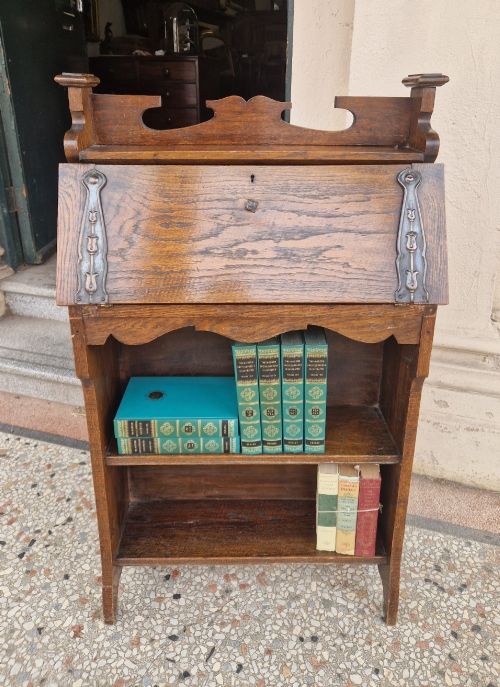


Small Wooden Secretary
These small wooden secretary desks offer compact writing spaces and concealed storage, appealing to collectors seeking functional period furniture.
Small Wooden Secretary
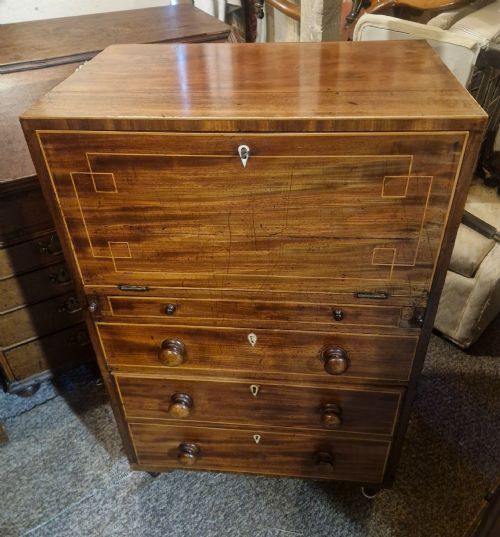
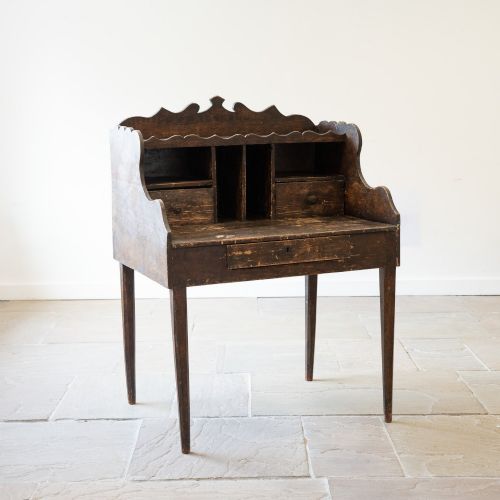
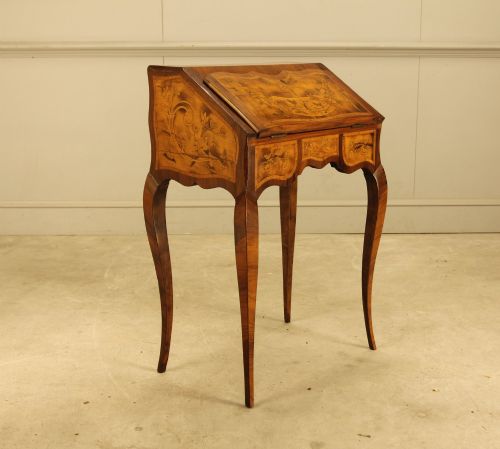
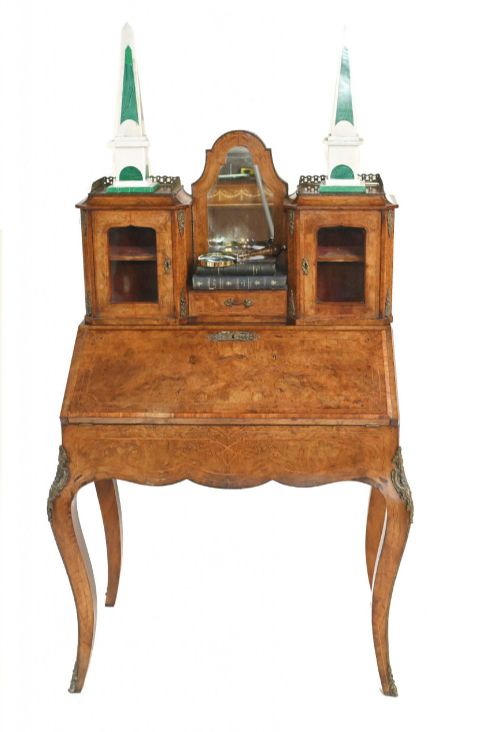
A small wooden secretary combines a compact writing surface with storage compartments, appearing in various forms throughout historical periods. Buyers searching for a small wooden secretary encounter diverse configurations including bureau desks, bonheur de jour ladies desks, and writing tables.
The inventory includes examples from the Regency, Victorian, Edwardian, and Arts and Crafts eras, spanning the nineteenth and early twentieth centuries. Pieces range from French provincial hotel desks and Italian marquetry bureau desks to narrow oak writing bureaux.
Forms vary from diminutive Davenport desks to inlaid mahogany bureau bookcases and simple walnut writing desks. These compact pieces serve collectors and interior decorators seeking traditional writing furniture with modest spatial footprints.
Materials and construction techniques
Construction relies upon traditional timber species such as mahogany, oak, walnut, pine, and fruitwood marquetry. Cabinetmakers utilised these woods alongside brass and copper hardware to build sturdy desks and bureaux.
Small Wooden Secretary Retail Price Guide 2026
Typical asking prices for small wooden secretary among the pieces listed under this phrase on Sellingantiques today, from the lower quarter to the upper quarter. They describe what is for sale here now, not the wider market.
Some nineteenth-century desks were specifically built for hotel receptions, ready to record the arrival of weary travellers.
Distinguishing quality in period desks
Quality differences emerge through the refinement of timber selection and the precision of marquetry or inlay work. Superior examples display sophisticated fruitwood patterns and well-executed stylistic revivals, such as French and Italian Rococo details.
Construction integrity and the proportion of diminutive forms separate standard items from finer pieces. Regency Davenport desks and neat bonheur de jour examples demonstrate the balance between decorative appeal and functional architecture.
The Small Wooden Secretary Glossary
- Bureau
- A sloping-lidded desk used for writing and storing papers. It typically opens to reveal pigeonholes and small drawers.
- Bonheur de jour
- A light ladies writing desk originating in France, usually featuring a small cabinet or shelving superstructure above the writing surface.
- Marquetry
- Decorative veneer work formed by fitting pieces of various coloured woods and other materials into a ground to create pictorial or geometric designs.
- Davenport
- A small compact desk featuring a sloping writing surface and a set of drawers accessed from the side.
Small Wooden Secretary: Frequently Asked Questions
What is a small wooden secretary?
A small wooden secretary is a compact piece of furniture designed for writing and correspondence, featuring a writing surface and enclosed storage. These items include bureau desks, writing tables, and ladies desks.
They offer practical workspaces combined with traditional cabinetry, making them suitable for domestic use in modern or period interiors.
How do I date a wooden bureau?
Dating a wooden bureau involves examining the timber species, construction methods, and stylistic indicators such as brass hardware or inlay techniques. Pieces span the Regency, Victorian, and Edwardian eras.
Specific design traits, like Arts and Crafts simplicity or Italian marquetry, help place the furniture within its historical period.
Where were these desks placed?
Historical small desks were typically positioned in private studies, bedrooms, or reception rooms for personal correspondence and estate management. Bonheur de jour tables often sat in ladies sitting rooms.
Today, their diminutive proportions allow them to fit easily into smaller living spaces or hallways as functional accent pieces.
What woods are commonly used?
Cabinetmakers utilised durable hardwoods including mahogany, oak, and walnut for primary structures. Fruitwood and various veneers provided contrasting tones for marquetry decoration.
Secondary timbers like pine frequently appeared in internal drawer linings and backboards.