
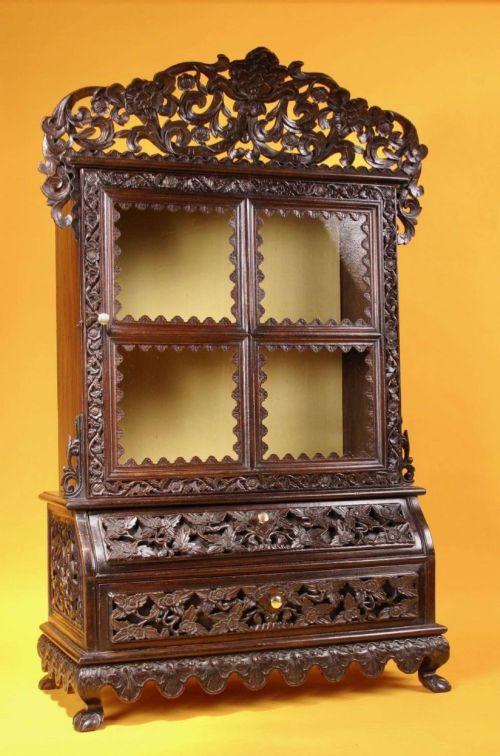


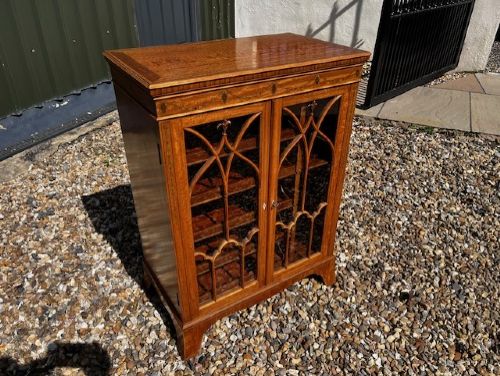


Small Wooden Display Case
A small wooden display case brings order to miniature collections while giving fragile curiosities the prominence they deserve.
Small Wooden Display Case
A small wooden display case functions as a secure enclosure for showing off cherished objects, miniature treasures and specialised collections. When searching for a small wooden display case, buyers encounter a diverse mix of tabletop vitrines, wall-mounted cupboards and countertop cabinets drawn from the nineteenth and twentieth centuries.
The selection ranges from Victorian mahogany and walnut cases to Edwardian glazed bookcases and 1920s commercial countertop cabinets. Anglo-Indian carved hardwood cabinets and Cotswold School oak corner designs also appear alongside specialist items like display domes and smokers cabinets.
Most examples combine glazed doors or panels with timber frames, offering a clear view of the contents while protecting delicate items from dust. These pieces vary from domestic tabletop accessories to sturdy shop counters and refined nineteenth-century collectors cabinets.
Materials and construction
Makers utilised a variety of timbers including oak, mahogany, walnut, satinwood and assorted hardwoods to build the structural frames of these display pieces. Glass forms the primary viewing panels, allowing light to illuminate the interior shelves and displayed objects.
Brass hardware such as hinges, handles, locks and ormolu mounts frequently provides functional and decorative accents on Victorian and Edwardian cabinets. Interior surfaces are occasionally lined with felt to cushion delicate items placed within the case.
Listings feature oak, mahogany, walnut, and hardwood cases spanning from the nineteenth century through the 1930s.
Evaluating quality and craftsmanship
Quality in these cabinets rests upon the choice of timber and the precision of the joinery used in the frame and door construction. Finer examples display meticulous marquetry inlay, such as satinwood work, or incorporate cast ormolu mounts rather than plain brass fittings.
The clarity and thickness of the glass, alongside the smoothness of opening doors and the tightness of joints, distinguish utilitarian shop counters from refined domestic display pieces. Well-preserved original hardware and intact interior linings further separate standard items from superior pieces.
The Small Wooden Display Case Glossary
- Vitrine
- A glass-panelled cabinet designed specifically for displaying fine objects or curiosities. These freestanding or tabletop cases protect fragile items while offering all-round visibility.
- Marquetry
- Decorative veneer work arranged in intricate patterns or pictures on wooden surfaces. Craftsmen utilise different coloured woods to create pictorial designs on cabinet doors and panels.
- Ormolu
- Gilt bronze ornamentation applied to furniture and decorative objects during the nineteenth century. This metallic decoration adds a bright, golden accent to cabinet frames.
- Countertop cabinet
- A small display case originally utilised in shops and commercial settings to showcase small wares to customers. These pieces typically feature glazed doors facing outward for easy viewing.
- Display dome
- A glass cover resting on a wooden base used to protect taxidermy, clocks or delicate ornaments. The wooden base often incorporates a groove to secure the blown glass dome firmly in place.
Small Wooden Display Case: Frequently Asked Questions
What fits inside a small display case?
These cabinets suit a wide range of miniature objects, pocket watches, medals, fossils and delicate porcelain figures. Their enclosed shelves keep dust away from fragile items while keeping them visible.
Larger countertop versions accommodate larger collections, while tabletop vitrines and domes highlight singular specimens or particularly prized curiosities.
How do I clean an antique wooden cabinet?
Dust the timber surfaces gently with a soft, dry cloth to remove everyday particles without disturbing the finish. Avoid modern silicone sprays or harsh chemical polishes that can damage older wood.
Clean the glass panels using a mild glass cleaner applied to a cloth rather than sprayed directly onto the glass, preventing moisture from seeping into the wooden frame.
Where should I place a countertop cabinet?
Countertop cabinets sit securely on top of sturdy sideboards, chests of drawers or designated tables where they remain at a comfortable viewing height. Ensure the surface is level so the doors open and close smoothly.
Keep the cabinet away from direct sunlight and strong heat sources to prevent the timber from drying out, warping or cracking over time.
How do I distinguish Victorian from Edwardian cases?
Victorian display cases often feature darker timbers like mahogany and walnut, frequently accompanied by heavy carving, brass hardware or ormolu mounts. The overall aesthetic tends towards denser ornamentation and formal dark tones.
Edwardian pieces generally exhibit lighter woods such as oak and satinwood, often reflecting a simpler, airier design sensibility influenced by changing domestic tastes at the turn of the twentieth century.