



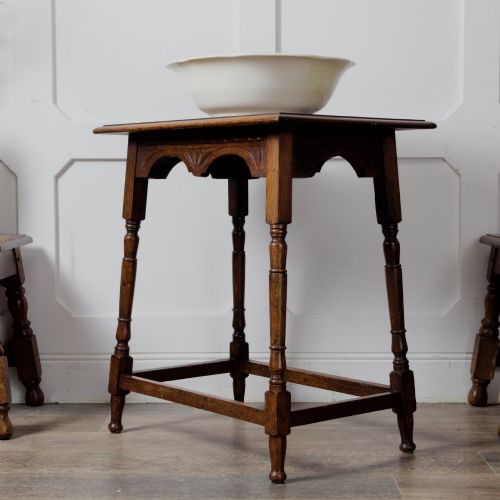
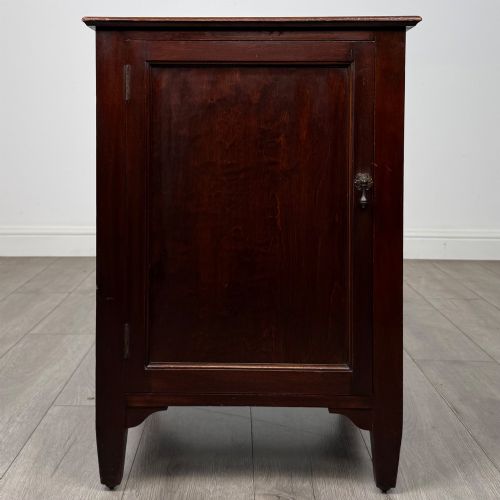
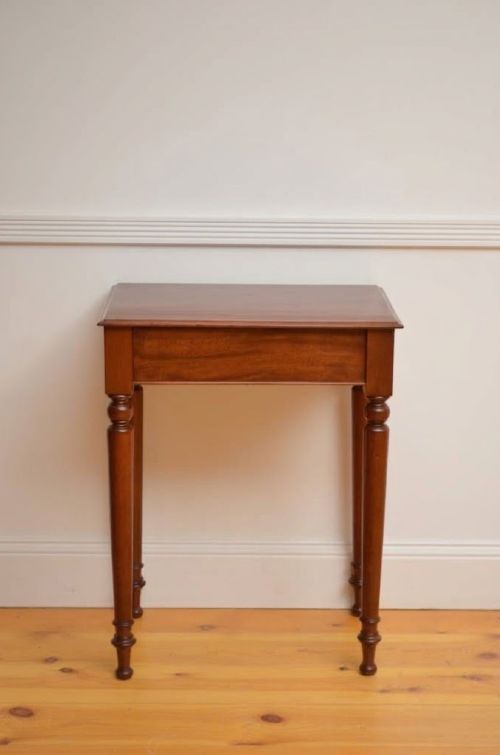
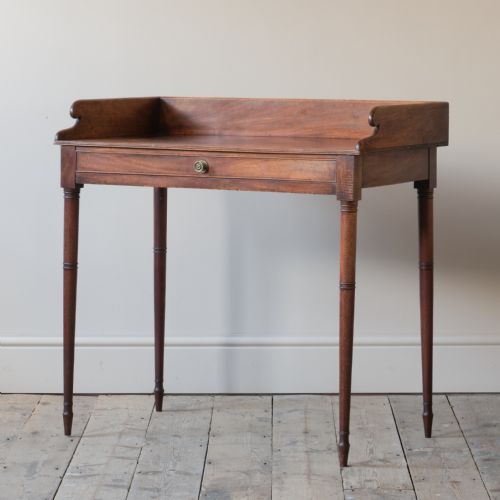
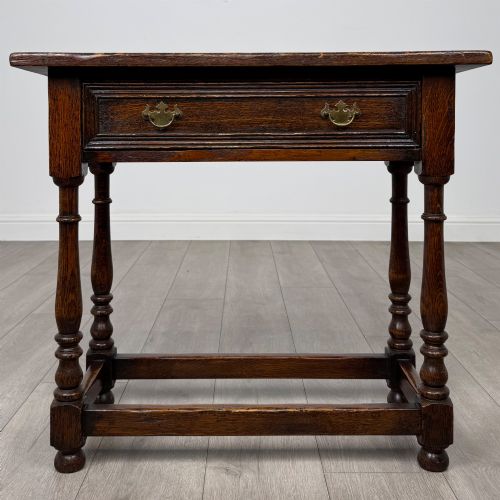
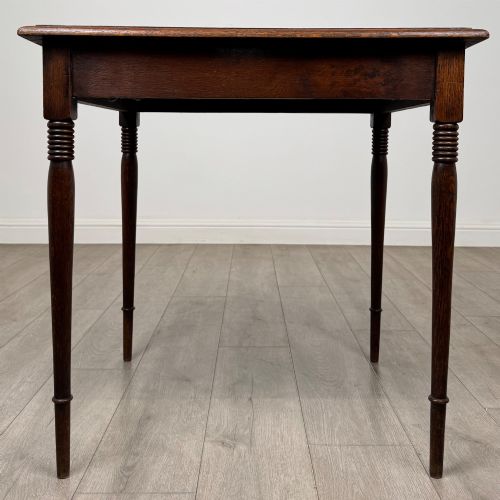
Small Wood Hall Table
A small wood hall table anchors an entrance passage cleanly, offering a surface for letters and keys without crowding the floor.
Small Wood Hall Table
A small wood hall table appears primarily as a side table, console table, or narrow occasional table designed to fit compact entranceways and passages. These pieces emerge across periods ranging from the eighteenth century through the Edwardian era and the nineteen-twenties.
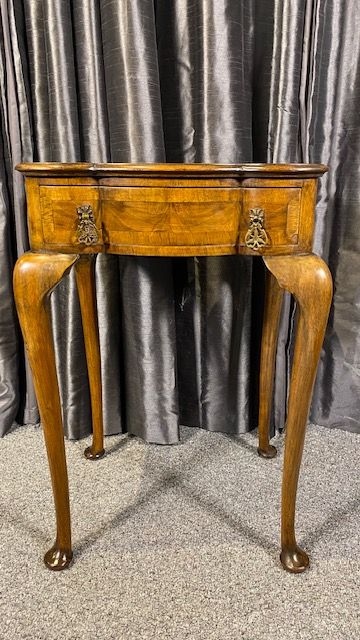
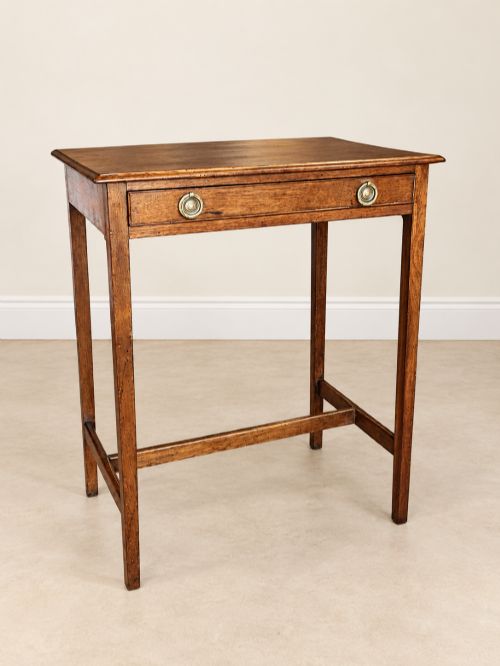
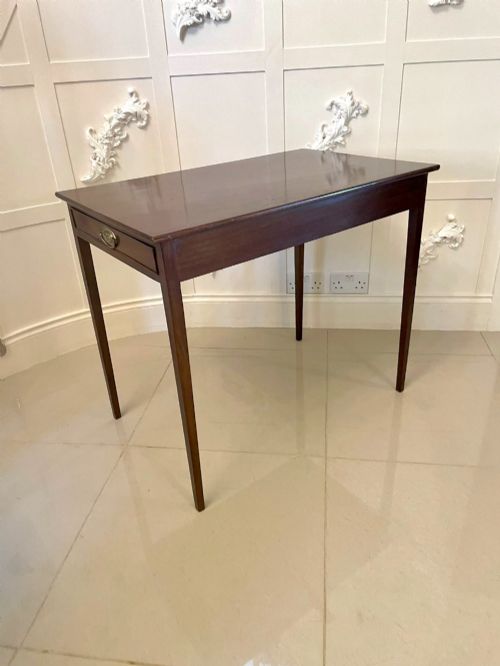
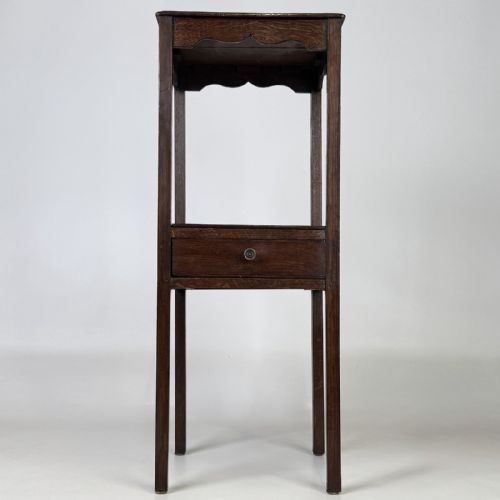
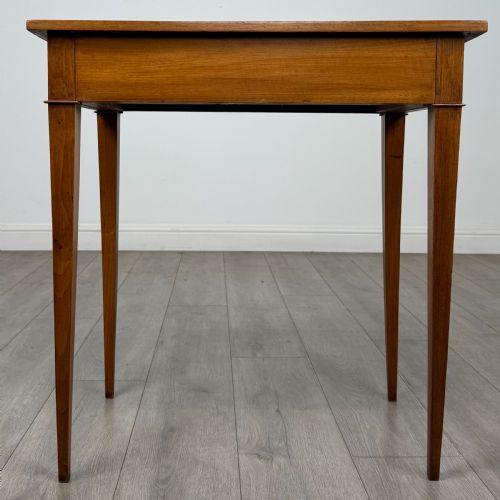
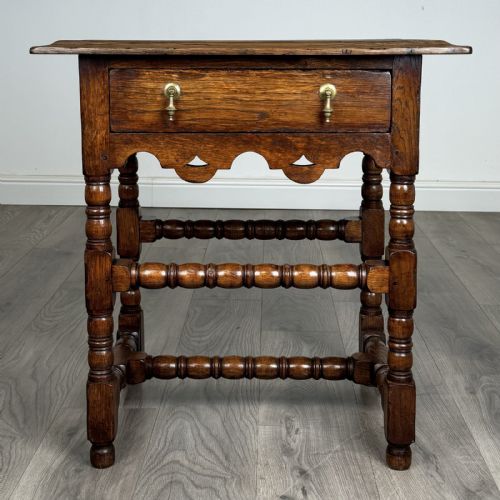
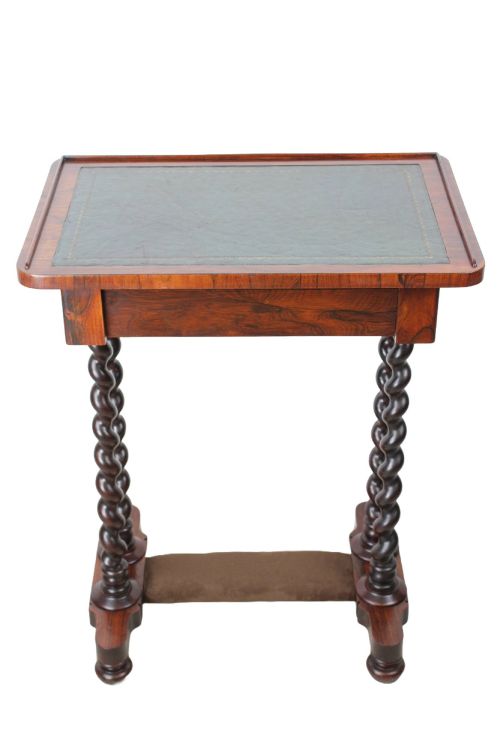
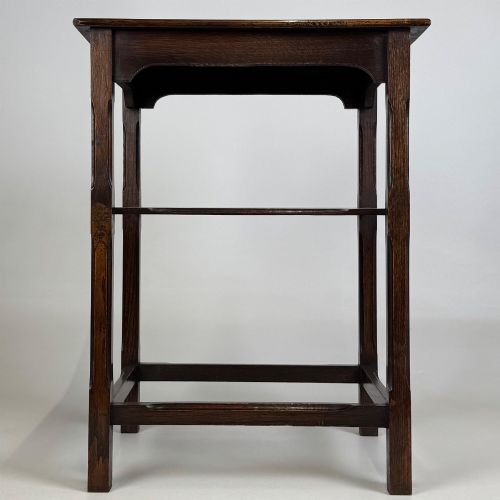
The domestic forms recorded on this page include narrow console tables, side tables with single drawers, lowboys, and demi-lune shapes. Oak and mahogany serve as the primary woods, often shaped with slender proportions to suit hallways.
Makers and workshops construct these items to stand against narrow walls, occasionally featuring hidden drawers, drop leaves, or shaped tops. Buyers encounter variations spanning Georgian simplicity, Victorian carving, and Edwardian inlay.
Materials and construction
Cabinetmakers utilise hardwoods such as mahogany, oak, walnut, rosewood, and cherry, frequently selecting figured timber for prominent surfaces. Secondary woods provide structural support within drawers and internal framing.
Joinery methods combine traditional mortise and tenon frames with dovetailed drawer construction. Surfaces receive polish, stain, or painted finishes, whilst decorative details incorporate brass hardware, bobbin turning, and inlaid veneers.
Small Wood Hall Table Retail Price Guide 2026
Typical asking prices for small wood hall table among the pieces listed under this phrase on Sellingantiques today, from the lower quarter to the upper quarter. They describe what is for sale here now, not the wider market.
Several Edwardian oak side tables double as lamp stands, ready to illuminate dark corridors with polite discretion.
Judging the range
Quality rests upon the selection of timber, particularly the grain figuration on top surfaces and the crispness of carved or turned details. Pieces with dense mahogany or figured burr walnut exhibit superior natural patterning.
Construction integrity separates standard utility items from finer workshop output, evident in hand-cut dovetails, well-fitted drawers, and stable framing that requires no modern bracing. Attributions to known firms like Druce and Co add discernible distinction.
Druce and Co
The Small Wood Hall Table Glossary
- Console table
- A table designed to stand against a wall, frequently supported by brackets or legs at the front. These pieces suit narrow spaces like hallways and corridors.
- Lowboy
- A small table with one or more drawers, originating in the eighteenth century and often used as a dressing or side table. They stand on four relatively tall legs.
- Demi-lune
- A half-moon shape used for table tops and console furniture. This silhouette allows the piece to sit flush against a wall.
- Inlay
- A decorative technique where contrasting materials are inserted into recesses cut into the wood surface. Edwardian and nineteenth-century examples often display fine linear stringing.
- Figured wood
- Timber possessing an attractive, natural grain pattern such as flame or burl. Cabinetmakers reserve these sections for table tops.
Small Wood Hall Table: Frequently Asked Questions
What is a small wood hall table used for?
These tables provide a compact surface in entrance halls for depositing daily items such as keys, post, and small lamps. Their narrow dimensions ensure passageways remain clear.
Certain variations include single drawers or lower shelves for additional concealed storage of small household accessories.
How do I identify a Georgian hall table?
Georgian examples typically feature solid mahogany or oak construction with clean structural lines, straight or tapering legs, and minimal ornamentation. Their proportions prioritise functional elegance.
Examination of the drawer construction reveals hand-cut dovetails and timber linings characteristic of eighteenth and early nineteenth-century workshop practices.
Will an antique table fit a narrow hallway?
Many console and side tables in these listings specifically offer narrow proportions or demi-lune shapes designed for restricted spaces. Measuring the available depth against the wall is essential.
Freestanding side tables and half-circle designs project outward minimally, accommodating tight architectural layouts without obstructing movement.
Are these tables made of solid wood?
The listings comprise items fashioned from solid oak, mahogany, walnut, and cherry, alongside pieces utilising wood veneers over secondary timber cores. Figured walnut and mahogany veneers frequently decorate table tops.
Checking the drawer edges and underside framing helps clarify the specific construction methods utilised by the maker.