



Small Upholstered Stool
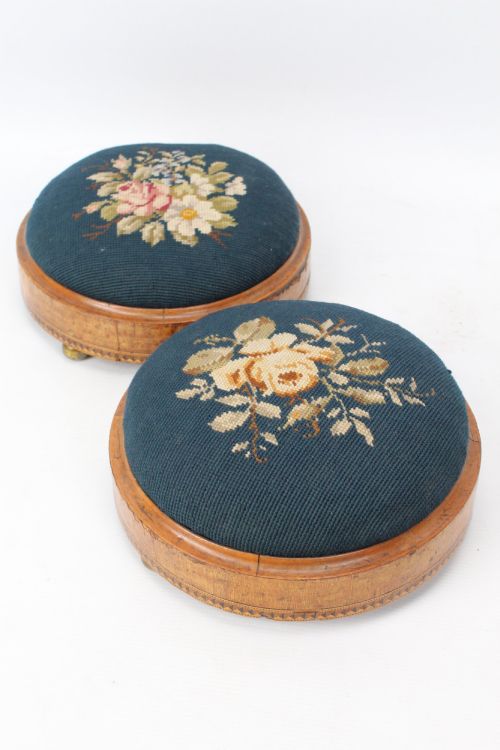
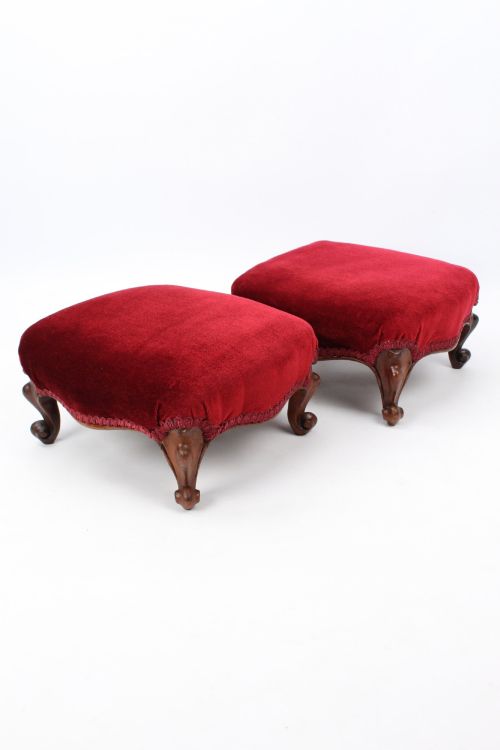
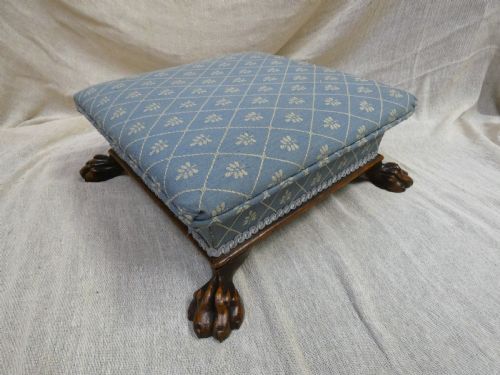
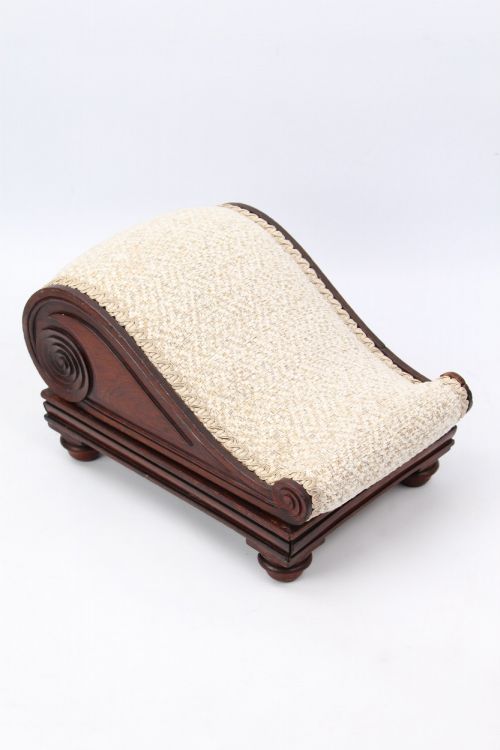
These small upholstered stool examples range from Regency mahogany frames to Victorian needlepoint footstools, offering compact seating and footrests for period interiors.
Small Upholstered Stool
Makers produced these compact furnishings for dressing rooms, music rooms, and drawing rooms, utilising durable timbers like mahogany, walnut, oak, and ebonised wood. Surviving examples demonstrate the period preference for functional seating that occupied minimal floor space while complementing larger sofas and occasional tables.
Materials and construction methods
Carpenters shaped the structural frames from dense hardwoods such as mahogany, walnut, and oak, occasionally incorporating brass details or intricate carved elements. Tunbridge Ware and ebonised finishes appear on select pieces, showing the decorative surface treatments favoured by nineteenth-century cabinet makers.
Upholstery techniques combined traditional stuffing methods with robust textile coverings including needlepoint, wool tapestry, and textured linen. Frames were joined securely to withstand the daily pressure of resting feet or seated use in domestic parlours.
Small Upholstered Stool Retail Price Guide 2026
Typical asking prices for small upholstered stool among the pieces listed under this phrase on Sellingantiques today, from the lower quarter to the upper quarter. They describe what is for sale here now, not the wider market.
Several stools double as music seats, proving that nineteenth-century pianists also appreciated comfortable feet.
Assessing quality in period stools
The distinction between standard utility items and finer pieces lies in the crispness of timber carving, the choice of primary woods like figured walnut or dense mahogany, and the integrity of the frame construction. Superior examples often display thoughtful proportions and specialised decorative touches such as inlaid wood or distinctive X-frame geometry.
Upholstery execution also defines grade, with hand-stitched needlepoint or quality tapestry reflecting greater artisanal investment than plain utilitarian coverings. Original matching pairs demonstrate higher initial commissioning quality than isolated domestic workshop pieces.
The Small Upholstered Stool Glossary
- Tunbridge Ware
- A form of British woodwork characterised by minute mosaic pictorial decoration made from thousands of tiny wood blocks. It appears on mid-nineteenth-century items.
- Regency
- The British architectural and decorative style spanning the early nineteenth century. Pieces from this period often feature classical lines and dark hardwoods.
- Aesthetic Movement
- A late nineteenth-century design current emphasising art for art's sake and simplified forms. Such pieces often draw inspiration from Japanese or minimalist motifs.
- Needlepoint
- A type of canvas work embroidery executed with a yarn threaded through a stiff open-weave mesh. It frequently covers the top surface of Victorian footstools.
- X-framed
- A furniture structure utilising intersecting diagonal members forming an X shape when viewed from the side. This geometry provides both structural stability and architectural elegance.
Small Upholstered Stool: Frequently Asked Questions
Where should I place a small upholstered stool?
These compact pieces fit naturally beside armchairs in a living room as a fireside footrest or beneath a dressing table. Their modest scale allows them to slide easily out of the way when not in use.
They also serve effectively as occasional seats in narrow hallways or bedrooms where full-sized chairs would crowd the floor plan.
How do I clean antique fabric upholstery?
Gentle surface dusting with a soft brush removes loose particles without disturbing old fibres. Avoid modern chemical detergents or soaking the textile.
Professional textile conservationists should handle deeper cleaning to protect delicate nineteenth-century wool, velvet, or needlepoint surfaces from damage.
Are these stools sturdy enough for daily sitting?
Most surviving examples remain structurally sound for resting feet or brief seated use. Solid hardwood frames joined with traditional methods hold their integrity well over generations.
Regularly check the underside joints for looseness, and avoid placing excessive weight on delicate X-frame or slender turned leg variations.
How can I tell a Victorian stool from a Regency one?
Regency pieces typically display smoother, classical lines in dark rosewood or mahogany, reflecting early nineteenth-century design restraint. They often feature distinct architectural elements like the X-frame. Ninetheenth-century Victorian examples frequently incorporate heavier carved walnut, ebony finishes, or ornate needlepoint and tapestry covers.