

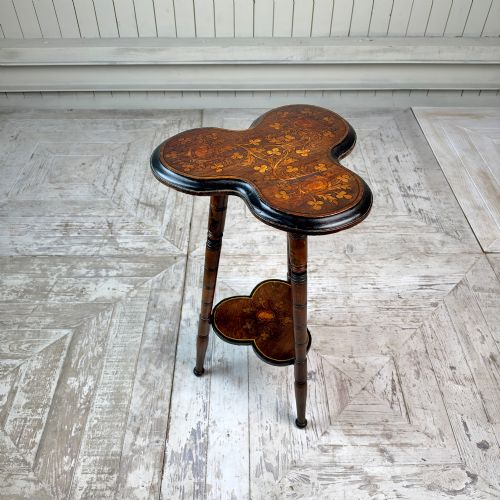
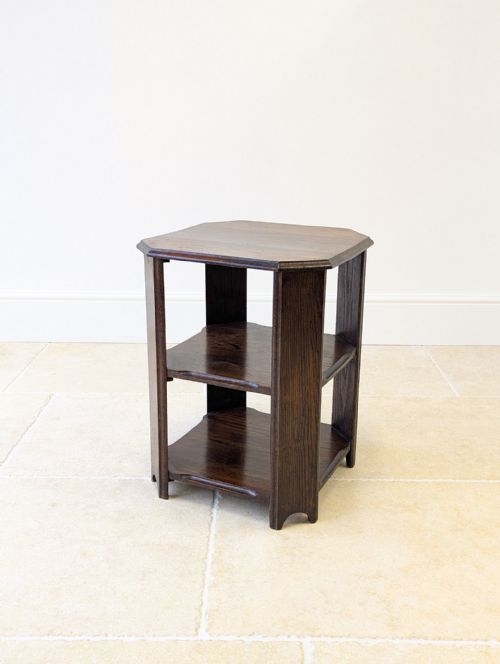
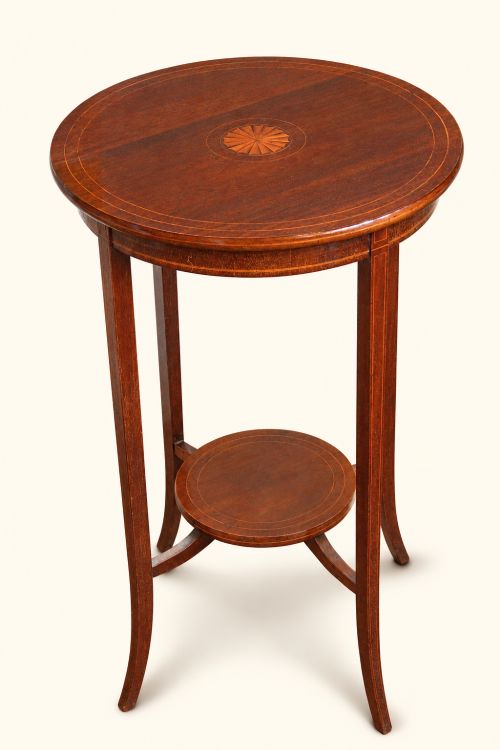
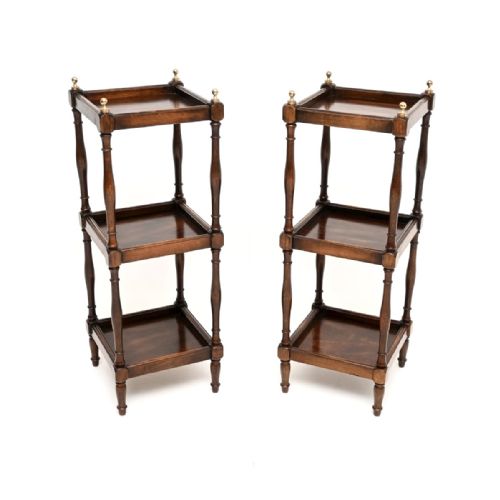

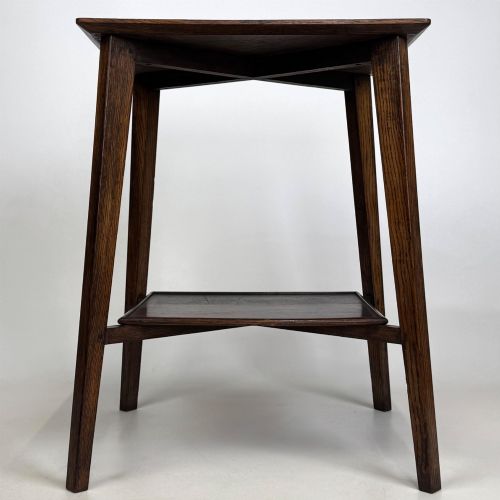
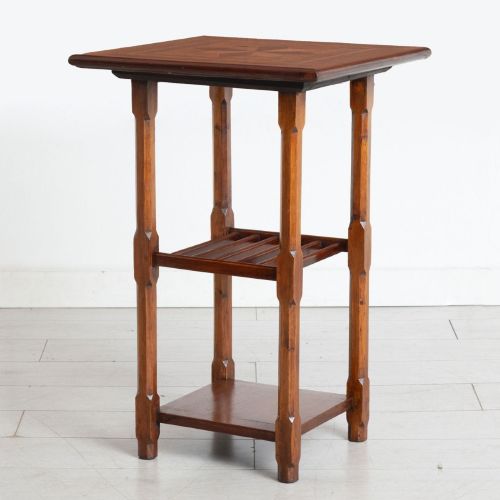
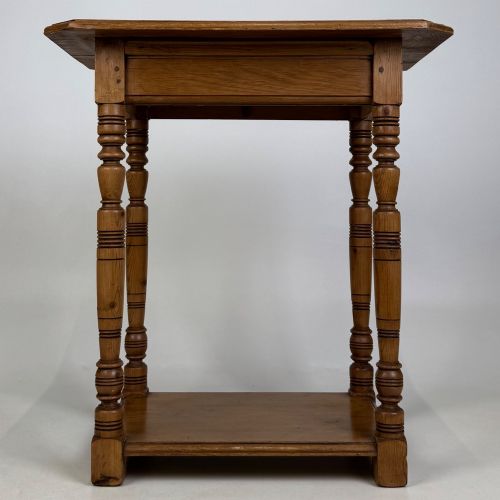
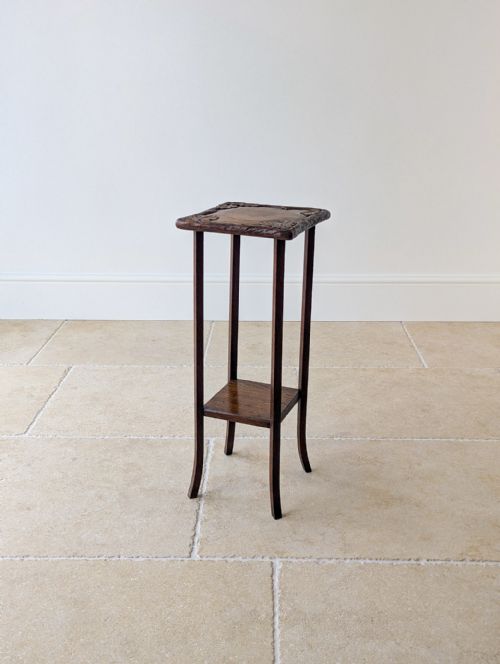



Small Tier Display Table
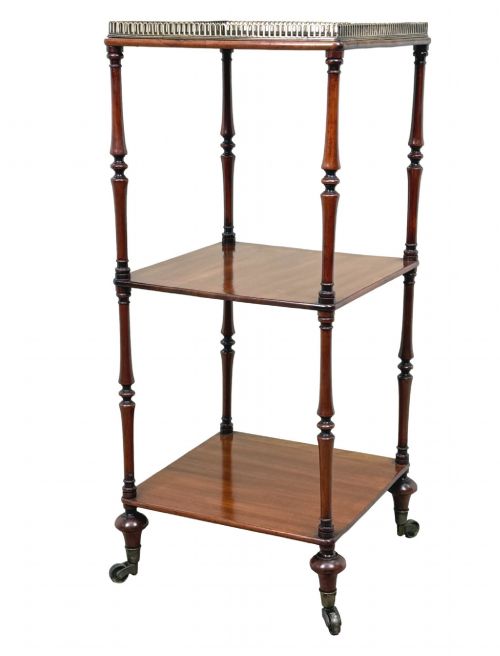
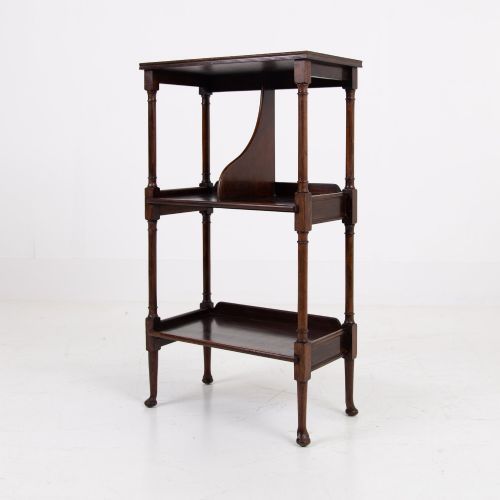
A small tier display table provides multi-level surface space, arriving in forms from Edwardian occasional tables to Victorian etageres.
Small Tier Display Table
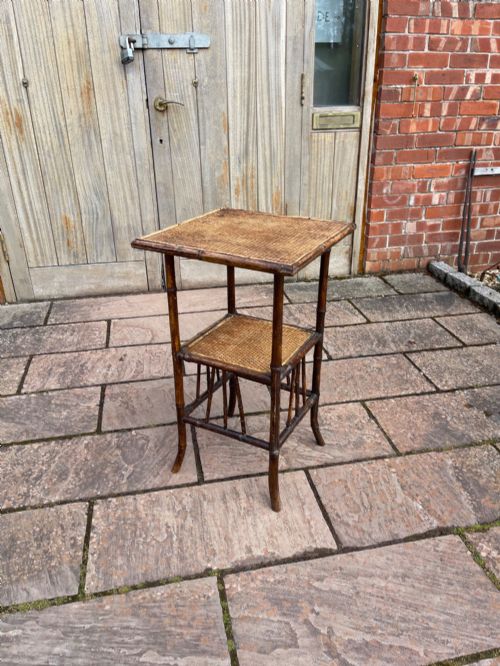
A small tier display table groups together multi-surface occasional tables, whatnots, etageres, and plant stands designed to hold objects across more than one level. When searching for a small tier display table, buyers encounter pieces primarily from the nineteenth century, Victorian, Edwardian, and Regency periods, alongside early twentieth-century examples.
The forms span shamrock-shaped penwork occasional tables, octagonal side tables, oval lamp tables, and multi-tiered étagères. Materials range from mahogany and oak to walnut, rosewood, satinwood, and bamboo.
Makers and designers of these multi-tiered forms utilised styles including Arts and Crafts, Sheraton Revival, Regency Style, and Aesthetic Movement. These tables function as side tables, bedside tables, and freestanding display pieces.
Materials and Construction
Cabinet makers constructed these tiered tables predominantly using solid and veneered hardwoods such as mahogany, walnut, oak, and rosewood. Timber selection dictated the weight and grain pattern of each tier, while supporting columns or turned legs provided structural stability across multiple levels.
Surface decoration involved marquetry inlay, painted decoration, penwork, and brass fittings. Crossbanding and specialised timber choices define the aesthetic execution of nineteenth and early twentieth-century examples.
Small Tier Display Table Retail Price Guide 2026
Typical asking prices for small tier display table among the pieces listed under this phrase on Sellingantiques today, from the lower quarter to the upper quarter. They describe what is for sale here now, not the wider market.
Listings for small tiered tables span the nineteenth and early twentieth centuries, featuring woods such as mahogany, oak, walnut, rosewood, and satinwood.
Assessment of Quality
Quality in a tiered table rests on the crispness of the joinery, the selection of timber figures such as burr walnut or flame mahogany, and the restraint of decorative inlay. Superior pieces exhibit balanced proportions between the tiers and sturdy vertical supports that prevent wobble.
The distinction between standard utility pieces and finer examples depends on integrated details such as brass gallery rails, hand-painted floral motifs, or penwork, which elevate an everyday occasional table into a display piece.
Liberty and Co·Gillows
The Small Tier Display Table Glossary
- Étagère
- A set of open shelves or tiers for displaying small objects or ornaments. These pieces typically feature three or more levels supported by slender columns.
- Whatnot
- A piece of furniture consisting of a series of open shelves supported by pillars, used for holding books, ornaments, or display items. They originated in the eighteenth century and persisted through the Victorian era.
- Occasional table
- A small table designed for intermittent use in a living space or bedroom. They serve functions as lamp tables, plant stands, or side tables.
- Penwork
- A decorative technique utilising ink drawn on wood to create intricate patterns or pictorial designs. This method appears on specialist nineteenth-century occasional tables.
- Crossbanding
- A strip of veneer running along the edge of a tabletop or shelf with the grain running perpendicular to the surface. It provides a neat border framing the central timber.
Small Tier Display Table: Frequently Asked Questions
How do I date a small tier table?
Dating relies on timber choices, construction methods, and stylistic markers such as inlay or leg turning. Victorian and Edwardian examples often employ mahogany or oak with characteristic turned supports.
Earlier Regency pieces show lighter proportions and specific classical revival motifs, while Arts and Crafts items emphasise exposed joinery and plain timber.
Where should I place a two-tier table?
These compact tables function well beside seating as lamp tables or against walls to display small collections. The lower shelf offers additional storage for books or decorative objects.
Their open construction allows light to pass through, making them suitable for smaller rooms where heavy furniture appears obtrusive.
What is the difference between an etagere and a whatnot?
The terms often overlap in nineteenth-century furniture description, though etagere traditionally emphasises display, while whatnot encompasses general tiered storage. Both forms utilise vertical tiers to organise and exhibit objects.
Construction styles vary from bamboo frames to substantial mahogany and walnut structures.