





Small Space Tables
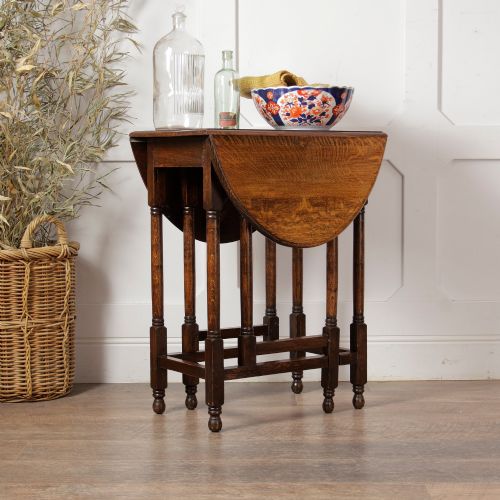
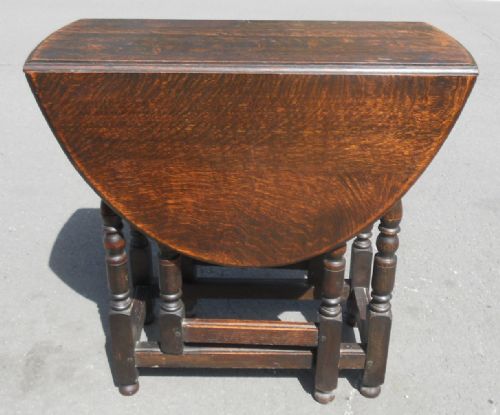
Small space tables turn awkward corners into usable surfaces, and these compact drop-leaf and gateleg designs offer genuine utility without crowding a room.
Small Space Tables
Small space tables encompass compact dining tables, occasional tables, side tables, drop leaf tables, and Sutherland tables designed to fit restricted interiors. When searching for small space tables, buyers encounter practical pieces intended for daily use in limited footprints.
The versions most commonly met on this page date from the nineteenth and twentieth centuries, spanning Victorian, Edwardian, and later periods. These forms rely on folding flaps and gateleg frames to expand when needed and fold flat against a wall.
Makers utilised timber such as oak, mahogany, walnut, burr walnut, and pine to construct these adaptable items. Simple painted pine farmhouse examples sit alongside polished mahogany and walnut Sutherland tables from the Victorian era.
How they were made
Cabinetmakers built these tables using solid hardwoods like oak, mahogany, and walnut, alongside resilient pine for painted country pieces. Joints were pegged or glued to withstand the constant movement of folding leaves and swinging legs.
Hinges of brass supported the drop leaves, allowing the hinged flaps to drop smoothly when not in use. Gateleg frames swung outward on pivot joints to bear the weight of extended leaves during meals or tea.
Small Space Tables Retail Price Guide 2026
Typical asking prices for small space tables among the pieces listed under this phrase on Sellingantiques today, from the lower quarter to the upper quarter. They describe what is for sale here now, not the wider market.
Victorian homeowners relied on narrow Sutherland tables to serve tea without permanently blocking the fireplace hearth.
What varies in quality
Timber selection marks the boundary between everyday utility and finer craftsmanship, with figured burr walnut and rich mahogany sitting above standard pine. The grain pattern and depth of polish on the top surface dictate visual weight in a small room.
Structural integrity rests on the precision of the gateleg pivots and hinge fittings. Solid timber leaves that remain flat without sagging when extended show superior original construction.
The Small Space Tables Glossary
- Drop leaf table
- A table with a fixed centre section and hinged flaps on either side that fold down. These leaves are supported by swinging legs or brackets when raised.
- Gateleg table
- A table featuring hinged legs that swing outward like a gate to support drop leaves. This design provides maximum surface area while folding away compactly.
- Sutherland table
- A particularly narrow type of drop leaf table with exceptionally slender leaves and folding legs close to the centre. The design allows the table to fold down into a very thin profile.
- Burr walnut
- A prized wood veneer showing swirling, knotty growths from the tree. It creates highly decorative patterns on Victorian tabletop surfaces.
Small Space Tables: Frequently Asked Questions
How do drop leaf tables work?
Drop leaf tables use hinged wooden flaps attached to a fixed centre board. When extra surface space is needed, the flaps lift upward and supporting legs swing out from the base to hold them steady.
Dropping the leaves requires simply swinging the supporting legs back inward and letting the flaps hang downward. This mechanism allows the table to occupy minimal floor space against a wall.
What is a Sutherland table?
A Sutherland table is a specific variation of the drop leaf table distinguished by exceptionally narrow centre boards and wide leaves. The folding legs are positioned close to the centre to create a very thin profile when stored.
Victorian makers often built these tables in walnut or mahogany for drawing rooms and sitting rooms. They served as tea tables or occasional surfaces that could be moved aside easily.
How do I date an antique oak table?
Dating an antique oak table involves examining the timber grain, construction joints, and hardware. Pieces from the Victorian and Edwardian periods often show machine-cut components alongside traditional hand-planed surfaces.
Hardware such as brass hinges and screws provides further clues to the period of manufacture. Style characteristics like Jacobean Revival turning also help place the piece within its historical era.
Can small dining tables seat four people?
Many compact drop leaf and gateleg tables are designed to seat four diners when fully extended. Raising both leaves creates a square or oval surface large enough for everyday meals in confined spaces.
Dropping one or both leaves reduces the seating capacity to one or two people. This flexibility makes them practical for modern flats and smaller dining areas.