

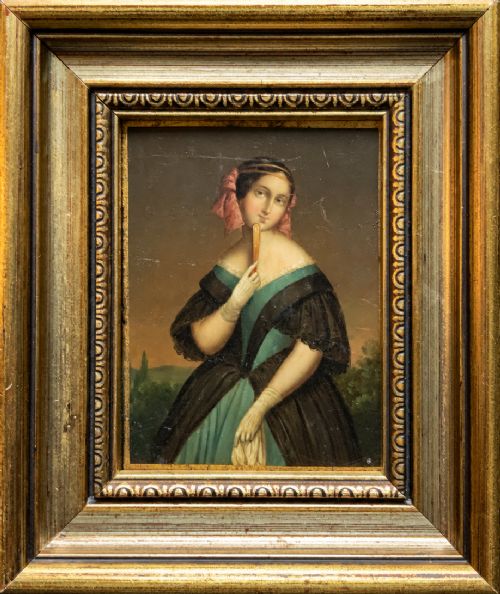
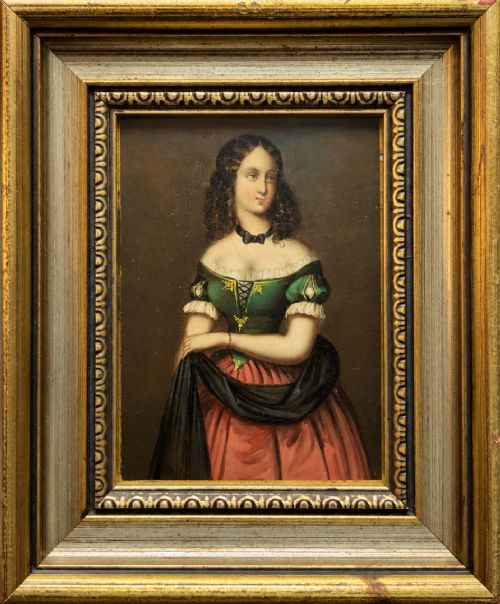
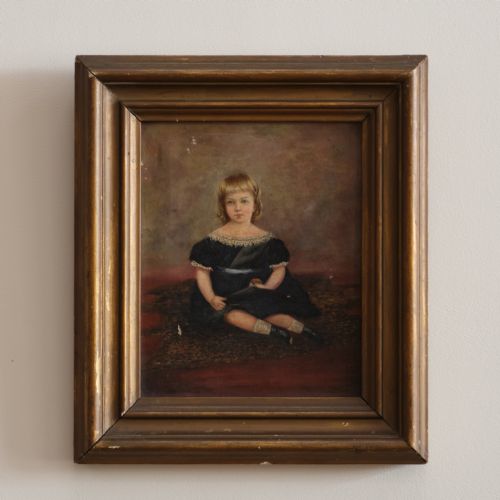
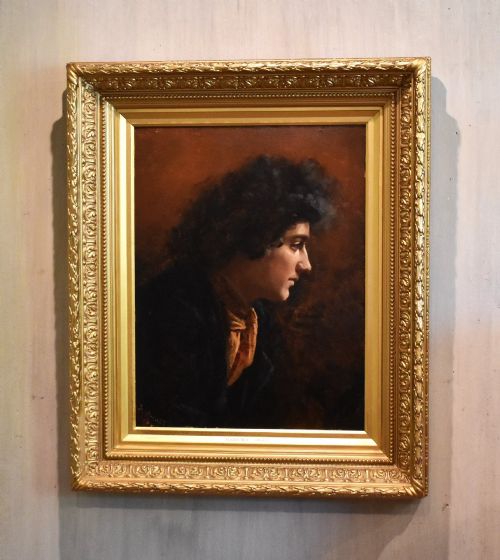


Small Portrait Oil Painting
A small portrait oil painting brings human character and historic presence into a room without demanding a wall of its own.
Small Portrait Oil Painting
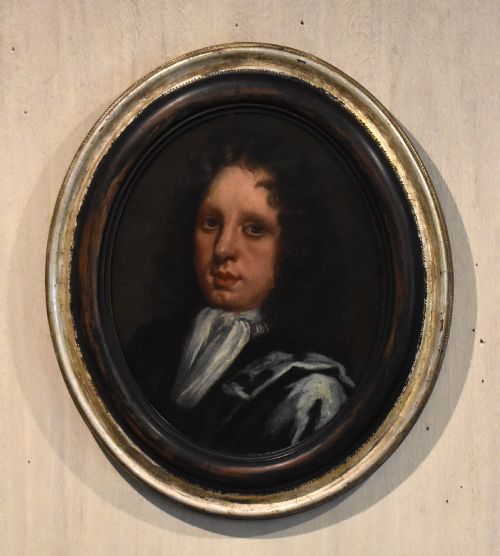
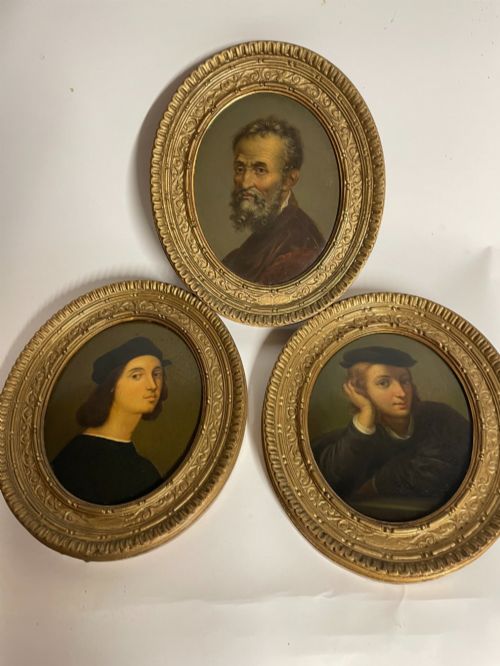
A small portrait oil painting captures an individual likeness, a domestic pet, or a historic figure on a compact scale using oil pigments. These intimate works range from seventeenth-century panels to mid-twentieth-century studies.
The most common examples on this page are nineteenth-century canvases and panel works depicting ladies, gentlemen, and animals. They often sit inside period frames of giltwood or gesso.
Makers recorded in the evidence span named artists such as Florence Small and John Scougall alongside anonymous hands working in naïve or traditional styles.
Materials and Technique
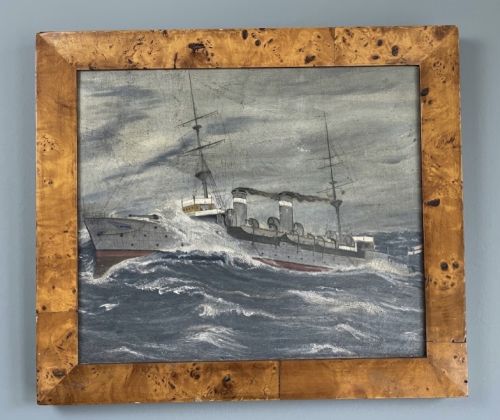
These works rely on oil paint applied to supports of wood, canvas, panel, copper, tin, or board. Painters built up the image through layers of pigment, capturing skin tones, fabric textures, and background details.
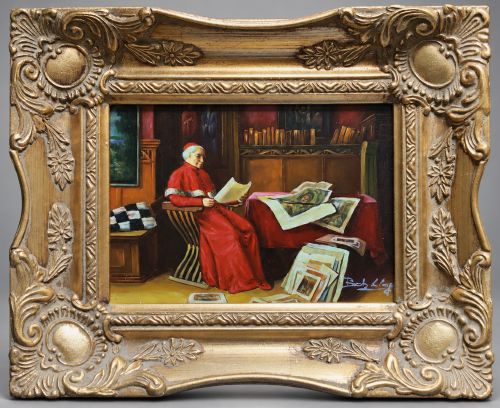
Frames play a structural role, utilising materials like carved wood, giltwood, and gesso to protect the edges of the panel or canvas. Many smaller items arrive housed in miniature frames suited to their scale.
Small Portrait Oil Painting Retail Price Guide 2026
Typical asking prices for small portrait oil painting among the pieces listed under this phrase on Sellingantiques today, from the lower quarter to the upper quarter. They describe what is for sale here now, not the wider market.
Current listings feature pieces spanning the seventeenth century through to the 1960s, utilising canvas, wood panels, copper, and tin.
Quality and Execution
The strength of a small portrait oil painting rests on the confidence of the brushwork and the psychological depth given to the subject. Superior works render hands and facial expressions with life and precision, while lesser examples rely on stiffer, formulaic proportions.
The condition of the paint surface and the integrity of the original support determine the longevity of the piece. Works that retain their unlined canvases or original panels without extensive overpaint command greater attention from collectors.
Florence Small·Samuel Raven·John Scougall·Ferdinand Barth·Sir John Everett Millais·Francis Alleyne·Elisabeth Vigee Le Brun
The Small Portrait Oil Painting Glossary
- Oil on panel
- A painting executed on a wooden board rather than woven canvas. This surface often provides a rigid, smooth ground that preserves fine brush detail.
- Giltwood
- Wood carved and coated with a thin layer of gold leaf or metallic paint. It forms the decorative border for many traditional picture frames.
- Gesso
- A plaster mixture applied to wood or canvas to prepare the surface for painting. It creates a smooth, absorbent base for oil layers.
- Naïve art
- Work created by an artist without formal academic training. These pieces display charming quirks in perspective and proportion.
- Portrait miniature
- A painting executed on a very small scale, intended to be held in the hand or displayed in a compact space.
Small Portrait Oil Painting: Frequently Asked Questions
Where should I hang a small portrait oil painting?
These compact works suit narrow wall spaces, hallways, or groupings salon-style among larger bookshelves. Their intimate scale rewards close viewing rather than distant display.
Keep them away from direct sunlight and damp conditions to protect the oil pigments and wooden supports over time.
How do I identify the period of an oil painting?
Examine the materials of the support, the preparation of the rear boards, and the style of the frame. Nail types, stretcher construction, and canvas weave offer clues to the decade of creation.
Clothing styles and hairstyles depicted in the portrait also provide a reliable anchor for dating the work.
Are these paintings cleaned or restored?
Many historic oil paintings undergo conservation to remove accumulated surface dirt and aged, yellowed varnish layers. Professional cleaning reveals the original brilliance of the palette.
Inspect the surface under magnification or ultraviolet light if you wish to check for areas of later retouching or overpaint.
Why are some portraits painted on copper or tin?
Metal supports offered a completely smooth surface that allowed artists to achieve exceptional detail without the interference of a canvas weave. Copper panels also proved durable and resisted the warping common to wood.
Painters working on a miniature scale frequently chose these metals for their stability and fine finish.