



Small Parlour Table
These small parlour table examples are compact, versatile surfaces from the Victorian and Edwardian eras that fit neatly into any room.
Small Parlour Table
A small parlour table brings domestic history into a modern room, offering a handy surface for lamps, books or cups of tea. When you search for this phrase, you find occasional tables and side tables primarily from the Victorian and Edwardian periods.
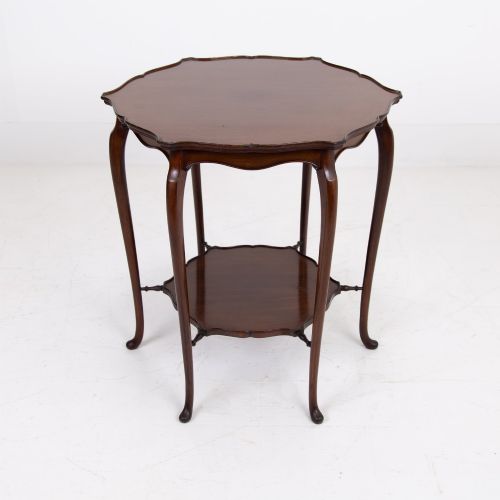
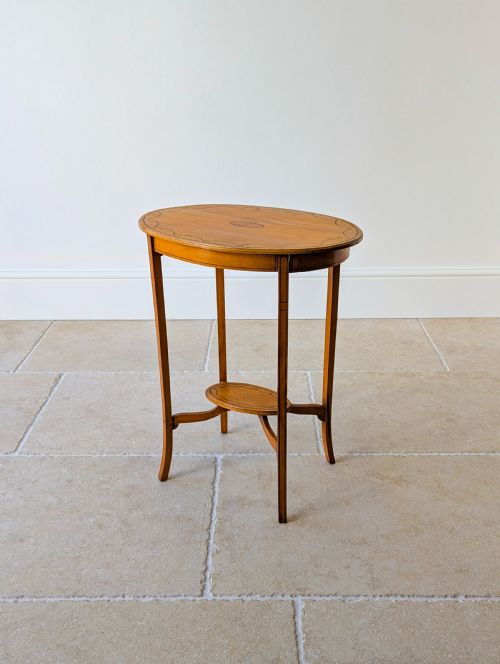
The forms vary across these listings from round and oval tops to octagonal, six-sided, and shaped designs. Many feature useful lower tiers or shelves for storage and display.
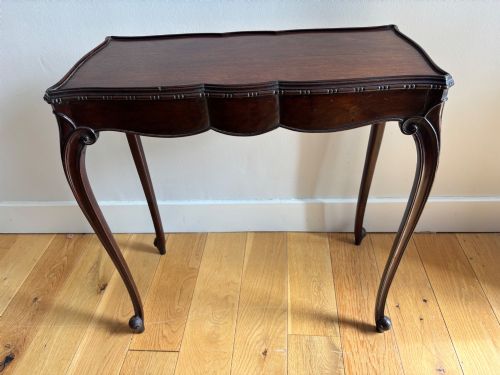
Origins stretch from English workshops influenced by Sheraton and Aesthetic styles to French makers working in the Louis XV Revival manner. You are most likely to encounter Edwardian mahogany occasional tables on this page.
How they were made
Carpenters relied on solid timber and rich veneers, frequently utilising mahogany, satinwood, and kingwood. These surfaces often received detailed embellishments such as boxwood inlay and intricate marquetry.
Structural elements include turned legs for support and specialised finishes including ebonised treatments. Details like brass accents and subtle bone or ebony components appear on specific pieces.
Listings span the Victorian and Edwardian periods, featuring materials such as mahogany, satinwood, kingwood, and boxwood inlay alongside French and English styles.
What varies in quality
The distinction between standard tables and finer examples lies in the crispness of the turning on the legs and the precision of the boxwood inlay or marquetry. Superior pieces display deliberate timber selection, where the grain patterns of satinwood or kingwood are carefully matched across the top.
Design ambition also separates the ordinary from the exceptional, as seen in complex six-sided tops, shaped edges, and multi-tier constructions. Cohesion of style, such as a unified Sheraton Revival or French Louis XV Revival aesthetic, elevates the overall execution.
The Small Parlour Table Glossary
- Occasional table
- A small, movable table designed for light use in a sitting room or parlour. These versatile pieces shifted easily to wherever a surface was needed.
- Marquetry
- Decorative veneer work arranged in pictorial or geometric patterns using various woods. Craftsmen cut thin slices of timber like kingwood to create intricate surface designs.
- Aesthetic Movement
- A late Victorian design style that emphasised artistic visual qualities over traditional moral or narrative themes. Ebonised finishes and simpler, striking lines frequently characterise this approach.
- Two-tier table
- A table featuring a main upper surface supported by a secondary lower shelf or tier. This configuration provided extra space for display in compact rooms.
Small Parlour Table: Frequently Asked Questions
What is a small parlour table?
A small parlour table is a compact moveable surface designed for nineteenth and early twentieth-century drawing rooms. They were used to hold decorative objects, reading material, or tea.
Today, these tables serve well as bedside stands or compact lamp tables in smaller modern spaces.
How do I date a parlour table?
Dating relies on identifying the prevailing style, timber choices, and construction methods seen in the piece. Victorian examples often lean towards heavier ebonised finishes, while Edwardian pieces frequently showcase lighter mahogany and satinwood.
Examining the turning on the legs and the presence of specific revival motifs provides further clues to the era of manufacture.
Where were these tables made?
These tables originate primarily from English and French workshops working during the Victorian and Edwardian periods. English makers frequently drew on Sheraton and Aesthetic traditions.
French makers tended towards Kingwood marquetry and Louis XV Revival forms.
How do I care for antique wood?
Protect antique wood surfaces by keeping them away from direct sunlight and sudden temperature changes. Regular dusting with a soft, dry cloth preserves the finish.
Avoid modern silicone polishes and instead use appropriate traditional waxes sparingly when the timber appears dry.