
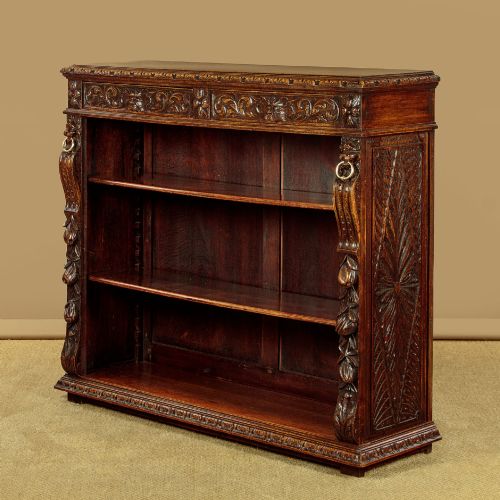
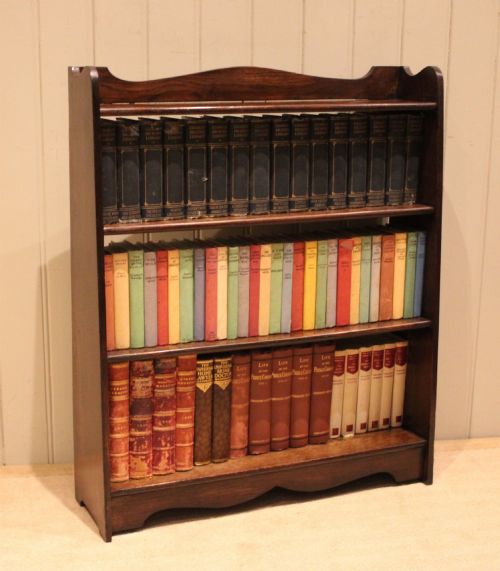
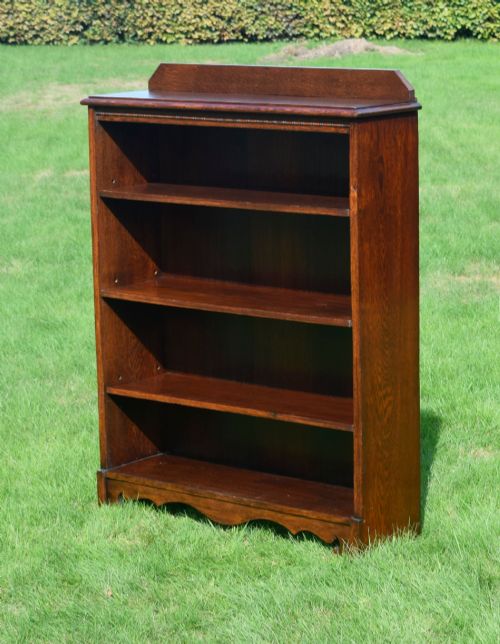
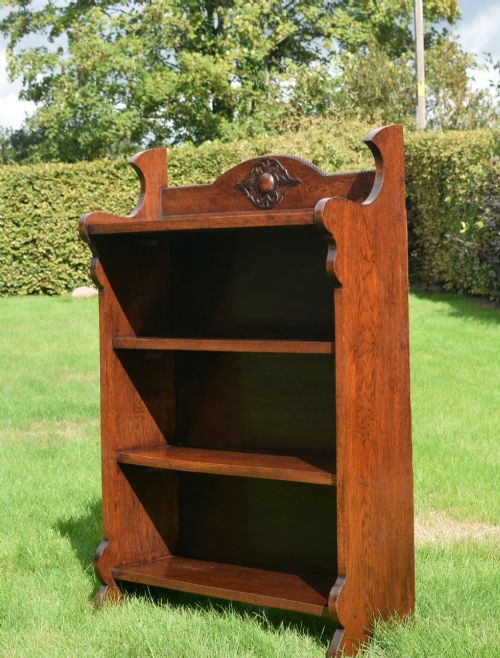
Small Oak Open Shelves
Small oak open shelves provide compact, accessible storage that suits modest rooms without dominating the floor space.
Small Oak Open Shelves
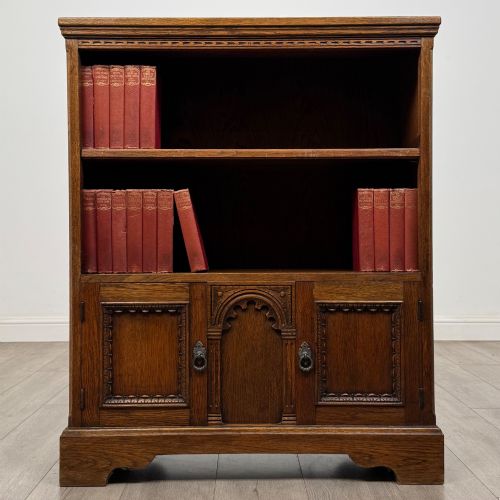
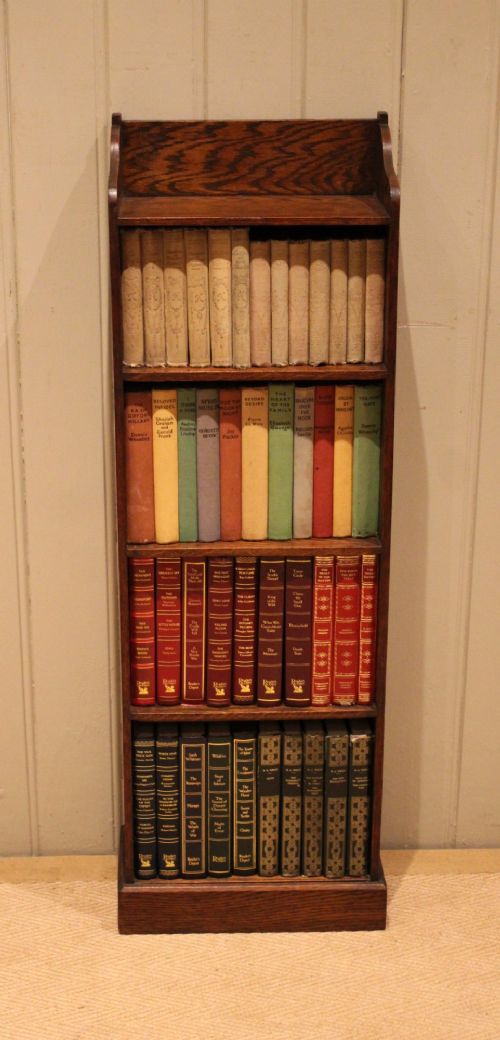
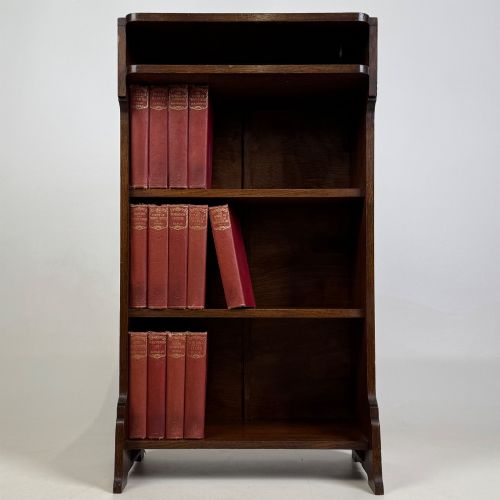
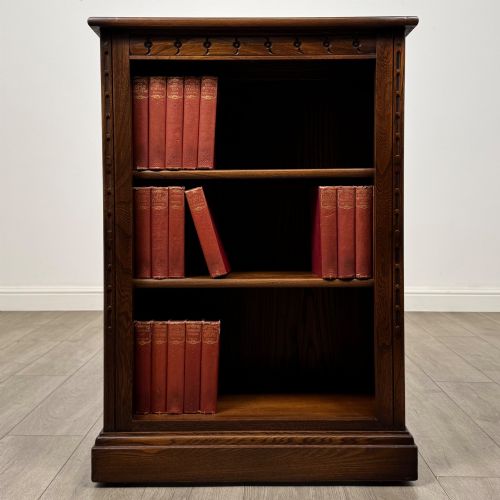
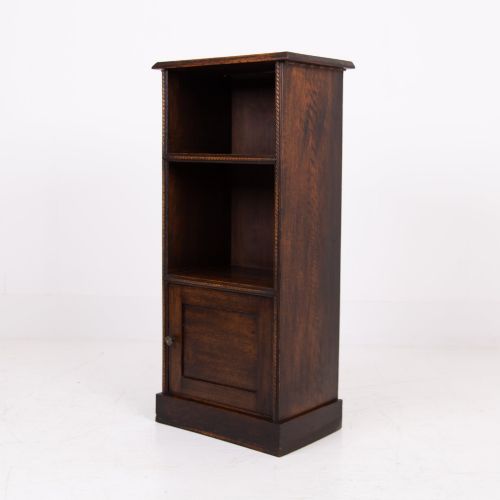
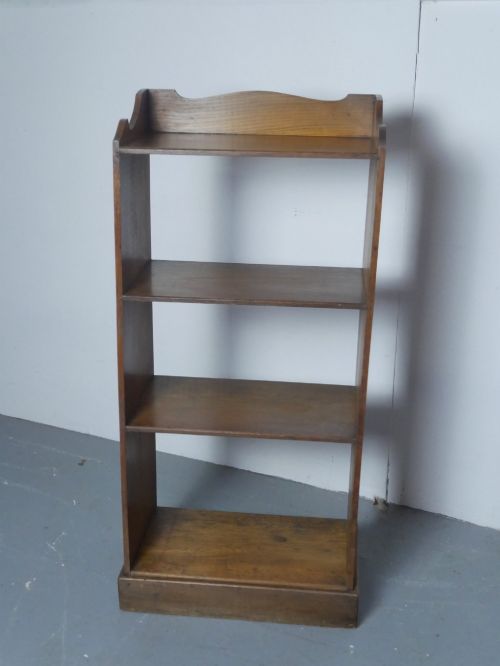
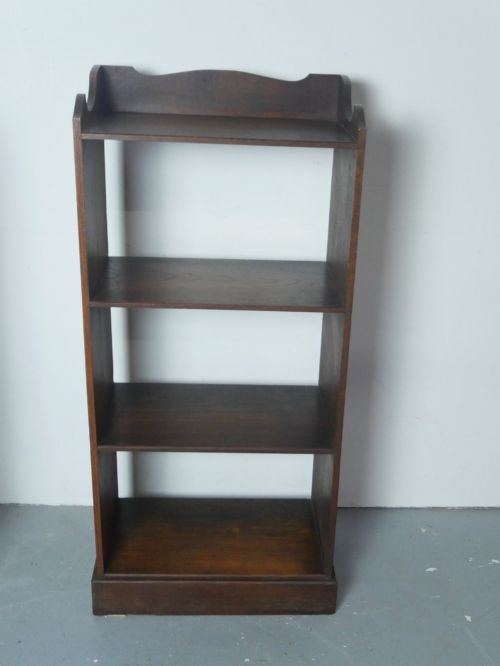
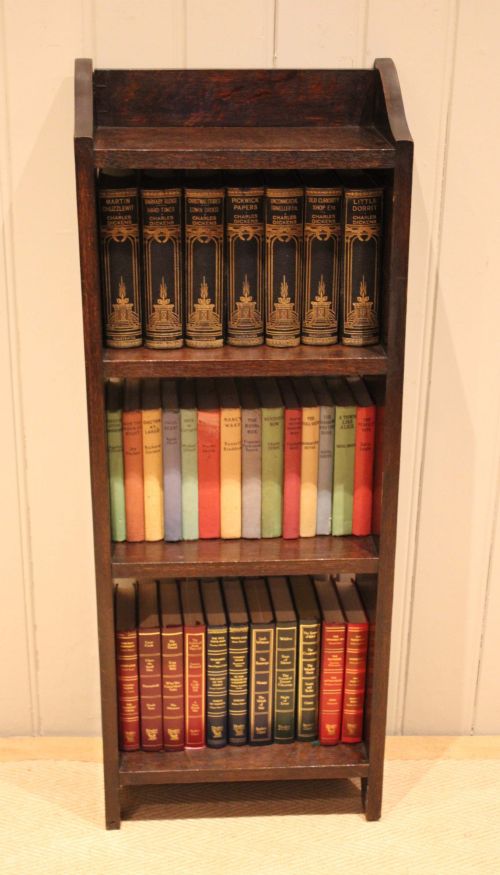
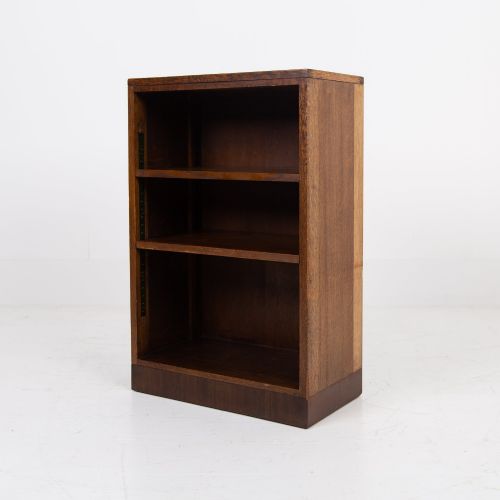
Small oak open shelves comprise compact open bookcases, bookstands and tiered shelving units built primarily to hold books and display small objects within domestic spaces. When buyers search for small oak open shelves, they encounter pieces ranging from simple vernacular furniture to distinct regional interpretations.
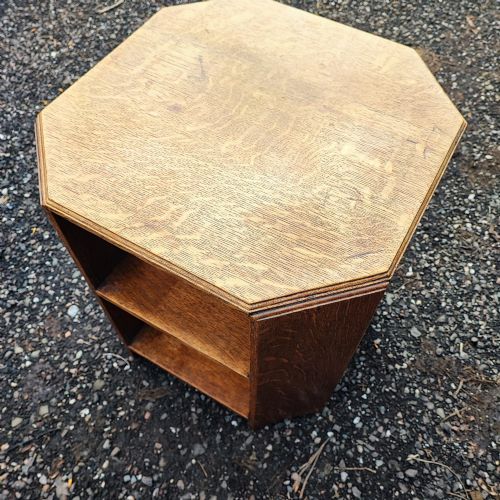
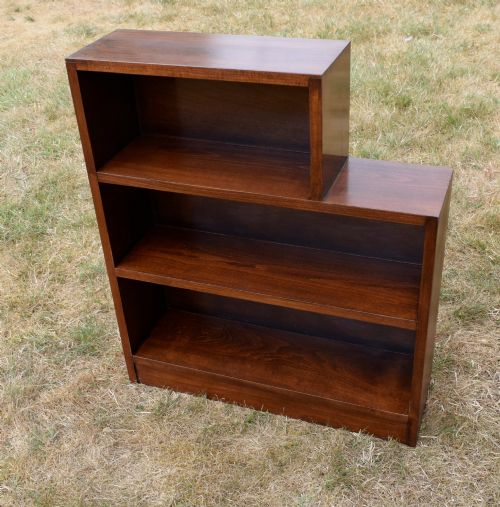
The pieces recorded on this page span the Victorian and Edwardian eras, alongside the Arts and Crafts and Art Deco movements of the early twentieth century. These variations mean a buyer might select a straightforward upright timber stand or a stepped design with specific stylistic flourishes from the 1920s or 1930s.
Most examples utilise modest proportions designed to fit tight corners or narrow wall spaces in studies, halls and living rooms. Origins vary from English country workshops to pieces attributed to notable makers such as Betty Joel and Heal's.
How they were made
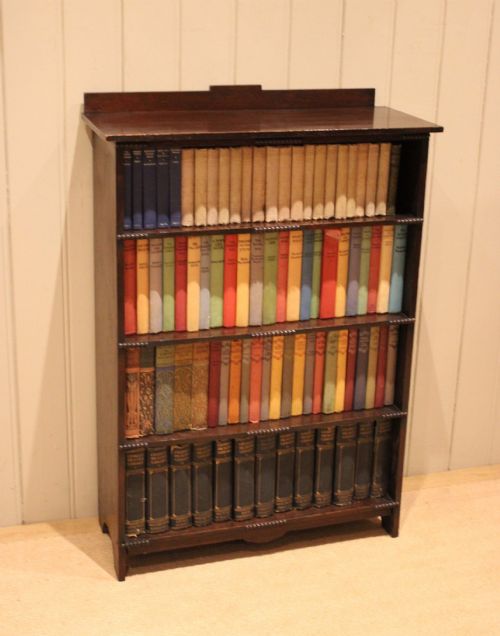
Construction relies heavily on solid timber and dark oak planks, often shaped with beaded edges, angled tiers or waterfall profiles. Joinery methods prioritise stability for open shelving formats, keeping the framework rigid without heavy doors.
Surface treatments vary from natural golden tones to darker polished finishes, occasionally complemented by brass hardware, metal fixtures or inset leather tops. Decorative styles draw on Jacobean revival motifs, Gothic influences and clean modernist lines depending on the manufacturing period.
The listings on this page span the Victorian era, the Edwardian period, and the 1920s and 1930s, constructed predominantly in oak with occasional brass and leather elements.
What varies in quality
Quality differences stem from timber selection, with tighter grain patterns and uniform colouration separating superior pieces from basic utility furniture. The integrity of the joints and the crispness of any applied mouldings, such as beaded edges or stepped shelves, indicate the skill of the original workshop.
Attribution to documented designers or firms like Betty Joel and Heal's elevates a piece above standard commercial output from the same decade. Finer examples maintain structural balance and proportion even when scaled down for smaller rooms.
Betty Joel·Heal s
The Small Oak Open Shelves Glossary
- Arts and Crafts
- A design movement originating in the late nineteenth century that emphasised honest construction and simple materials. Pieces from this tradition often display visible tenons and straightforward timber framing.
- Beaded edge
- A narrow, rounded moulding run along the border of a shelf or upright. This decorative detail adds subtle definition to plain oak boards.
- Waterfall bookcase
- A shelving unit where each tier steps back progressively from the bottom to the top. The profile resembles cascading steps.
- Slope-shelf
- An angled display surface designed to hold a large volume open for reading or presentation. This form appears frequently in early Arts and Crafts library furniture.
Small Oak Open Shelves: Frequently Asked Questions
Where should I place small oak open shelves?
These compact units fit comfortably in narrow hallways, beside armchairs in a living room, or tucked into alcoves in a study. Their open nature keeps books and small decorative items immediately accessible.
Because they lack heavy doors, they maintain an airy feel in smaller rooms where larger cabinetry might overwhelm the space.
Can these shelves hold heavy books?
Most solid timber and dark oak constructions are sturdy enough to support everyday reading material, poetry collections and novels. The fixed or adjustable shelves are built to handle standard loads.
Very heavy volumes or large reference sets are better suited to lower tiers to maintain overall stability.
What is a beaded edge on a shelf?
A beaded edge is a thin, rounded strip carved directly into or applied along the front edge of the timber board. It provides a subtle decorative finish to otherwise plain shelving.
This detail appears frequently on pieces from the 1920s to add definition without heavy ornamentation.