


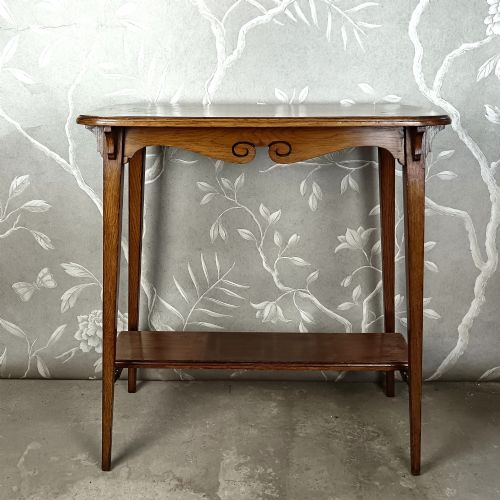

Small Oak Display Shelves
Small oak display shelves bring warmth and utility to a room, offering compact storage in periods from the eighteenth century to the twentieth.
Small Oak Display Shelves
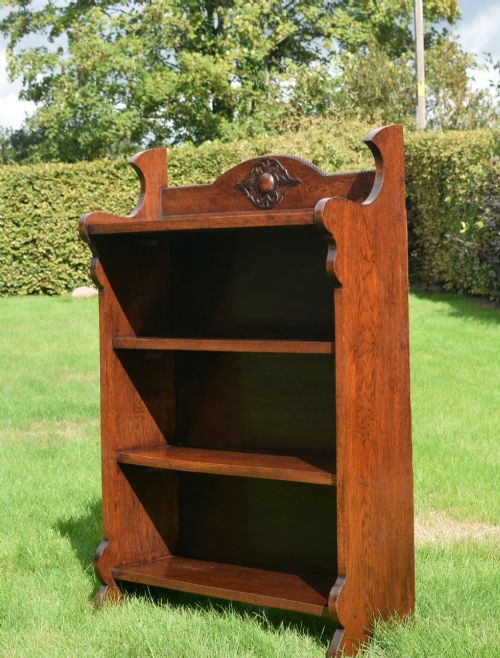
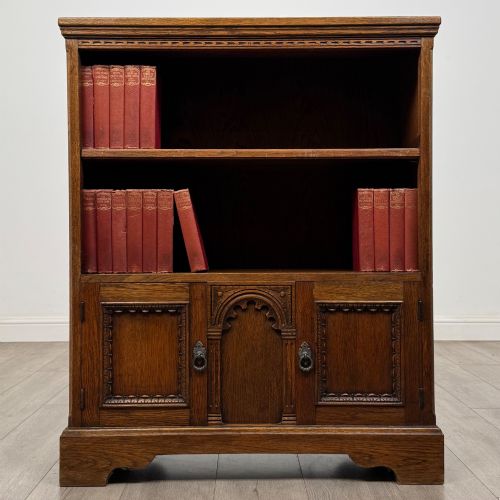
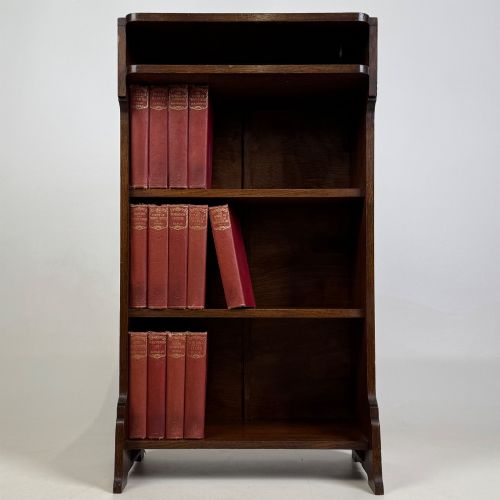
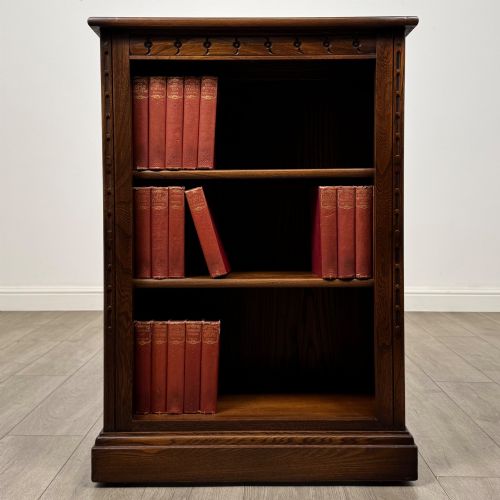
Small oak display shelves comprise bookcases, wall shelves, cabinets and plate racks constructed primarily from oak. They range from eighteenth-century hanging shelves to Edwardian and Art Deco open bookcases.
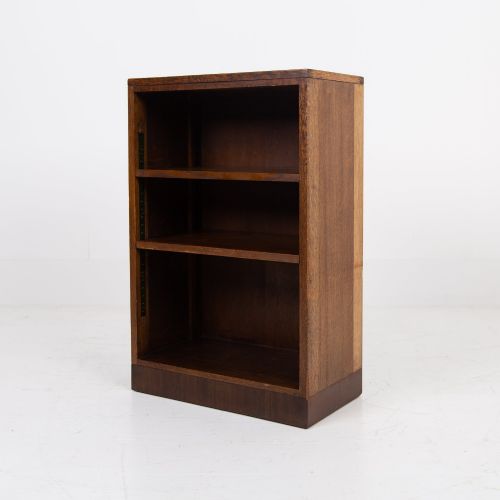
The pieces you encounter most frequently on this page date from the Edwardian era and the 1920s or 1930s. These domestic items served to hold books, plates and ornaments in hallways, reception rooms and studies.
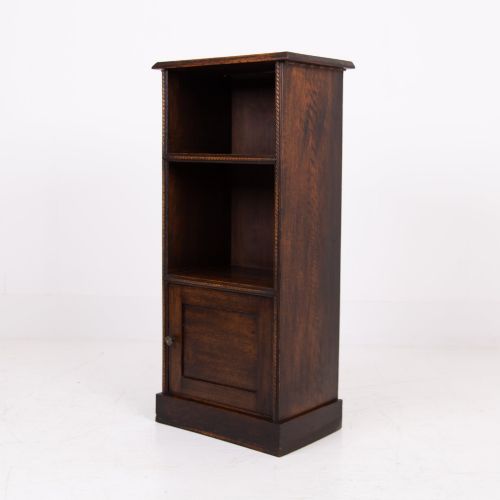
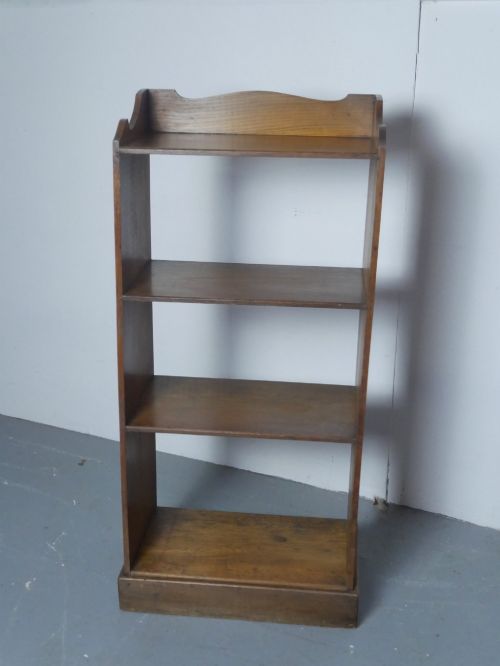
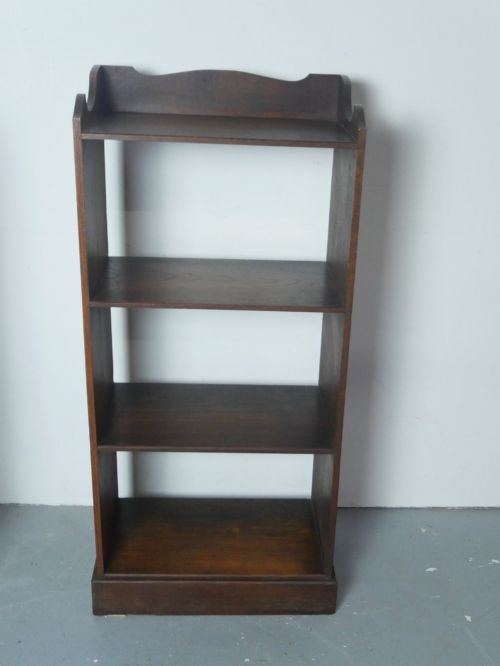
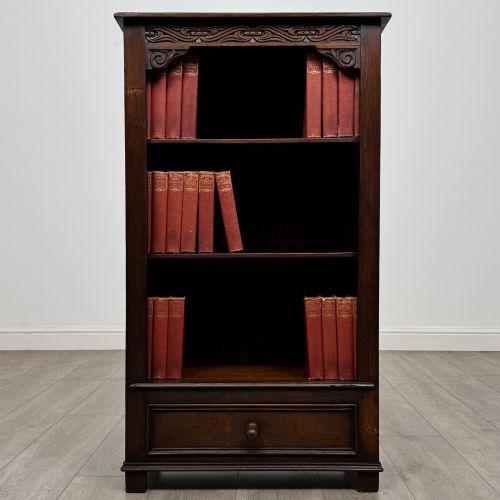
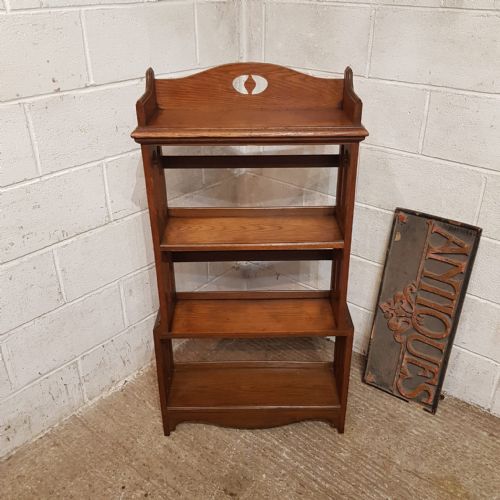
Forms vary from simple open standing shelves to tiered tables and wall cabinets with cupboards or glazed sections. Their compact proportions suit smaller spaces while maintaining practical storage capacity.
What varies in quality
Quality in these pieces depends upon the selection of timber and the integrity of the joinery rather than ornamentation alone. Dense, well-figured oak with careful grain matching elevates a simple open bookcase above standard utility furniture.
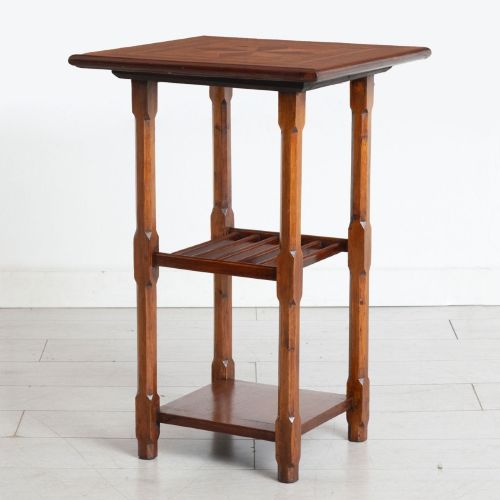
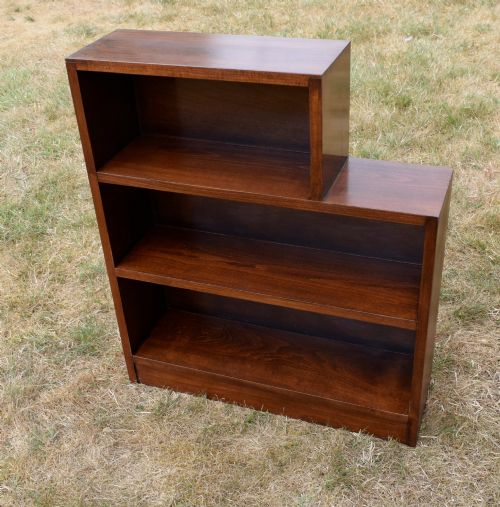
Proportion and execution distinguish finer examples, such as the clean geometry of an Art Deco stepped bookcase or the thoughtful hardware on an Arts and Crafts side table. The relationship between depth, height and shelf spacing dictates how successfully a piece holds its contents.
Some octagonal side tables manage to combine book storage with enough angles to confuse a wandering cat.
Betty Joel
The Small Oak Display Shelves Glossary
- Bookcase
- A piece of furniture with horizontal shelves for storing books. They appear as open structures or with integrated cupboards.
- Overmantel mirror
- A looking glass designed to hang on the wall above a fireplace mantel. These often incorporate small wooden shelves for display.
- Plate rack
- A wall-mounted or standing rack specifically designed to display plates upright. They utilise grooves and rails to secure the crockery.
- Jacobean Revival
- A nineteenth and twentieth-century style imitating seventeenth-century English furniture. It employs dark oak, turned supports and panelled decoration.
Small Oak Display Shelves: Frequently Asked Questions
Where should I place small oak shelves?
These compact pieces fit easily into hallways, studies and alcoves where floor space is limited. Their shallow depth allows them to hold books and objects without crowding a room.
Wall-mounted versions work well above sideboards or desks, while standing bookcases anchor empty corners and low tables sit beside seating.
How do I date an oak bookcase?
Dating relies on observing construction methods, timber preparation and stylistic details such as mouldings and hardware. Edwardian and 1920s pieces often show standardised timber dimensions and lighter golden oak finishes.
Earlier examples from the eighteenth and nineteenth centuries display hand-planed surfaces, pegged joints and denser, darker timber patination.
What is an Arts and Crafts shelf?
Arts and Crafts pieces emphasise simple construction, visible joinery and the natural grain of the timber. They reject heavy factory ornamentation in favour of honest craftsmanship.
You often see plain uprights, exposed tenons and subtle chamfered edges on these sturdy oak items.
Are these shelves suitable for heavy books?
Most small oak shelves are built from solid timber and easily support standard book collections. Open bookcases from the Edwardian and 1920s periods were designed specifically for domestic libraries.
For exceptionally heavy volumes, standing models with fixed shelves provide greater stability than hanging wall shelves.