


Small Library Shelf
A small library shelf provides accessible display for books and compact interiors, bringing timber grain and historic craft to tight spaces.
Small Library Shelf
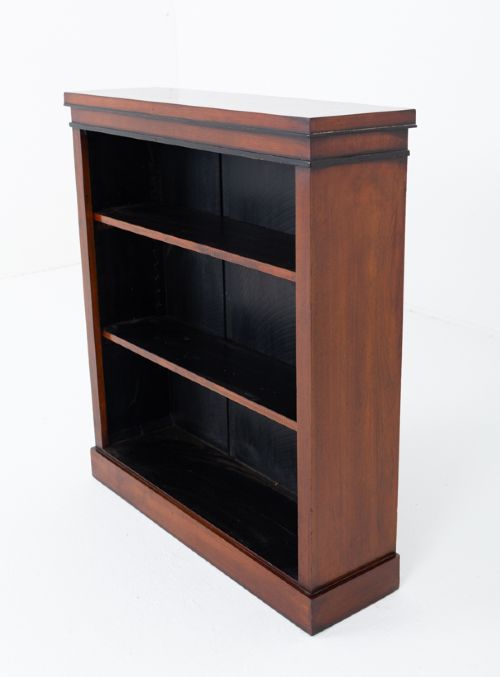
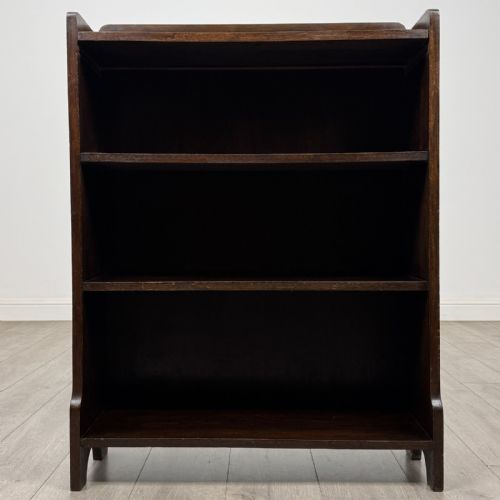
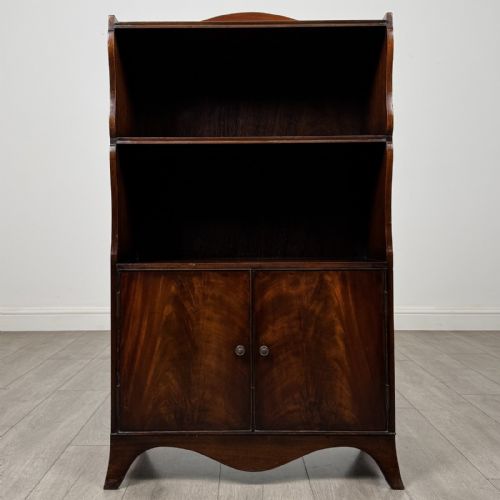
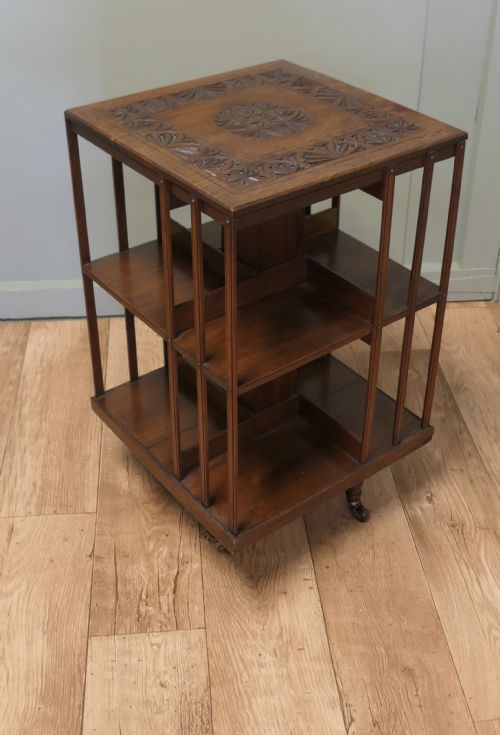
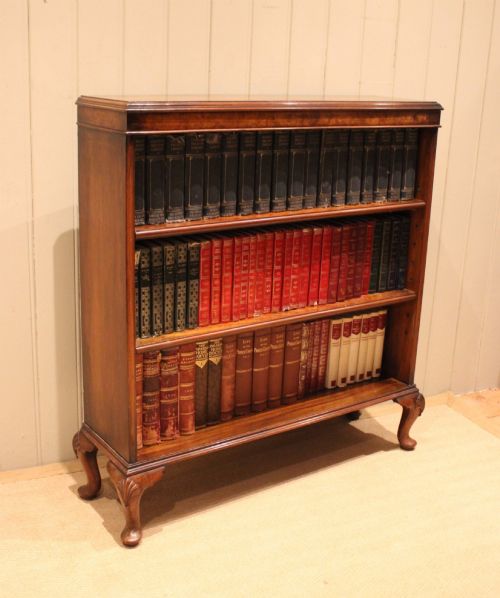
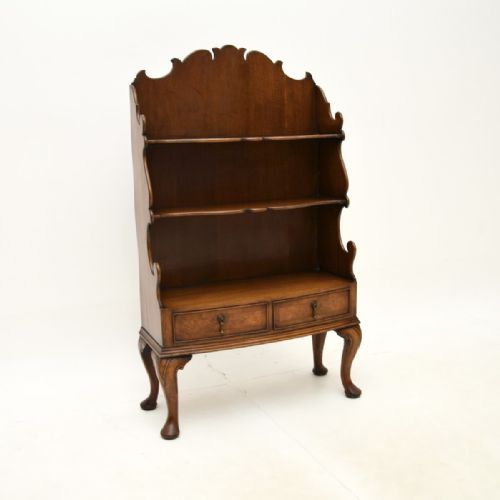
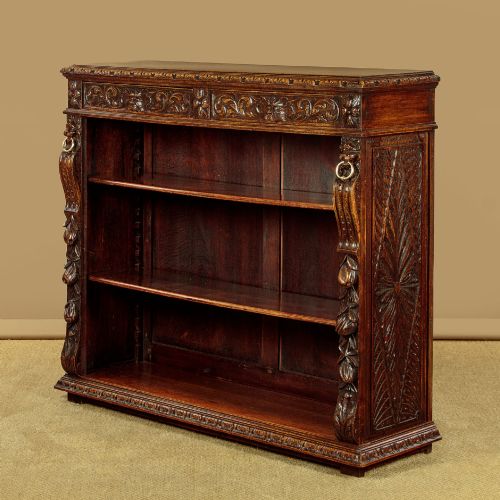
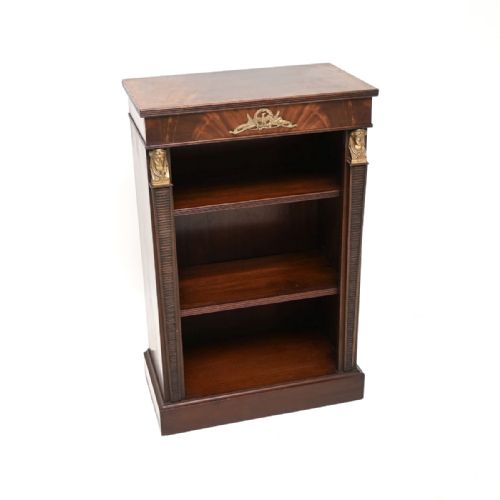
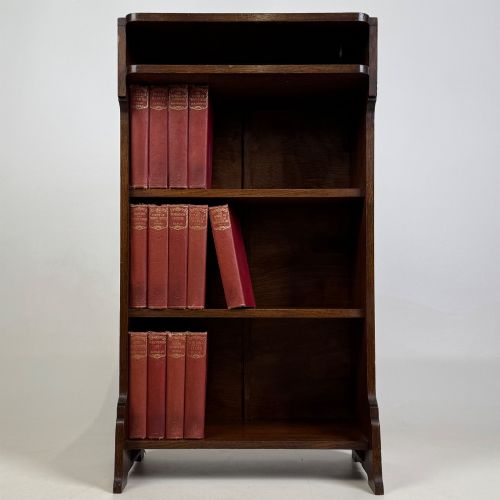
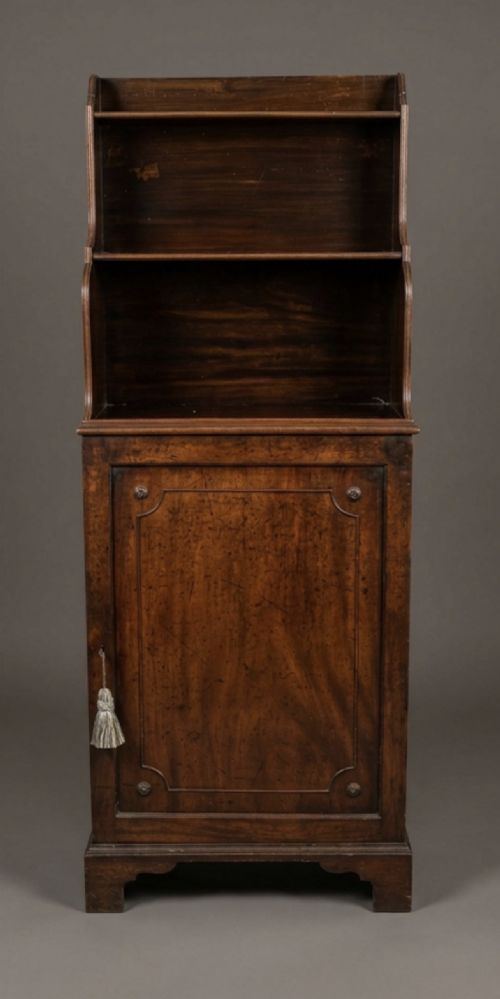
A small library shelf serves as a compact home for volumes and decorative objects, appearing most frequently on this page as an open mahogany or oak bookcase from the Victorian and Edwardian eras. These pieces range from simple two-tier revolving models to petite etageres and breakfront forms fitted with adjustable shelves or raised galleries.
Makers designed these items for studies, parlours and intimate rooms where full-height cases proved impractical. The selection spans straightforward utilitarian furniture alongside revivalist interpretations featuring carved edges, brass details and figured veneers.
How they were made
Cabinet makers built these pieces using solid timbers such as mahogany, oak and walnut, frequently applying flame mahogany veneer or burr walnut to prominent surfaces. Construction methods combined traditional joinery with brass fittings and glass elements, alongside specialised revolving mechanisms for circular or tiered table designs.
Surfaces received hand-applied finishes that highlighted natural grain patterns, while decorative variants incorporated carved woodwork, leather accents and Neoclassical Empire style motifs. Structural choices balanced the weight of heavy volumes against the need for slender, space-saving proportions.
Listings feature woods including mahogany, oak, walnut, burr walnut, partridge wood and satinwood.
What varies in quality
Quality rests upon the selection of timber and the precision of the joinery, distinguishing finely figured burr walnut and flame mahogany from plain utility boards. Superior examples exhibit balanced proportions, crisp carving on edges and galleries, and smoothly functioning adjustable shelving mechanisms.
The refinement of secondary woods and the integration of brass or leather details further separate standard commercial production from bespoke cabinet work. Greater care in matching veneers and finishing hidden surfaces elevates the standing of an individual piece.
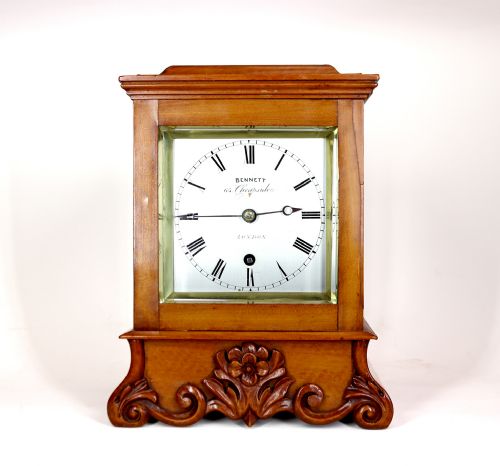
Sir John Bennett·McCabe London
The Small Library Shelf Glossary
- Open bookcase
- A piece of furniture designed for book storage featuring unobstructed front access rather than glazed or solid doors. These items often include adjustable internal timber shelves.
- Gallery
- A raised ornamental border running along the top edge of a shelf or cabinet top. This feature prevents small items from sliding off the surface.
- Etagere
- A set of open tiered shelves used for displaying ornaments and small volumes. They frequently appear in diminutive proportions suitable for corner placement.
- Revolving bookcase
- A compact shelving unit mounted on a rotating pivot base. This design allows users to access volumes from multiple angles in limited floor space.
- Breakfront
- A cabinet or bookcase whose central section projects forward from the flanking wings. This architectural arrangement adds visual depth to smaller wall elevations.
Small Library Shelf: Frequently Asked Questions
Where do I put a small library shelf?
These compact pieces fit easily into alcoves, beside seating areas, or along narrow hallways where full-sized bookcases overwhelm the room.
Their shallow depth allows them to hold books and display objects without obstructing natural walkways or diminishing the sense of space.
How do I adjust the shelves?
Many period bookcases utilise traditional wooden bearer systems or brass rack strips inset into the interior uprights.
By lifting the timber shelf slightly, you can reposition the brass clips or slide the board to accommodate taller volumes.
What is a revolving bookcase?
A revolving bookcase is a low or table-height shelving unit built around a central hidden pivot mechanism.
This clever design lets readers spin the entire tier to browse titles from a seated position without moving.
How do I date an oak bookcase?
Dating relies on examining the timber preparation, tool marks on hidden boards, and the prevailing style of the period.
Victorian and Edwardian examples often display machine-sawn backing boards and distinct revival motifs compared to earlier Georgian work.