


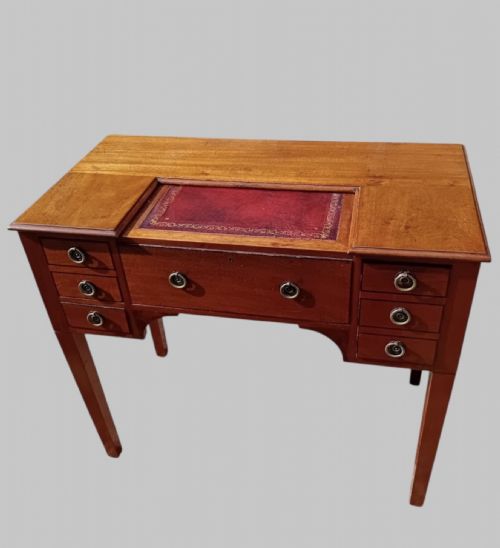


Small Leather Inset Table
These small leather inset table designs combine compact proportions with practical writing surfaces for everyday use.
Small Leather Inset Table
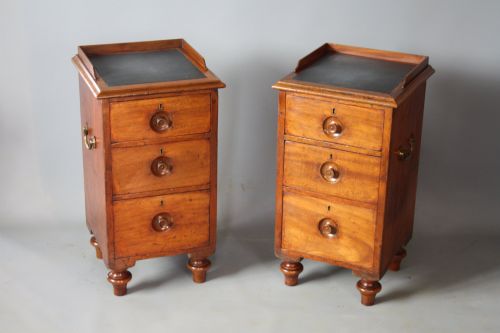
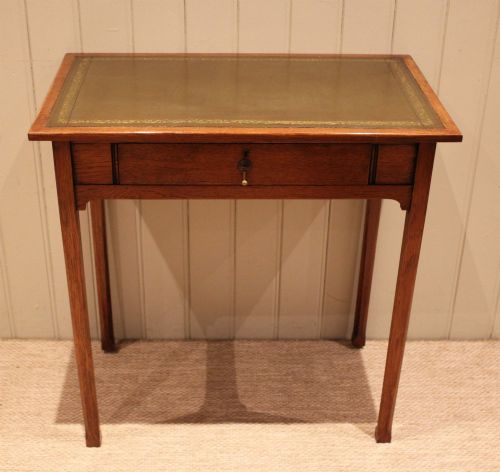
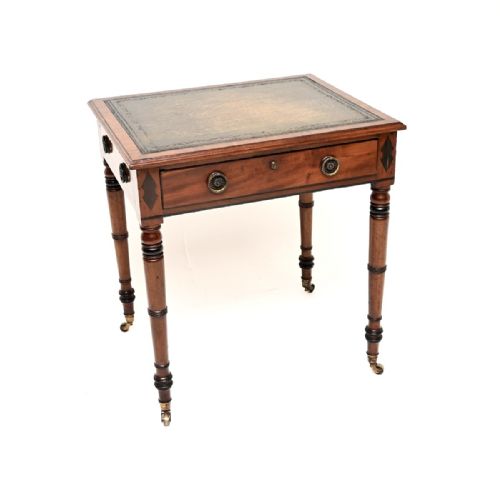
A small leather inset table serves primarily as a writing desk, side table or compact occasional piece. The pieces seen here span the nineteenth and early twentieth centuries, covering periods from the Georgian era through Victorian, Edwardian and Arts and Crafts designs.
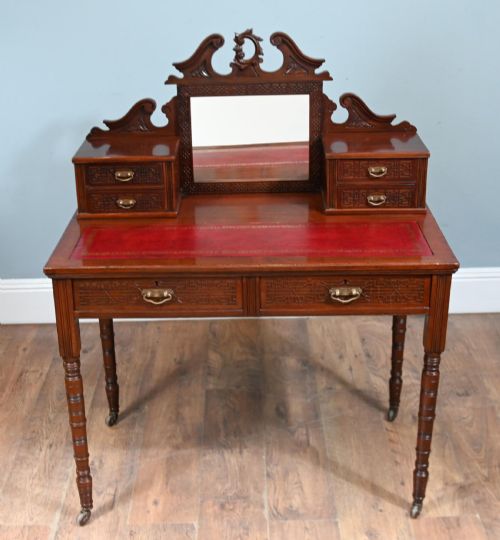
Most examples function as writing tables or ladies desks incorporating fitted drawers, leather slides or correspondence compartments. Mahogany and oak dominate the construction, accompanied by rosewood, satinwood and birdseye maple.
Buyers will find both formal Regency models and simpler Edwardian side tables sharing similar leather writing surfaces. These smaller dimensions suit modern rooms where floor space remains at a premium.
Materials and construction
Cabinet makers utilised dense timber stocks such as mahogany, oak and walnut for the primary frames and carcases. Secondary woods provided structural stability for drawer linings and internal dividers.
Table tops received inset panels of dyed or tooled leather, often highlighted with blind or gilt tooling along the perimeter. Brass handles, castors and escutcheons completed the functional hardware on these desks and tables.
Small Leather Inset Table Retail Price Guide 2026
Typical asking prices for small leather inset table among the pieces listed under this phrase on Sellingantiques today, from the lower quarter to the upper quarter. They describe what is for sale here now, not the wider market.
Some nineteenth century writing tables include secret compartments hidden behind false drawer linings for private correspondence.
Execution and detail
Finer pieces display select timber veneers, such as birdseye maple or figured mahogany, matched across drawer fronts and top surfaces. Simpler tables rely on solid oak or plain mahogany without decorative inlay.
Hardware quality ranges from heavy cast brass fittings to simpler stamped metal handles. The precision of drawer dovetails and the execution of the leather tooling distinguish workshop standards.
James Shoolbred·Heal and Son
The Small Leather Inset Table Glossary
- Leather inset
- A panel of treated hide fitted into a recessed section of a wooden table top to provide a writing surface. This surface is frequently decorated with gold tooling around the outer edge.
- Writing table
- A freestanding desk designed with a finished back and one or more drawers beneath the top. These pieces were used for correspondence and paperwork.
- Bonheur du jour
- A small lady's writing desk featuring a superstructure of small drawers and pigeonholes above the main writing surface. The form originated in France during the eighteenth century.
- Davenport
- A compact pedestal desk with a sloping writing lid and drawers opening to one side. The form became popular during the Victorian period.
- Drum table
- A circular library table with a deep frieze containing drawers, mounted on a central pillar and tripod base. Many examples feature leather inset tops.
Small Leather Inset Table: Frequently Asked Questions
What is a small leather inset table used for?
These tables provide a compact writing surface combined with occasional table utility in smaller rooms.
Many incorporate drawers for stationery or correspondence, making them practical for daily administrative tasks.
How do I date a leather inset writing table?
Timber choice, construction methods and hardware styles help determine the period of manufacture.
Victorian and Edwardian pieces often show machine-sawn timber elements, whereas earlier Georgian examples display hand-cut dovetails and simpler joinery.
Are these tables suitable for daily use?
The sturdy timber frames and durable leather writing surfaces withstand regular writing and placement of desk lamps.
Routine care involves treating the leather with appropriate dressings to prevent drying.
What is the difference between a desk and a side table?
Desks typically incorporate fitted drawers, writing slides or internal compartments specifically intended for paperwork.
Side tables offer a flat surface with fewer or no drawers, serving broader display and occasional functions.