



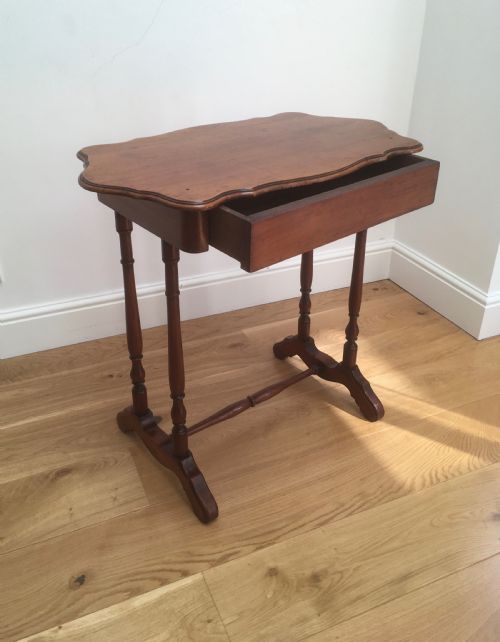


Small Hallway Console
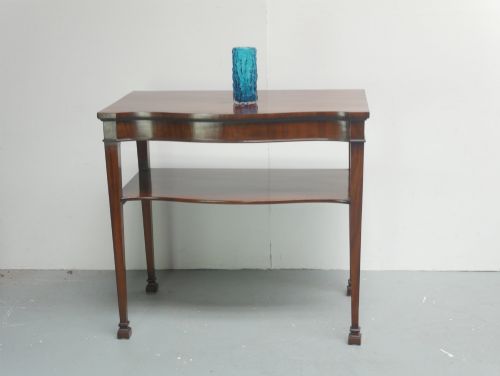
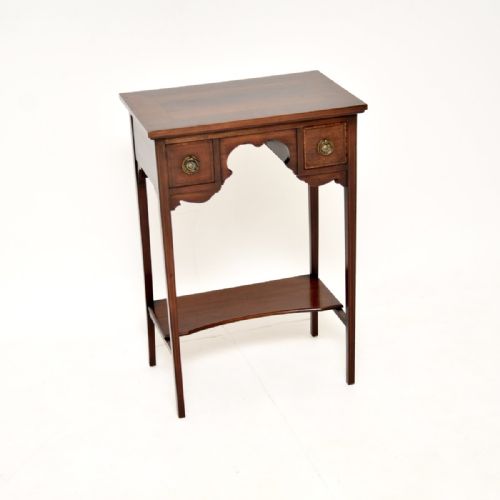
A small hallway console is a narrow ledge for tight passages, mostly met here in mahogany or oak from the Victorian and Edwardian eras.
Small Hallway Console
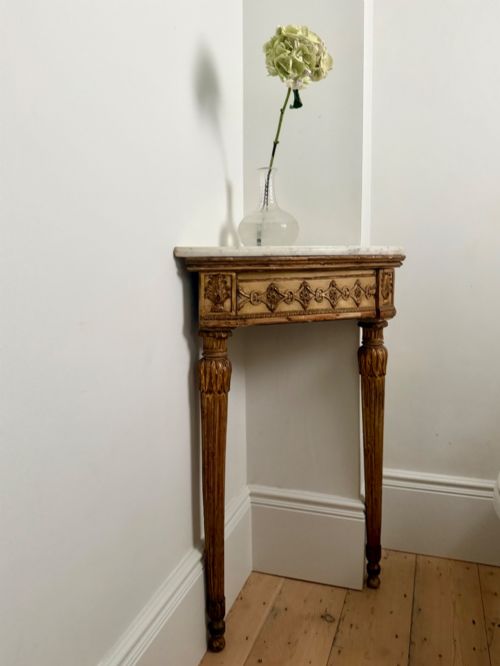
A small hallway console brings surface space to narrow passages and reception rooms without blocking the floor. When you search for a small hallway console, you are looking at items primarily recorded as console tables, side tables, and lowboys from the Georgian, Victorian, and Edwardian periods.
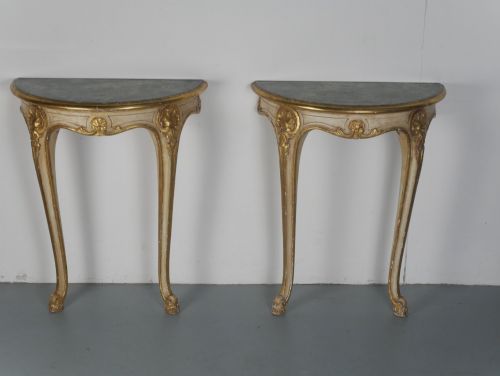
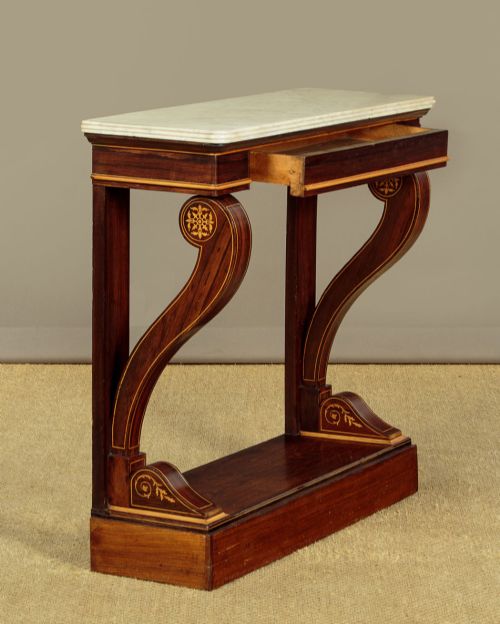
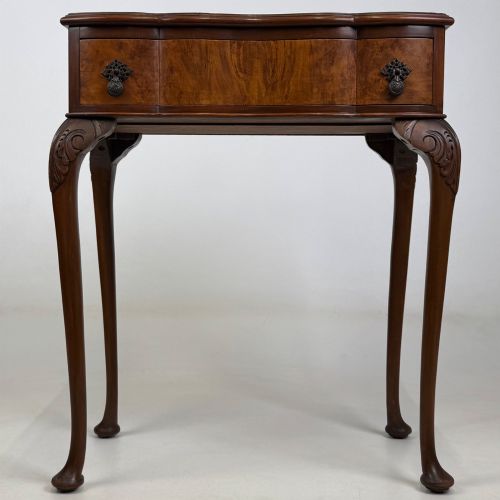
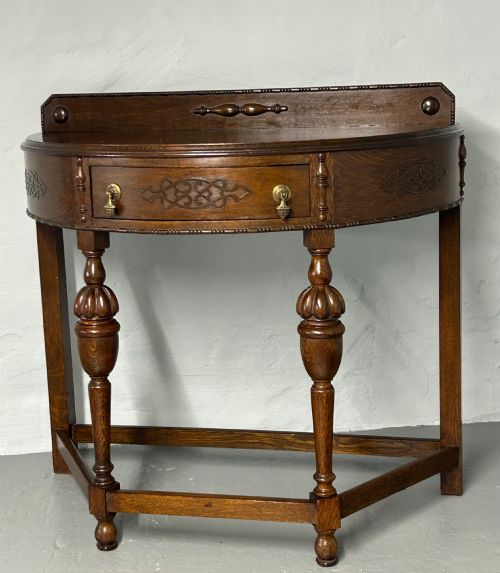
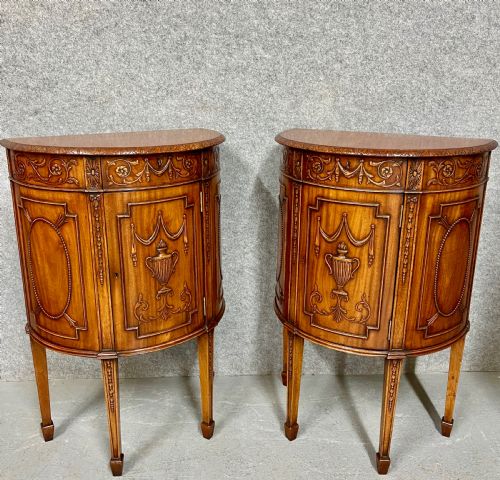
The most common versions met on this page are mahogany side tables and console tables, often featuring single drawers or shaped tops. Examples span from Georgian pine bowfront sideboards to Edwardian walnut and oak pieces, along with demilune shapes and occasional marble-topped designs.
Origins range across the nineteenth and early twentieth centuries, including Georgian, Victorian, Edwardian, and later revivals. These slender formats serve to furnish hallways and compact reception areas where deeper furniture simply will not fit.
What varies in quality
Figure and grain selection separate standard joinery from finer examples, particularly in figured mahogany and burr walnut surfaces. The crispness of wood inlay and the proportion of narrow console frames dictate the refinement of the piece.
Original material combinations, such as fitted marble tops paired with matching pier mirrors, represent the higher tier of these narrow tables. Maker attribution and disciplined neoclassical or Georgian styling further distinguish individual items.
Small Hallway Console Retail Price Guide 2026
Typical asking prices for small hallway console among the pieces listed under this phrase on Sellingantiques today, from the lower quarter to the upper quarter. They describe what is for sale here now, not the wider market.
Several demilune tables come in matched pairs, proving even furniture enjoys travelling with a companion.
Druce and Co·Heal and Son
The Small Hallway Console Glossary
- Console table
- A table designed to stand against a wall, frequently fixed or supported by brackets, utilised in narrow spaces.
- Lowboy
- A small eighteenth-century English table with one or more drawers, often standing on cabriole or straight legs.
- Demi-lune
- A half-moon shape used for tables and sideboards designed to fit flush against a wall.
- Cabriole leg
- A furniture leg that curves out and then in, resembling the leg of an animal, common in period seating and tables.
- Pier mirror
- A tall mirror designed to hang on the wall between windows, frequently matched with a console table beneath.
Small Hallway Console: Frequently Asked Questions
Where should I put a console table?
These narrow tables suit entrance halls, reception spaces, and tight corridors where floor area is restricted. Their shallow depth allows passage past them without obstruction.
They also function in sitting rooms as side tables or against empty wall stretches beneath mirrors.
What is the difference between a console and a side table?
Console tables historically fastened to walls or stood upon brackets, whereas side tables stand independently on four legs. In modern usage, the terms often overlap for narrow furniture.
Both formats provide surface space in hallways and reception rooms across the Victorian and Edwardian periods.
How do I identify a Victorian hallway table?
Victorian examples frequently utilise dark mahogany or walnut, sometimes incorporating heavy marble tops or single storage drawers. Look at the timber grain and construction details to gauge the nineteenth-century origin.
Proportions tend to be sturdy, reflecting the domestic architecture of the period.
Can I use a small console as a desk?
Certain narrow tables recorded in the listings double as writing tables or home office desks with single drawers. Check the clearance underneath to ensure your knees fit comfortably.
Writing tables from the Victorian era were specifically built for correspondence in smaller rooms.