

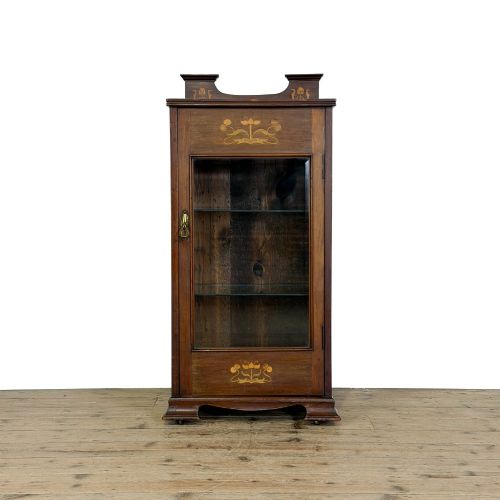
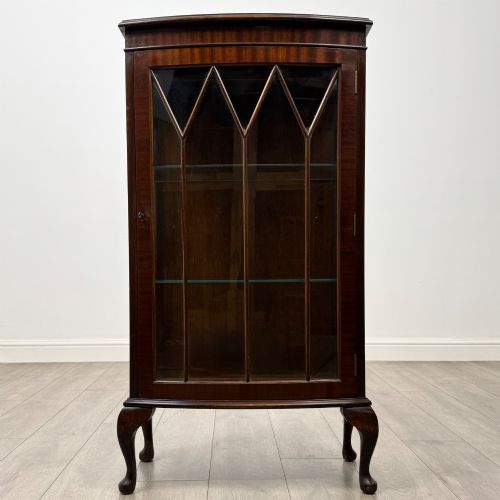
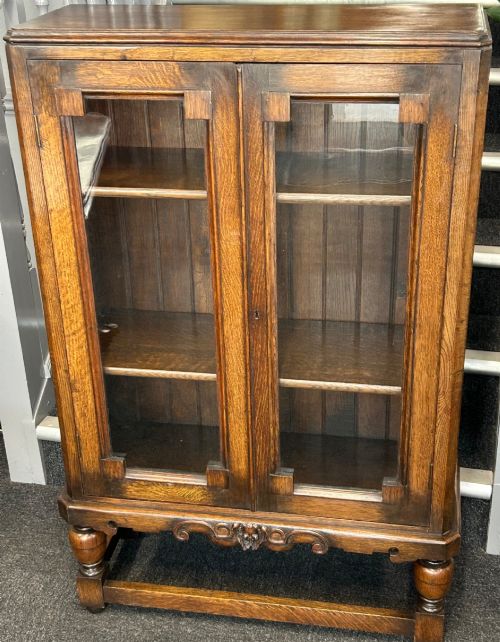
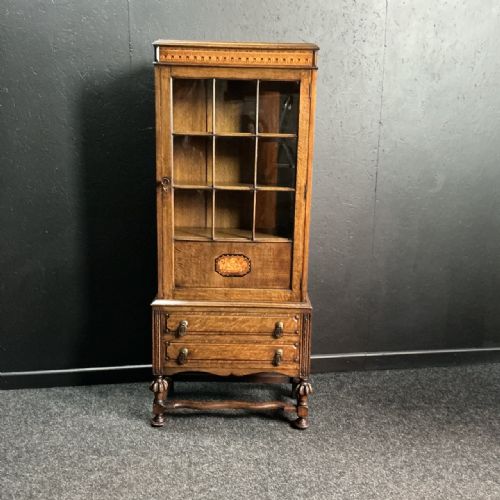


Small Edwardian China Cupboard
A small edwardian china cupboard brings understated display space into a room, offering glazed panels and fitted timber shelving for treasured collections.
Small Edwardian China Cupboard
A small edwardian china cupboard takes the form of compact display cabinets, floor bookcases, and side cabinets designed to showcase porcelain and glassware within domestic spaces. These pieces emerge primarily from the Edwardian era alongside surrounding periods like 1900, 1910, and 1920, aligning with Edwardian, Georgian Revival, Arts and Crafts, Art Nouveau, Jacobean Revival, Sheraton Revival, and George III styles.
How they were made
Makers construct these cabinets principally in mahogany and oak, applying wood inlay and satinwood details to enrich the exterior surfaces. Brass hardware secures the doors and provides functional hinges and handles.
Glass panels are fitted into wooden frames to form the glazed doors, occasionally supported by lead work. Fabric linings sometimes appear within the interior display compartments to soften the background behind china and glassware.
Small Edwardian China Cupboard Retail Price Guide 2026
Typical asking prices for small edwardian china cupboard among the pieces listed under this phrase on Sellingantiques today, from the lower quarter to the upper quarter. They describe what is for sale here now, not the wider market.
Listings span the Edwardian period alongside pieces dated to 1880, 1900, 1910, and 1920.
What varies in quality
The sophistication of the timber selection and decorative detailing establishes the distinction between standard examples and finer pieces. Cabinets featuring deliberate wood inlay, satinwood accents, and refined proportions reflect a higher tier of cabinetmaking.
Structural integrity and the clarity of the original glass panes further differentiate the pieces. Clean joinery in the oak and mahogany frameworks ensures longevity and preserves the intended aesthetic of the revival styles.
The Small Edwardian China Cupboard Glossary
- Glazed cabinet
- A storage piece featuring glass panels set into the doors or sides to display contents. This design protects objects from dust while keeping them visible.
- Inlay
- A decorative technique where pieces of contrasting wood, such as satinwood, are inserted into the primary timber surface. It creates geometric or floral patterns.
- Revival style
- An architectural or decorative approach that looks back to historical periods like the Georgian or Jacobean eras. These designs adapt older motifs for twentieth-century homes.
- Floor bookcase
- A tall or mid-height shelving unit designed to rest directly on the floor. Many variations incorporate glazed doors to function simultaneously as display cabinets.
Small Edwardian China Cupboard: Frequently Asked Questions
Where should I place a small display cabinet?
These compact cabinets suit living rooms, dining spaces, or hallways where floor space is at a premium. Their modest proportions allow them to fit neatly into corners or against shorter walls.
Position them away from direct sunlight to protect the timber finishes and any displayed ceramics or glassware from fading over time.
How do I clean the wooden surfaces?
Dust the mahogany and oak regularly with a soft, dry cloth to prevent buildup. Avoid modern silicone polishes, which can damage traditional finishes.
Applying a quality beeswax periodically will nourish the wood and maintain its natural lustre without leaving a heavy residue.
Can these cabinets hold heavy books?
Many Edwardian pieces double as bookcases with sturdy wooden shelving. Check the thickness and support of the internal shelves before loading them with heavy volumes.
Lighter collections of china, glassware, or paperbacks are best suited to the original internal layouts of these smaller display units.
How do I identify Edwardian style?
Edwardian furniture often combines lighter proportions with revivals of earlier eighteenth-century designs. Look for Sheraton or Georgian influences paired with refined inlay work.
The materials typically feature mahogany and oak, often accompanied by delicate brass hardware and clear glass panels.