

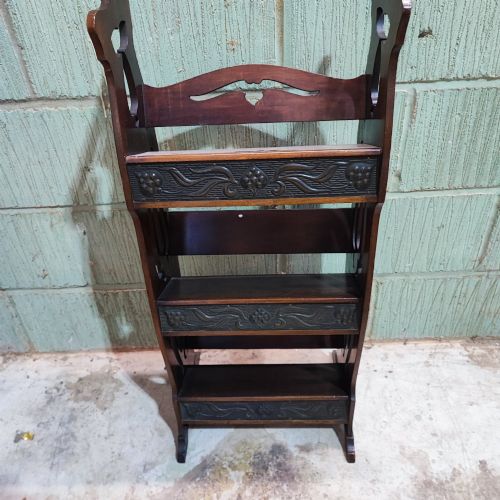
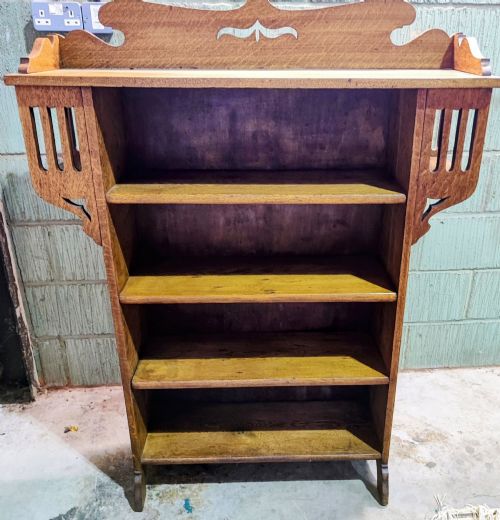
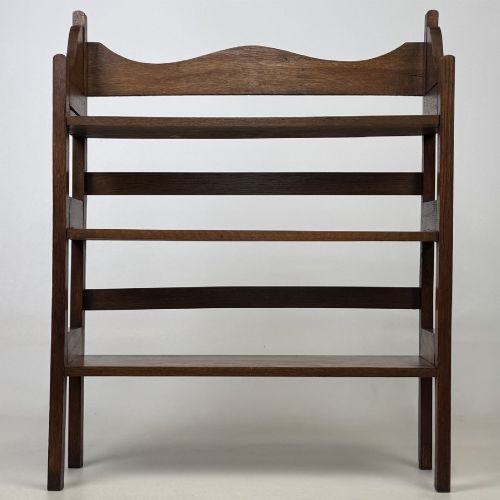
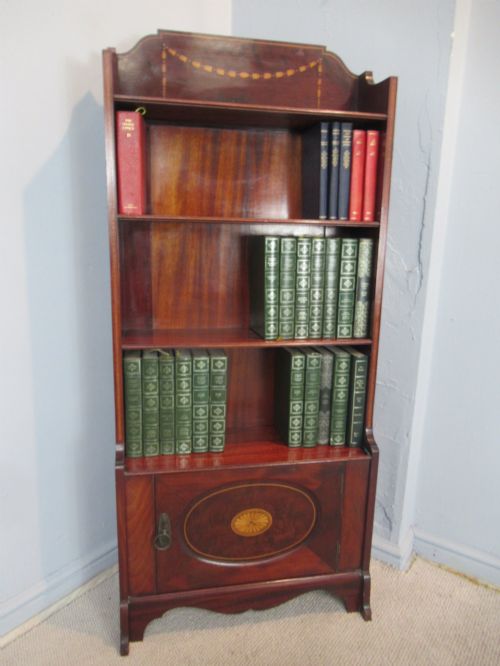
Small Edwardian Bookcase
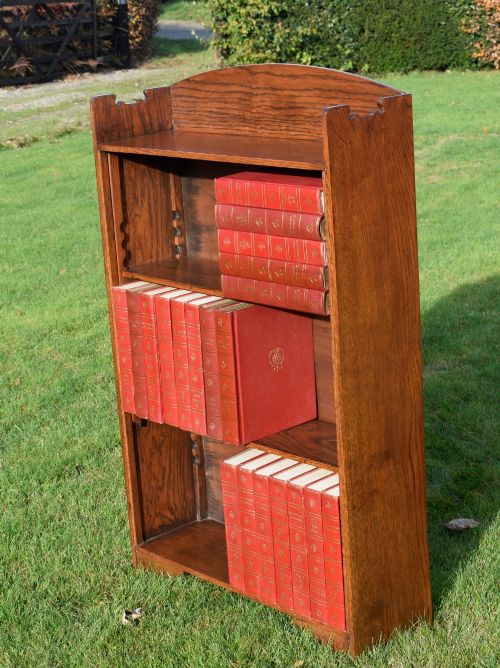
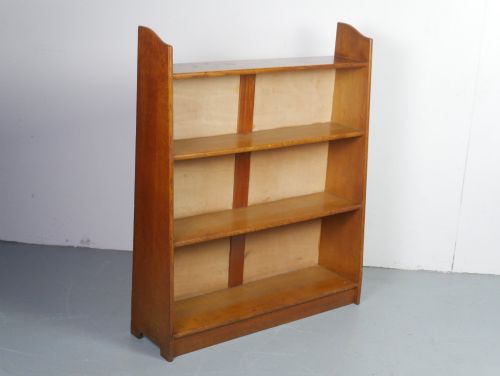
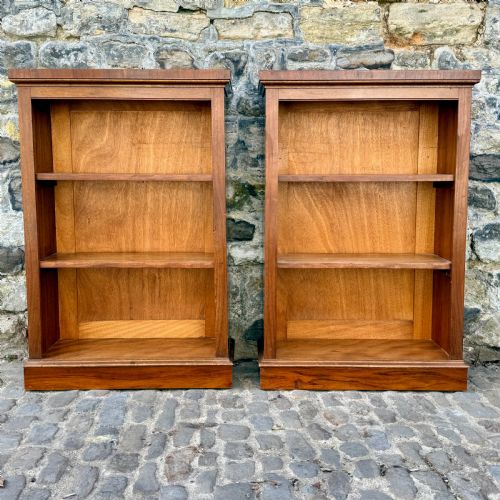
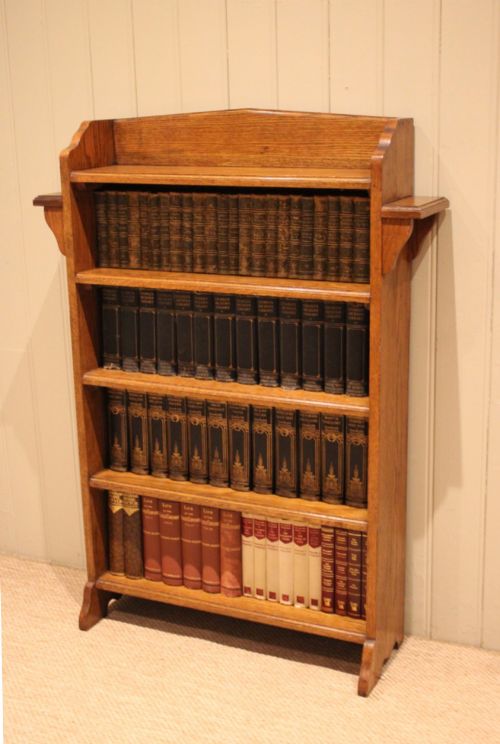
A small edwardian bookcase offers compact shelving for tight spaces, blending functional timber storage with period character.
Small Edwardian Bookcase
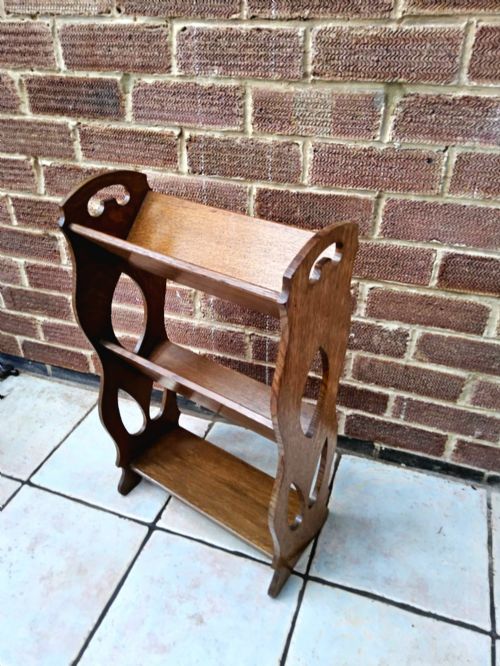
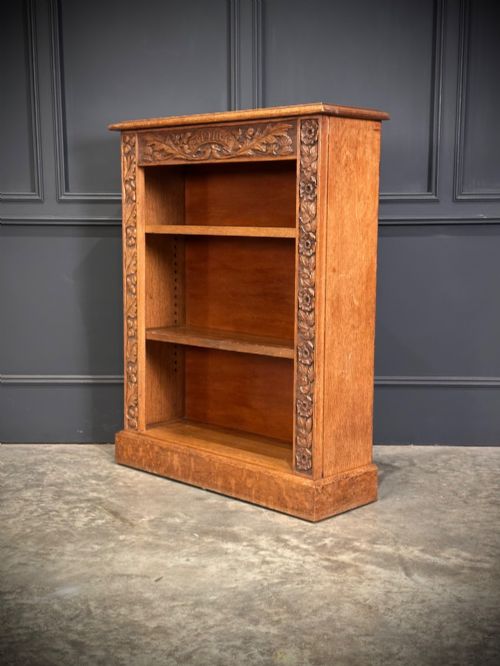
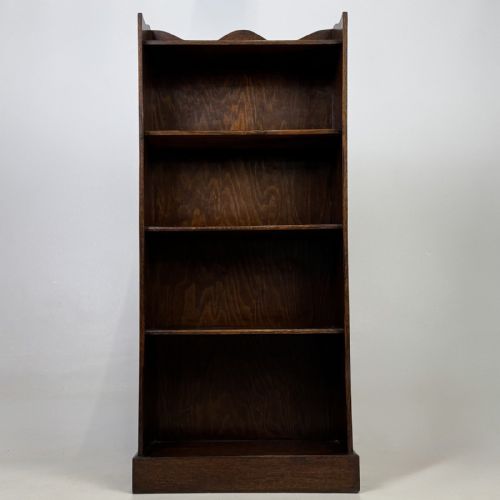
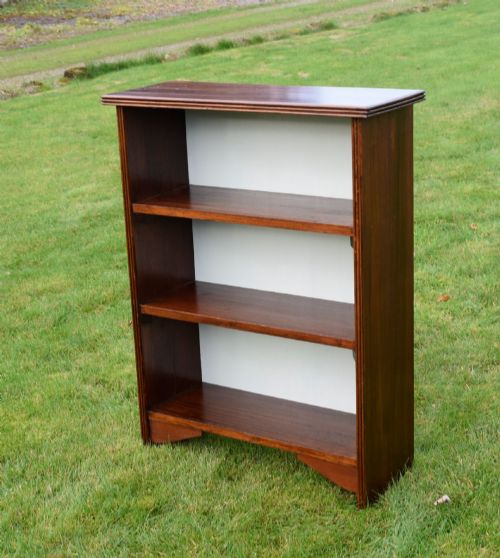
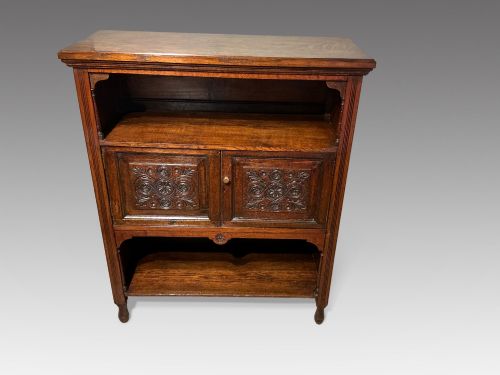
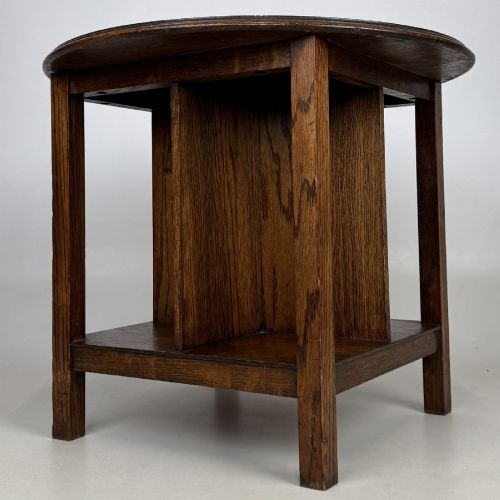
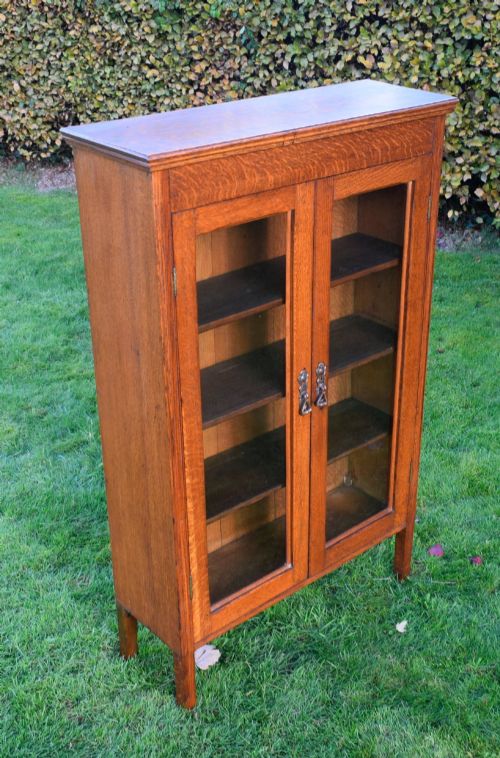
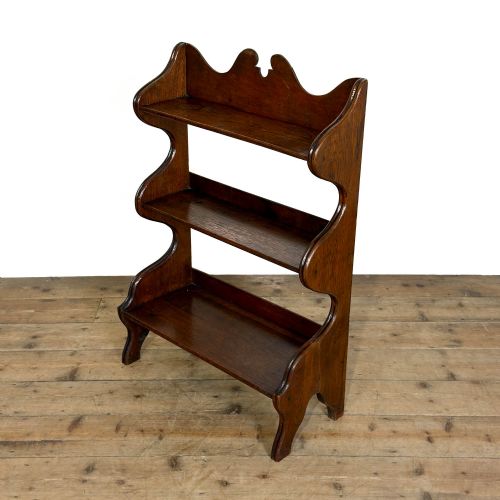
When searching for a small edwardian bookcase, a buyer encounters pieces designed for compact rooms, spanning open shelf formats, glazed display cabinets, and revolving versions. The selection includes dwarf oak cabinets, narrow mahogany designs, and items featuring raised galleries or shaped sides.
Most examples originate from the early twentieth century, alongside related pieces from the Victorian era and the 1920s. These items serve to house modest libraries while adding period presence to studies, halls, and sitting rooms.
Materials and construction
Construction relies primarily on oak and mahogany, frequently complemented by walnut, satinwood, and rosewood veneers. Structural integrity is supported by iron elements and brass fittings, including castors.
Surface finish and detailing involve marquetry inlay, carved edges, beaded borders, and glazed doors. Revolving mechanisms employ internal timber frames to allow smooth rotation of the tiers.
Small Edwardian Bookcase Retail Price Guide 2026
Typical asking prices for small edwardian bookcase among the pieces listed under this phrase on Sellingantiques today, from the lower quarter to the upper quarter. They describe what is for sale here now, not the wider market.
Some revolving bookcases turn smoothly on hidden iron cross frames, making book selection feel like a quiet playground ride.
Factors that define quality
Quality rests on the selection of timber, such as burr walnut or figured mahogany, and the precision of marquetry inlay. Superior examples display crisp carving on edges and gallery tops rather than plain mouldings.
Construction methods distinguish finer items, evident in tight joinery, original brass hardware, and the smooth operation of revolving tiers or fitted doors.
The Small Edwardian Bookcase Glossary
- Gallery
- A raised ornamental border around the top shelf of a bookcase or cabinet. It prevents items from sliding off the edge.
- Marquetry
- Decorative inlay work using various woods to create intricate patterns. This technique embellishes the surfaces of cabinets and bookcases.
- Pier cabinet
- A slender cabinet designed to fit into narrow wall spaces between windows or doors. These pieces often feature glazed doors for display.
- Revolving bookcase
- A freestanding bookcase built on a rotating base. It allows access to books from multiple angles in a compact footprint.
- Waterfall bookcase
- A tiered set of open shelves where each level steps back from the one below. The design creates a cascading profile.
Small Edwardian Bookcase: Frequently Asked Questions
Where do I put a small edwardian bookcase?
These compact pieces fit easily into alcoves, narrow hallways, or beside a fireside chair where floor space is limited. Their modest proportions allow them to hold a working collection of books without dominating the room.
They also sit comfortably on tabletops or serve as low display surfaces for small ornaments and collected volumes.
How do I care for the timber?
Keep wooden surfaces away from direct heat sources and strong sunlight to prevent the timber and veneers from drying out or fading. Regular dusting with a soft, dry cloth preserves the polished finish.
Apply a traditional beeswax polish occasionally to nourish the wood and maintain its natural lustre without building up heavy residue.
Are these bookcases sturdy enough for heavy books?
Solid oak and mahogany versions offer robust support for standard hardbacks and reference volumes. The fixed or adjustable shelves are built to handle everyday use.
It remains sensible to distribute heavier volumes across the lower shelves to maintain overall balance and stability.
How do I identify the Edwardian period?
Edwardian pieces date from the reign of King Edward VII, spanning the early years of the twentieth century. They often combine lighter timbers and simpler lines than heavy Victorian furniture.
Look for refined proportions, subtle inlay work, and stylistic links to the Arts and Crafts movement alongside traditional cabinetmaking.