






Small Corner Unit
A small corner unit solves awkward wall junctions cleanly, offering period timber storage that reclaims dead room without cluttering the floor.
Small Corner Unit
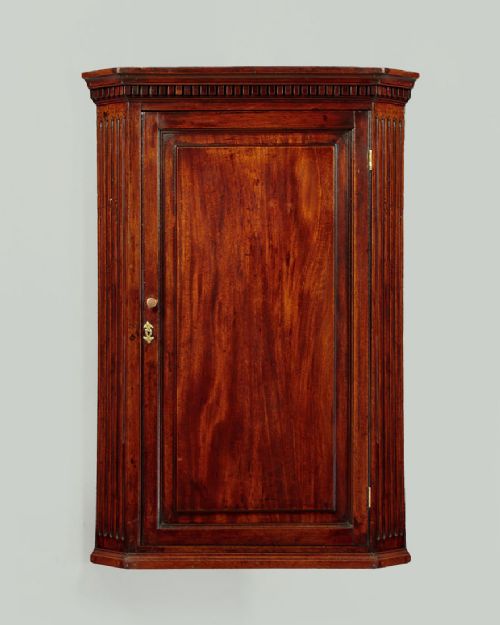
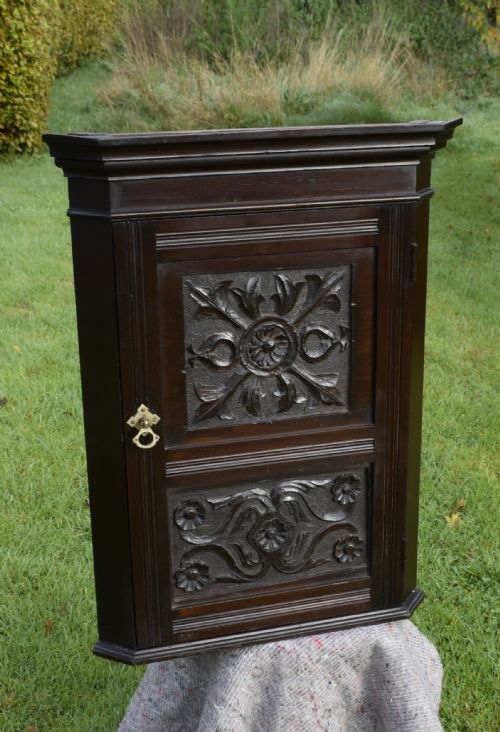
A small corner unit takes the form of a wall-mounted cupboard or cabinet designed specifically to fit the ninety-degree angle of a room. These pieces utilise vertical wall space that otherwise stands empty, turning neglected junctions into practical storage.
Most examples found here date from the eighteenth and nineteenth centuries, spanning Georgian, Victorian, and Edwardian periods. They appear predominantly as hanging corner cupboards, frequently constructed in pine, mahogany, or oak.
Makers shaped these cabinets for domestic interiors needing compact display or enclosed storage. The format bridges utilitarian hanging cupboards and refined display cabinets with glazed doors or tambour fronts.
How they were made
Cabinet makers built these units primarily using solid timbers like mahogany, oak, and pine, often applying burr walnut veneers or decorative inlay wood to more formal surfaces. Structural joints relied on traditional woodworking techniques suited to heavy hanging loads.
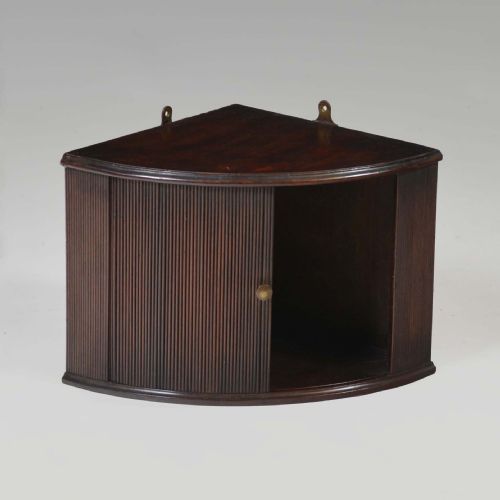
Glazing bars divided small glass panes on display variants, while specialised mechanisms such as tambour fronts appeared on refined Georgian iterations. Brass hardware, including hinges and escutcheons, secured doors and added functional detail.
Small Corner Unit Retail Price Guide 2026
Typical asking prices for small corner unit among the pieces listed under this phrase on Sellingantiques today, from the lower quarter to the upper quarter. They describe what is for sale here now, not the wider market.
A tambour door rolls open like a miniature roller shutter, proving that eighteenth-century makers loved clever mechanical tricks just as much as we do.
What varies in quality
Quality rests upon the choice of timber and the precision of the joinery at the wall-meeting edges. Finer versions exhibit figured mahogany or burr walnut veneers with delicate string inlay, whereas utility pieces utilise plain painted or unpainted pine.
Interior fitments also distinguish standard cupboards from superior examples. Fitted shelving contours, original brass hardware, and intact glazed panels elevate a piece beyond basic utilitarian storage.
The Small Corner Unit Glossary
- Hanging corner cupboard
- A wall-mounted cabinet enclosed by a single door, built with straight sides that meet at a right angle to fit room corners. These units keep floor space completely clear.
- Tambour front
- A flexible door constructed from narrow vertical strips of wood glued to a canvas backing, allowing it to slide smoothly around a curved track. This mechanism appears on select Georgian storage pieces.
- Glazing bars
- Slender strips of wood forming a framework that holds individual panes of glass within a door. These bars create distinct geometric patterns across display cabinet fronts.
- String inlay
- A narrow, contrasting band of wood set flush into the surface veneer to form decorative borders. Cabinet makers utilised this technique on formal Georgian and Edwardian furniture.
- Burr walnut
- Timber taken from a tree growth deformity that produces intricate, swirling grain patterns. Craftsmen prized this wood for high-status cabinet facades.
Small Corner Unit: Frequently Asked Questions
Where should I hang a corner unit?
These cabinets suit dining rooms, kitchens, or hallways where empty wall angles allow the piece to anchor the room visually without obstructing movement.
Ensure the wall construction supports the weight of timber and contents before mounting securely at eye level or slightly above.
How do I date an antique corner cupboard?
Examine the secondary woods inside the carcass, the style of the hinges, and the construction methods used for the door framing and shelves. Eighteenth-century examples often feature hand-cut dovetails and pegged joints, whereas later Victorian and Edwardian pieces show machine-sawn elements.
Timber choice also signals the period, with native oak and pine common in earlier vernacular pieces and exotic mahogany dominating formal Georgian work.
Are these units difficult to hang securely?
Hanging requires locating solid wall studs or using heavy-duty fixings suited to brick or plaster. Because the cabinet sides meet at a right angle, the weight distributes back toward the corner.
Most pieces feature original internal hanging brackets or sturdy backboards designed for secure wall attachment.
What is the difference between a cupboard and a cabinet?
Cupboards generally feature solid wooden doors enclosing plain shelving for concealed storage. Cabinets often incorporate glazed doors designed specifically for displaying glassware and ceramics.
Both formats share the same triangular plan designed to tuck neatly into room angles.