

Small Book Shelf
A small book shelf is a compact domestic fixture designed to organise modest volumes while occupying minimal floor or wall space.
Small Book Shelf
A small book shelf encompasses compact open bookcases, wall-hanging shelf racks, revolving stands, and tiered whatnots designed for domestic libraries. These pieces emerge primarily from Victorian, Edwardian, and 1930s periods, reflecting the domestic scaling of their respective eras.
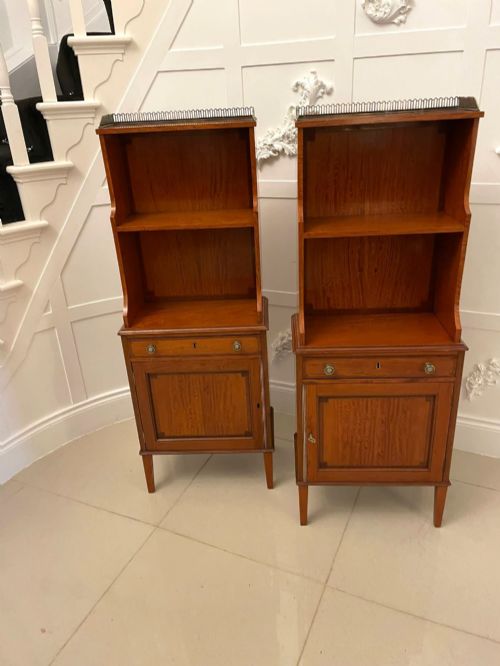
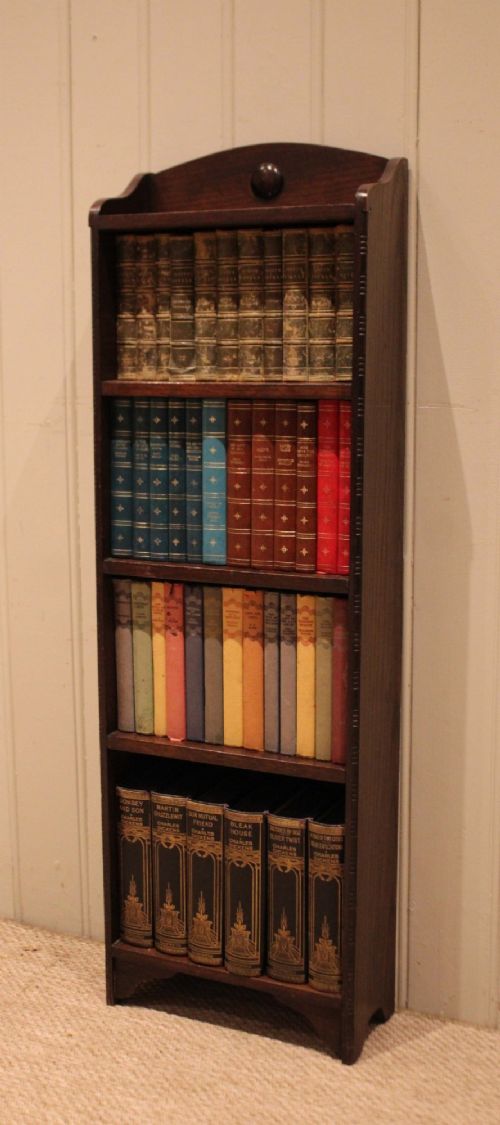
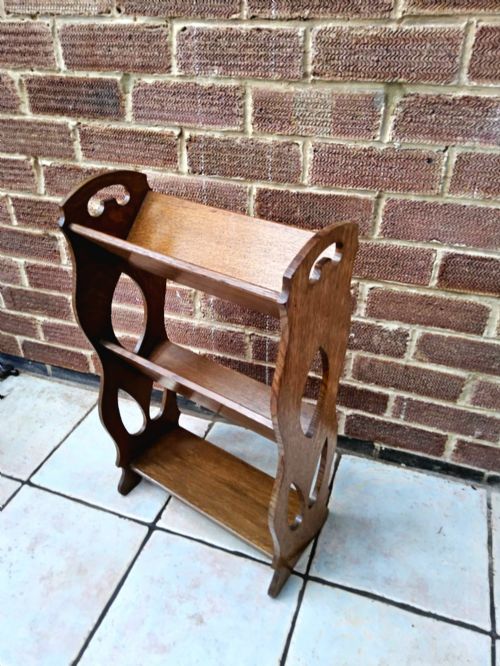
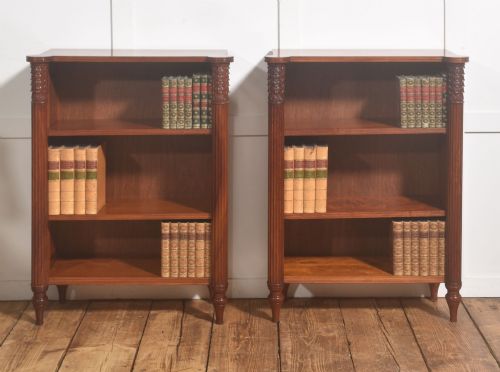
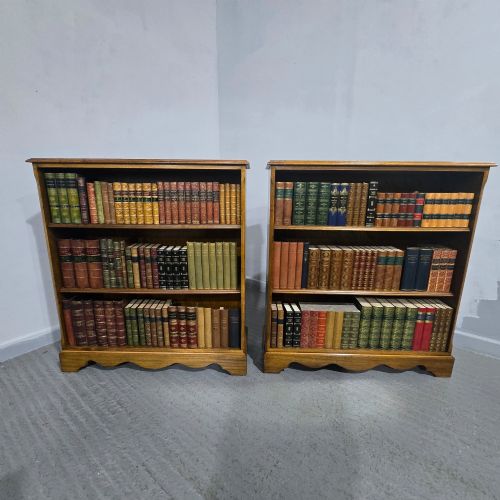
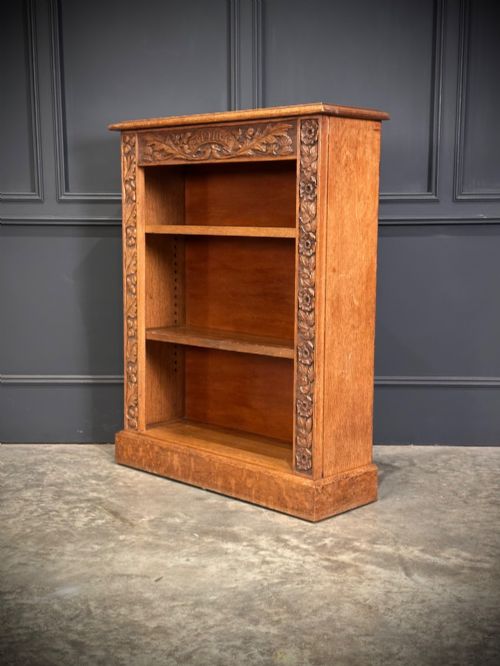
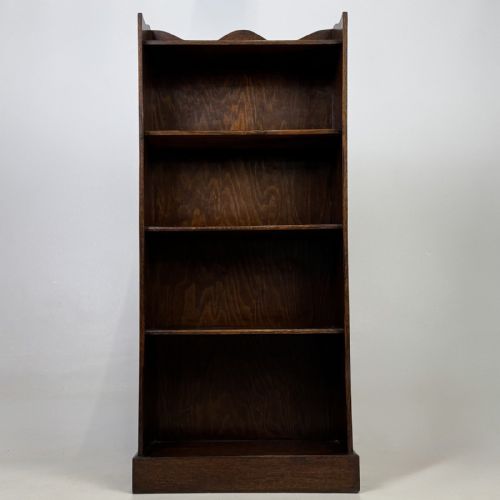
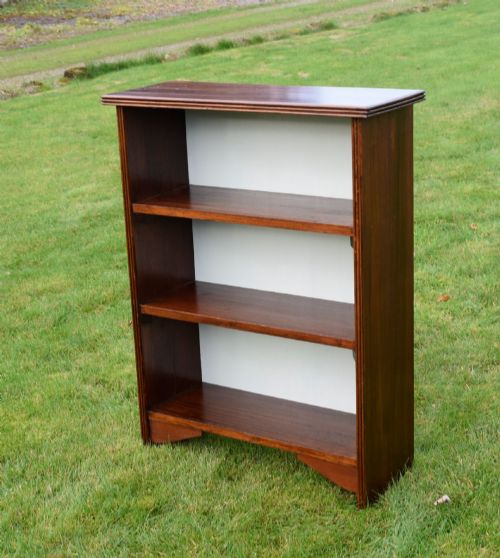
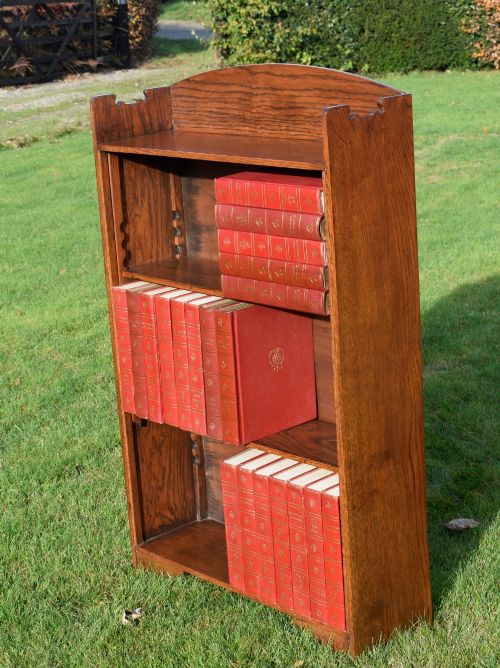
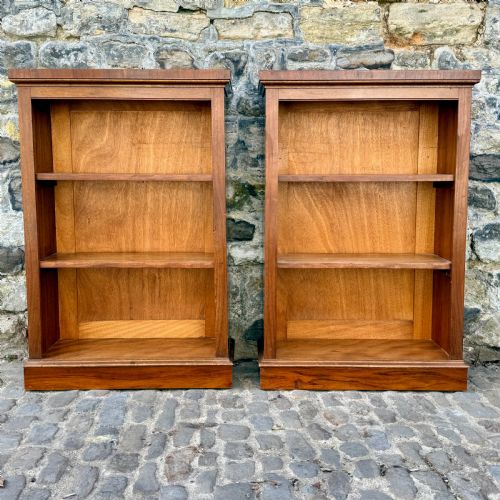
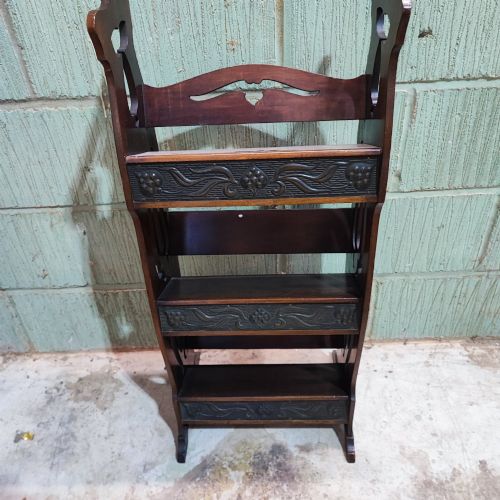
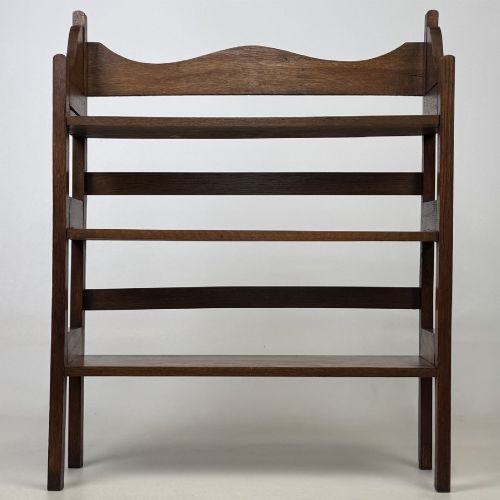
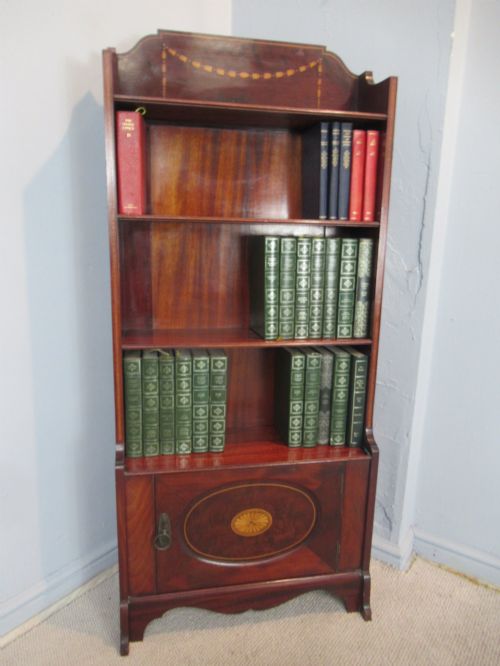
The inventory on this page is dominated by oak and mahogany open configurations, alongside rosewood and burr walnut variants. Buyers frequently encounter Edwardian and Arts & Crafts interpretations featuring raised galleries, shaped sides, or iron cross bracing.
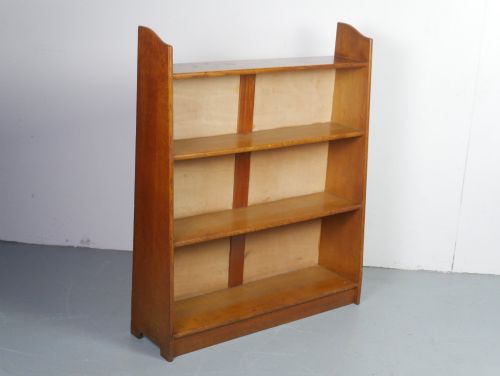
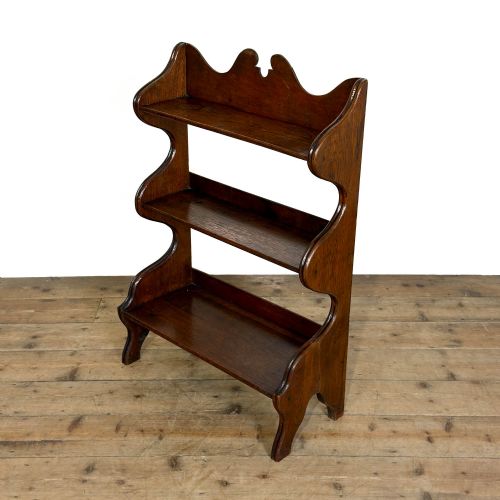
Forms span low open bookcases, bedside cabinets, cascading shelving units, and revolving bookstands. These items served functional storage needs in parlours, bedrooms, and studies, scaling down larger architectural bookcases for domestic rooms.
How they were made
Cabinet makers utilised sturdy timbers such as oak and mahogany as foundational materials, often employing burr walnut and rosewood for decorative impact. Grain orientation and timber selection determined the visual strength of the piece, particularly on flat expanses like side panels and shelves.
Construction techniques rely on traditional joinery, integrated shelves, and beaded edges to frame the timber. Details such as raised galleries, carved doors, and iron cross backs demonstrate the varied craftsmanship applied across Victorian, Edwardian, and Art Deco workshops.
Small Book Shelf Retail Price Guide 2026
Typical asking prices for small book shelf among the pieces listed under this phrase on Sellingantiques today, from the lower quarter to the upper quarter. They describe what is for sale here now, not the wider market.
Listings feature items spanning the 19th century through the 1930s, constructed predominantly in oak, mahogany, and rosewood.
What varies in quality
Quality separates pieces through the selection of timber veneers and the crispness of applied carving. Fine grain figures in burr walnut or figured walnut elevate a simple shelf into a decorative cabinet.
Structural integrity depends on the robustness of the joints and the stability of upright supports. Pieces integrating brass hardware, inlaid friezes, or thoughtful structural bracing demonstrate superior workshop standards.
Ercol·Heals
The Small Book Shelf Glossary
- Whatnot
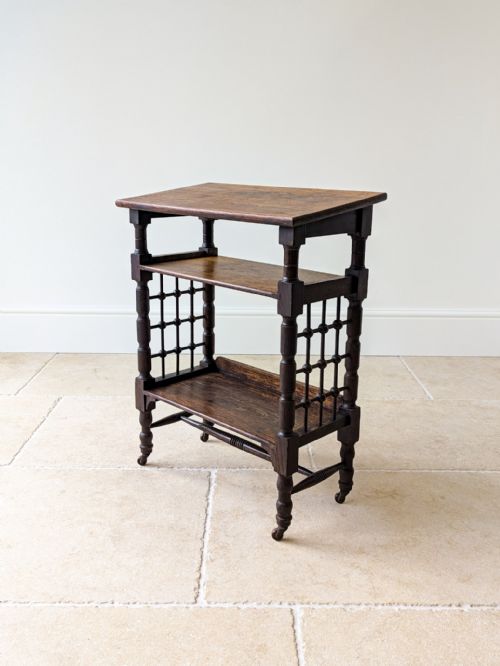
- A multi-tiered open piece of furniture used for displaying ornaments or books. These movable stands typically feature three or more shelves supported by slender vertical columns.
- Étagère
- A piece of furniture consisting of a set of open shelves for displaying small objects. This French-derived term often applies to refined Victorian and Regency tiered shelving units.
- Gallery
- A raised ornamental edge running along the top perimeter of a shelf or cabinet. This feature prevents items from sliding off the surface and adds a decorative border.
- Revolving bookcase
- A compact bookstand mounted on a concealed rotating base. This design allows users to access volumes from multiple angles while occupying a small floor footprint.
- Frieze
- The wide horizontal band situated just beneath the top surface of a piece of furniture. Cabinet makers frequently decorated this area with inlay or carved details.
Small Book Shelf: Frequently Asked Questions
What rooms suit a small book shelf?
These compact pieces fit easily into studies, bedrooms, and narrow hallways where full-sized shelving units would overwhelm the floor plan. Their modest scale allows them to function as bedside tables or auxiliary storage beside armchairs.
Open configurations provide immediate access to frequently read volumes, while tiered models accommodate both books and decorative objects in domestic settings.
How do I identify an Edwardian small book shelf?
Edwardian examples frequently display lighter oak construction, often accompanied by Arts & Crafts influences such as raised galleries or shaped sides. The proportions tend to be neat and domestic, prioritising utility alongside straightforward craftsmanship.
Craftsmen during this period favoured simpler lines than their Victorian predecessors, steering away from heavy ornamentation in favour of exposed grain and functional bracing.
What is the difference between a whatnot and a bookshelf?
A whatnot is primarily designed as a tiered open display stand for ornaments and mixed objects, whereas a bookshelf is specifically proportioned for storing bound volumes. However, smaller antique variants often overlap in function.
Both forms utilise open shelving, but whatnots frequently employ slender columns and multiple stepped tiers suitable for lighter display duties.
Are revolving oak bookcases stable?
Revolving bookstands use a weighted internal pivot mechanism designed to balance the load of books distributed across the compartments. This engineering keeps the structure steady during rotation.
When loaded evenly with volumes, these compact stands remain securely anchored on their bases while providing smooth 360-degree access.