

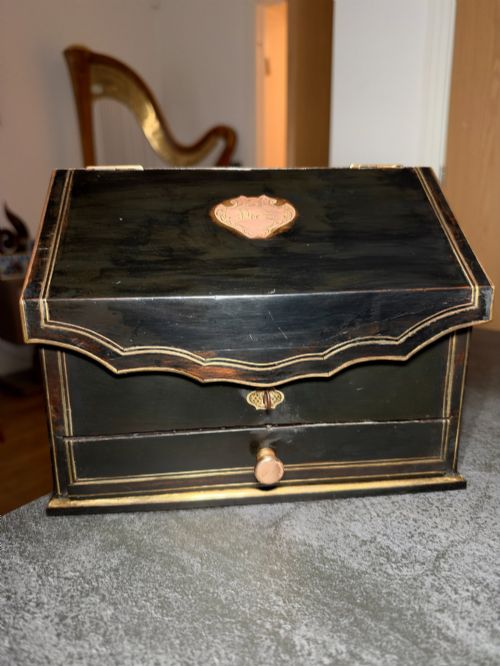
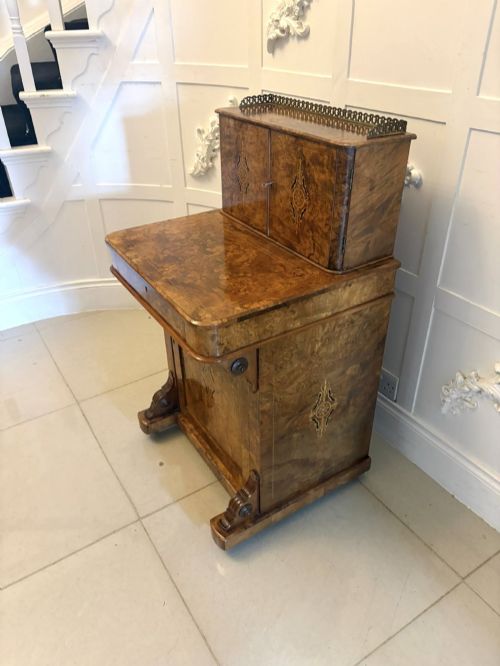
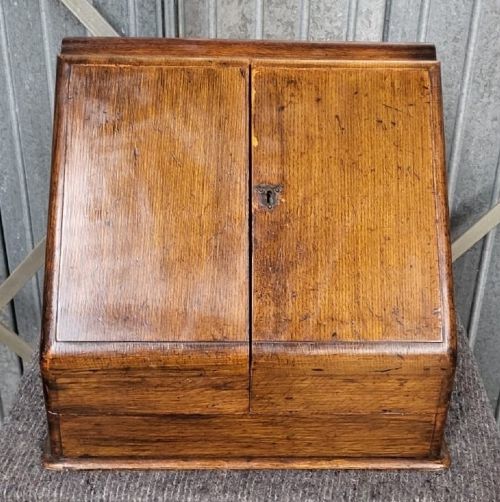
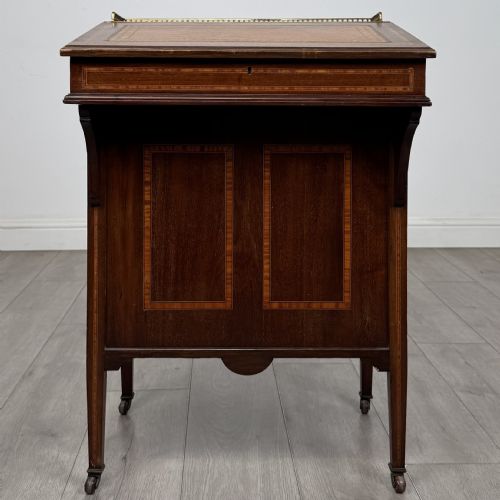


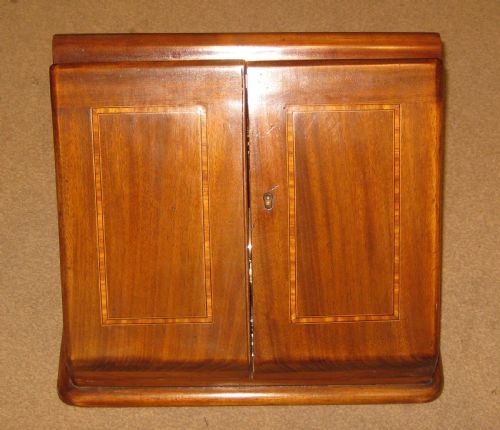
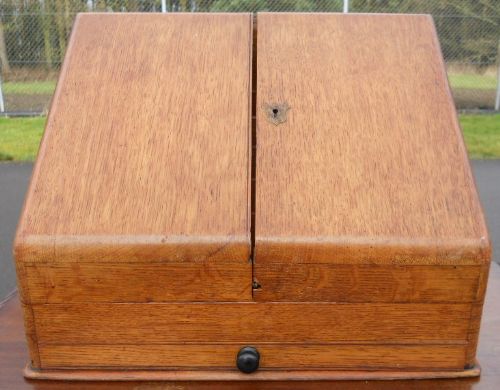


Slope Front Stationery Cabinet
A slope front stationery cabinet organises your desk with period craftsmanship, bringing timber elegance and practical compartments to your study.
Slope Front Stationery Cabinet
A slope front stationery cabinet combines a slanted writing surface or fall front lid with fitted internal compartments designed to hold letters, envelopes, and writing paper. These pieces range from compact tabletop boxes to freestanding Davenport desks and large bureau forms.
The versions most commonly met on this page span the Victorian and Edwardian eras, executed in timbers like oak, walnut, and mahogany. Many pieces incorporate drop fronts or sliding lids that reveal clever internal stationery tidies.
Earlier examples bridge the Georgian and Regency periods, whilst Victorian Gothic Revival and Jacobean Revival pieces offer heavier carving and bolder proportions. Collectors encounter various forms, including stationery boxes, writing boxes, and Secretaire desks.
Materials and construction methods
Cabinet makers utilised a variety of dense hardwoods, primarily mahogany, oak, walnut, and burr walnut, alongside exotic veneers such as rosewood, satinwood, and coromandel. These timbers provided a stable foundation for intricate marquetry and inlaid details.
Construction techniques relied upon traditional joinery, dovetail joints for drawers, and panelled falls to accommodate timber movement. Interiors feature fitted pigeonholes and letter slots, sometimes complemented by leather writing surfaces, brass carrying handles, and gilt covered accents.
Slope Front Stationery Cabinet Retail Price Guide 2026
Typical asking prices for slope front stationery cabinet among the pieces listed under this phrase on Sellingantiques today, from the lower quarter to the upper quarter. They describe what is for sale here now, not the wider market.
Some Victorian stationery boxes include secret compartments cunningly hidden behind the pigeonholes for truly private correspondence.
Distinctions in quality
Quality rests in the selection of figured timber veneers, such as burr walnut or quilted satinwood, and the precision of the inlay work. Superior cabinets display meticulous attention to internal partitions and the smooth mechanical operation of sliding tops or drop fronts.
The integrity of the original brass hardware, fitted locks, and interior leather panels distinguishes standard production pieces from finer cabinet work. Construction depth, timber thickness, and crispness of carved details set the higher end apart.
The Slope Front Stationery Cabinet Glossary
- Fall front
- A hinged flap or door that drops down to provide access to internal stationery compartments or a writing surface.
- Davenport
- A compact form of small desk featuring a sloped writing surface above a pedestal of drawers.
- Burr walnut
- A prized timber harvested from the warted growths of walnut trees, displaying swirling and highly decorative grain patterns.
- Secretaire
- A piece of furniture containing a drawer or compartment configured for writing and storing papers.
- Pigeonhole
- A small, open compartment within a desk interior used for sorting letters and documents.
Slope Front Stationery Cabinet: Frequently Asked Questions
What is a slope front stationery cabinet?
A slope front stationery cabinet is a specialised desk accessory or small piece of furniture designed to hold writing paper and correspondence.
These pieces feature an angled lid or drop front that opens to reveal internal compartments, pigeonholes, and pen trays.
How were stationery cabinets used?
Victorians and Edwardians utilised these cabinets to keep writing materials tidy and private in studies and drawing rooms.
The fitted interior allowed households to organise incoming and outgoing letters before the widespread use of modern envelopes.
How do I date a stationery cabinet?
Dating relies on observing the primary timber, decorative style, and construction methods characteristic of specific periods.
Victorian pieces often employ burr walnut or heavy mahogany, whilst Edwardian examples frequently feature lighter oak or satinwood inlay.
How do I care for timber stationery boxes?
Keep wooden cabinets away from direct sunlight and dramatic fluctuations in temperature to protect the delicate veneers and polish.
Regularly dusting with a dry, soft cloth maintains the finish without risking moisture damage to antique glue and leather.