
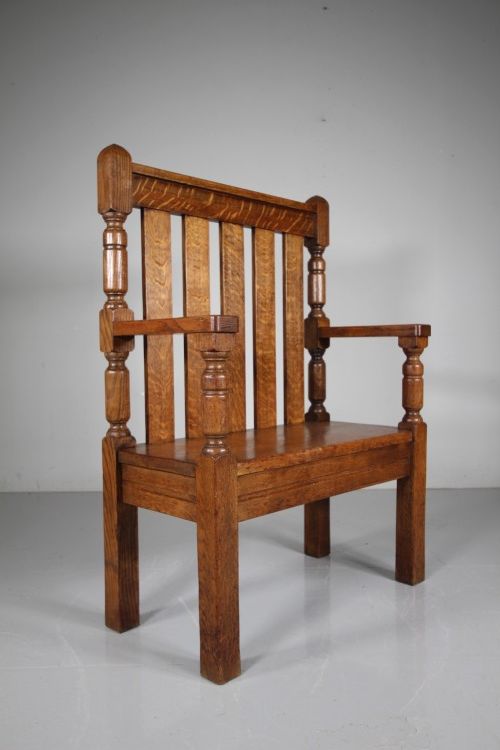


Slatted Back Bench
A slatted back bench brings architectural line and practical seating to a garden or hallway, built to endure.
Slatted Back Bench
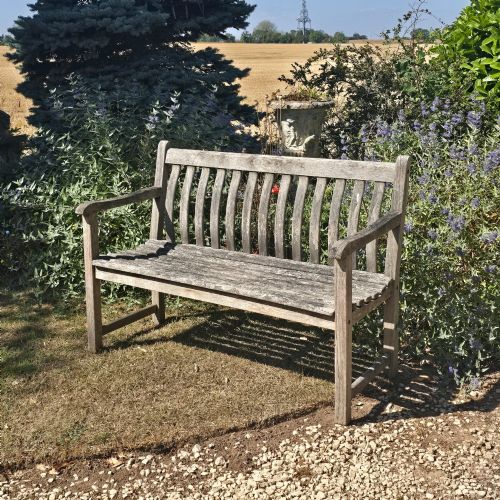
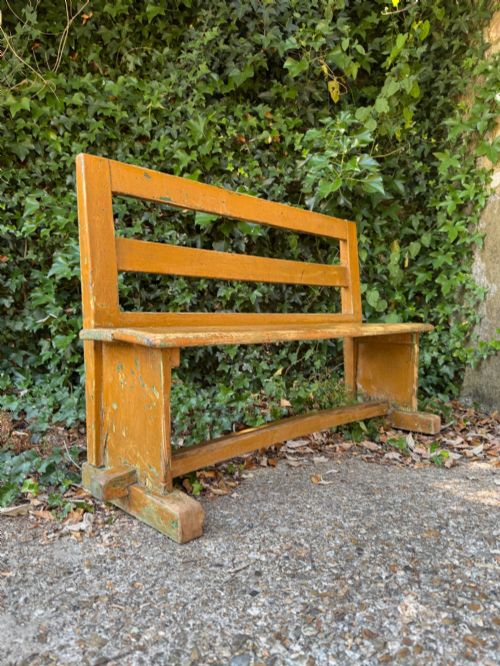
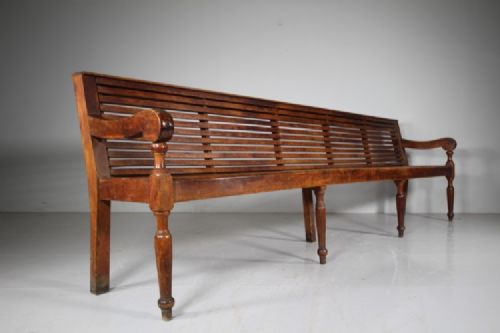
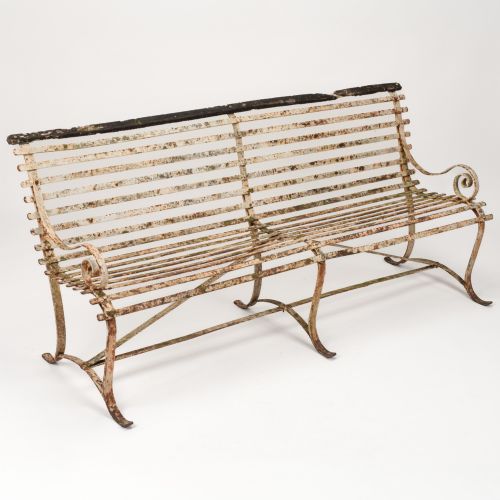
A slatted back bench serves either indoor utility or outdoor seating, taking the form of garden benches, hall benches, settees, and settle benches. When you search for a slatted back bench, you encounter forms ranging from rustic country pine to refined Regency wrought iron strapwork.
The materials span teak, pine, oak, walnut, mahogany, and wrought iron, reflecting domestic and garden origins from the Georgian, Regency, Victorian, Edwardian, and 1930 periods. Styles stretch from English Country Garden and Arts and Crafts to Georgian primitive and Austrian country variants.
How they were made
Makers constructed these benches using timbers such as oak, mahogany, walnut, teak, and pine, frequently shaping slats to form the backrests. Some examples incorporate wrought iron strapwork for structural support and decorative effect.
Surface treatments vary from natural weathered finishes and silvered teak to painted and scumble pine surfaces, alongside select examples featuring upholstered elements.
Listings feature timbers including teak, pine, oak, walnut, and mahogany across the Georgian, Regency, Victorian, Edwardian, and 1930 periods.
What varies in quality
Quality rests in the choice of timber and the precision of the joinery, distinguishing robust structural frames from simpler utilitarian builds. Finer examples display thoughtful proportions, such as neat forms or inlaid details.
The integrity of the slats and the character of the surface finish dictate the overall distinction of a piece, whether through weathered patination on outdoor teak or scumble painted detail on indoor settles.
Liberty
The Slatted Back Bench Glossary
- Slatted back
- A backrest constructed from individual narrow strips of wood arranged vertically or horizontally with gaps between them. This construction allows air circulation and sheds rainwater efficiently on outdoor seats.
- Strapwork
- Ornamental flat bands of metal arranged in interlaced patterns. In evidence from the Regency period, iron strapwork forms rigid yet visually light structural frames.
- Scumble
- A translucent layer of paint applied over a base colour to imitate the grain of more expensive wood or to create mottled texture. It appears frequently on primitive pine furniture.
- Orangery
- A large greenhouse or glazed building used historically to protect delicate plants through winter. Benches designed for these spaces needed to withstand humid environments.
Slatted Back Bench: Frequently Asked Questions
Where should a slatted back bench go?
These benches suit both interior hallways and outdoor garden settings, depending on the timber and finish.
Weathered teak and wrought iron versions endure exposure outside, while polished mahogany, walnut, and painted pine belong indoors.
How do I care for wooden outdoor benches?
Teak and oak benches left outdoors weather naturally over time, developing a silvered patina.
Regular cleaning removes debris from between the slats to preserve the structural integrity of the timber.
What is a settle bench?
A settle bench is a wooden seat with a high back and solid arms, designed historically to block draughts in domestic rooms.
Examples range from primitive scumble pine to painted Austrian country variants.
How do I identify a Regency iron bench?
Regency iron garden benches frequently incorporate wrought iron strapwork into their structural design.
This early nineteenth-century technique combines linear strength with decorative openwork framing.