



Six Arm Ceiling Lamp
A six arm ceiling lamp brings genuine presence to a room, offering striking illumination and period character through brass and crystal.
Six Arm Ceiling Lamp
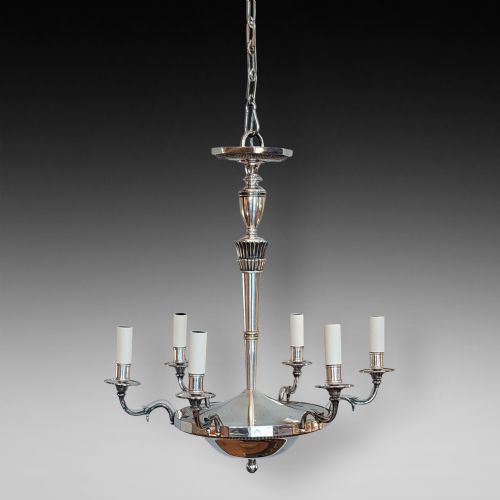
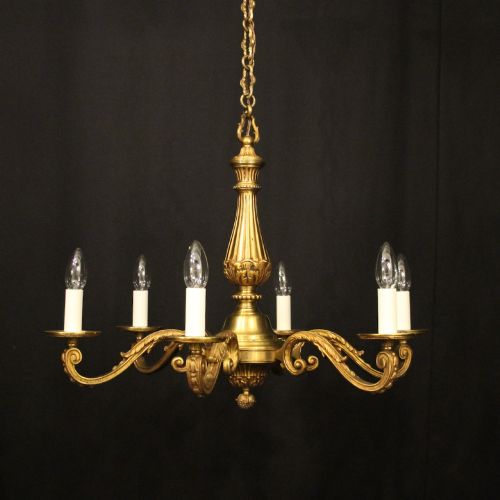
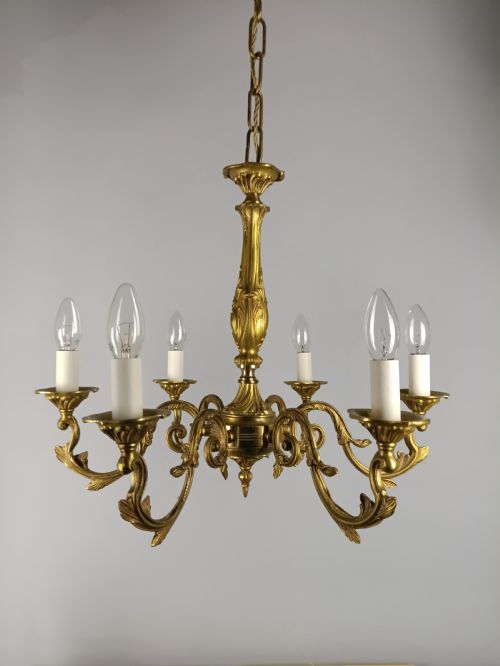
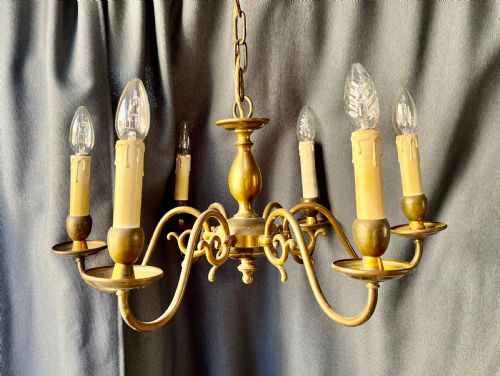
A six arm ceiling lamp fundamentally takes the form of a six light chandelier, configured with multiple arms to distribute light evenly across a space. These fixtures span from the nineteenth century through the 1930s, reflecting classical and regional European design traditions.
The versions most commonly met on this page are French examples executed in gilded bronze, brass, or silver leaf, often incorporating crystal elements. Dutch and Italian interpretations also appear, showing distinctive regional revival styles such as Italian Rococo and Dutch revival.
Buyers seeking a six arm ceiling lamp are typically looking for a substantial overhead focal point that combines period metalwork with functional lighting. The proportion of six lights provides a balanced presence suited to principal rooms rather than confined spaces.
How they were made
Makers constructed these fixtures using robust base metals such as cast bronze and heavy brass, which provided the structural integrity required to support six branching arms. Surfaces were frequently finished with gilding, silver leaf, or gilt framing to enhance their decorative impact.
Many examples integrate cut glass and crystal components suspended from the metal frames to refract and amplify the illumination. Casting techniques allowed for ornate detailing on the arms and central bodies, particularly in French Neoclassical and Chateau styles.
Six Arm Ceiling Lamp Retail Price Guide 2026
Typical asking prices for six arm ceiling lamp among the pieces listed under this phrase on Sellingantiques today, from the lower quarter to the upper quarter. They describe what is for sale here now, not the wider market.
Listings span the nineteenth century through the 1930s, featuring brass, gilded bronze, crystal, and silver leaf.
What varies in quality
The distinction between ordinary and superior pieces rests on the crispness of the metal casting and the depth of the finishing technique applied to the bronze or brass. Heavy cast construction yields a more substantial fixture with sharper botanical or architectural detailing along the arms.
Quality also resides in the integration of crystal and cut glass elements, where cleanly faceted drops create superior light refraction compared to simpler pressed glass. The coherence of the chosen style, whether French Neoclassical or Italian Rococo Revival, determines the overall refinement of the design.
The Six Arm Ceiling Lamp Glossary
- Gilded bronze
- A metal alloy treated with a thin layer of gold or gold-coloured finish. This technique adds warmth and prevents tarnishing on decorative metalwork.
- Chandelier
- A branched ornamental ceiling light designed to hold multiple bulbs or candles. It serves as both a primary light source and a decorative centrepiece.
- Crystal
- High-clarity glass containing lead oxide, cut to create sharp facets. It is suspended from chandeliers to refract light.
- Silver leaf
- Extremely thin sheets of beaten silver applied to a prepared surface. This finish provides a bright, reflective metallic sheen.
- Cast bronze
- An alloy poured into a mould to form complex shapes. This method allows for intricate relief work on lamp arms and frames.
Six Arm Ceiling Lamp: Frequently Asked Questions
What rooms suit a six arm ceiling lamp?
These fixtures work best in rooms with adequate ceiling height where the six-light spread can illuminate the space effectively without crowding the interior.
Dining rooms, living rooms, and large hallways provide the ideal scale for suspended multi-arm lighting.
How do I determine the period of a chandelier?
Dating relies on examining the metal casting techniques, the style of the arm joints, and the specific surface finishes characteristic of decades like the 1920s or 1930s.
Design motifs such as French Neoclassical or Dutch Revival also point to specific eras of manufacture.
Are these lamps electrified for modern use?
Most surviving examples from the nineteenth century and early twentieth century have been adapted to accept standard electrical wiring.
Wiring methods can vary, so checking the internal fittings ensures compatibility with current household standards.
What is the difference between brass and bronze?
Bronze is an alloy of copper and tin known for its strength and suitability for detailed casting.
Brass is primarily copper and zinc, offering a brighter golden tone that was widely utilised in various revival styles.