



Silver Vanity Ring Dish
These silver vanity ring dish pieces are small repositories for precious rings and trinkets, offering a tidy place for daily adornments.
Silver Vanity Ring Dish
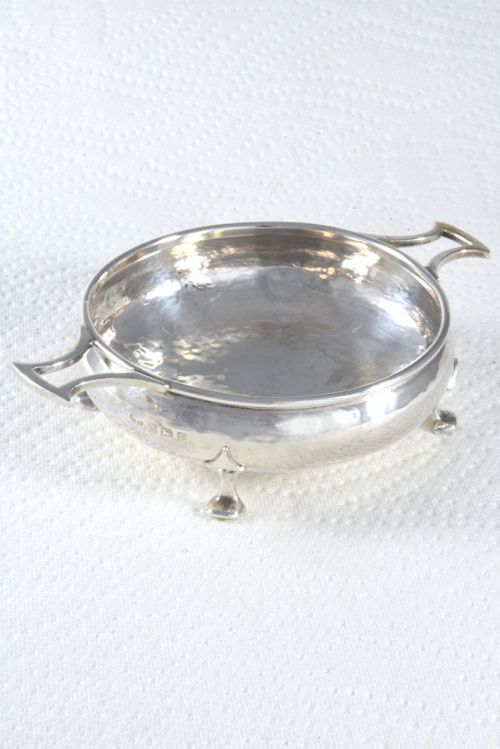
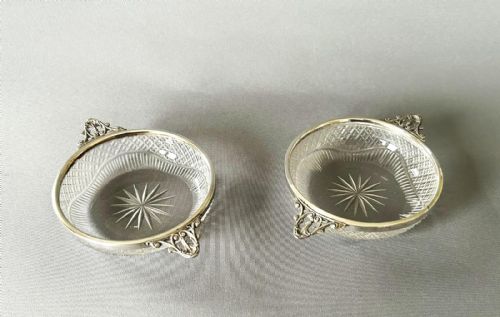
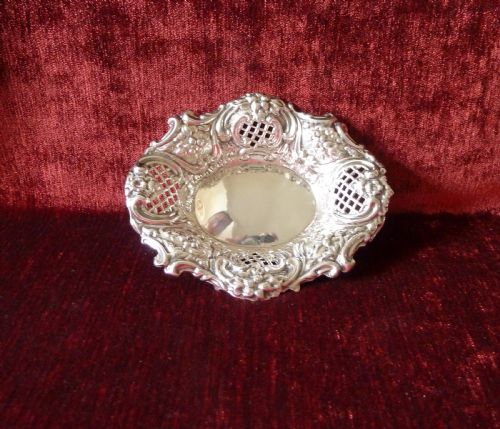
When you search for a silver vanity ring dish, you encounter small vessels and receptacles designed for dressing tables and vanity surfaces. These pieces serve to hold rings, pins, and small jewellery items safely at hand during the daily routine.
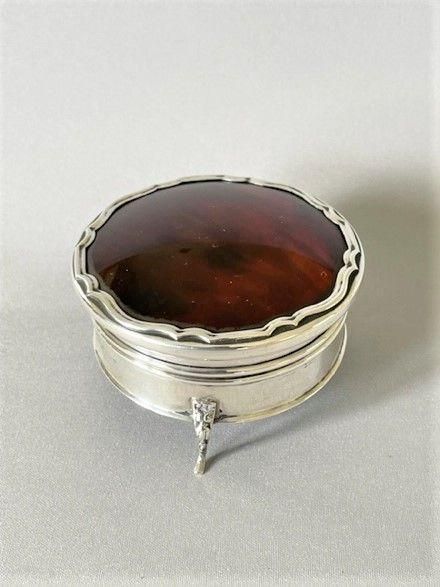
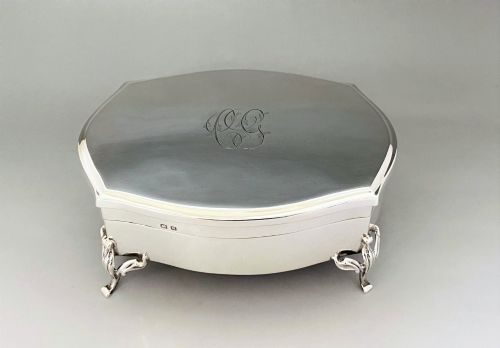
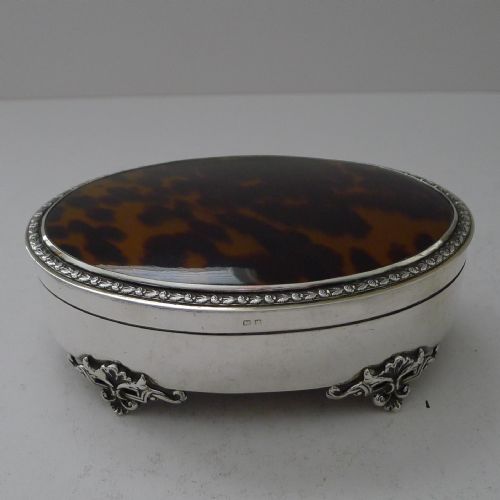
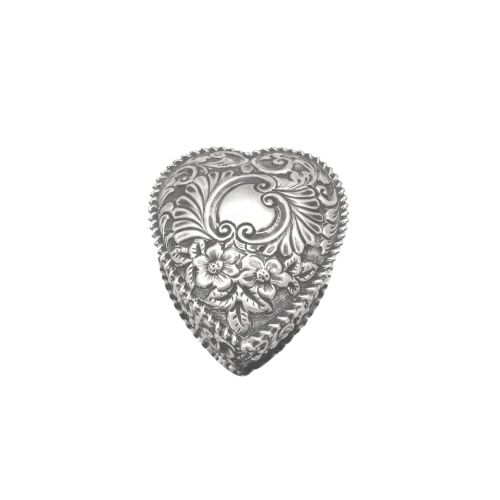
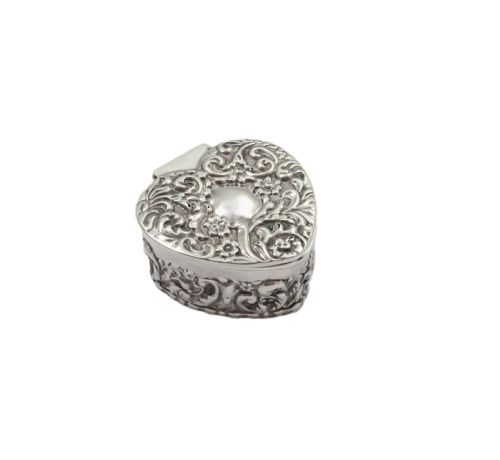
The versions most likely to meet you on this page span the Victorian, Edwardian, and George V periods, alongside pieces marked by 1900, 1890, 1910, and 1920 dates. They take the form of trinket dishes, jewellery boxes, ring holders, and ring trees, including heart-shaped boxes and oval dishes.
How they were made
These items rely primarily on sterling silver and silver construction, often paired with tortoiseshell or cut glass to create contrasting textures on the vanity. Metalsmiths shaped the silver bodies through pressing, casting, and repoussé techniques.
Many boxes and dishes incorporate decorative detailing such as cherub relief work or fitted interior compartments. Makers utilised standard silversmithing methods of the late nineteenth and early twentieth centuries to join mounts, hinges, and glass inserts.
A jovial cherub in high relief watches over your daily rings from the lid of an early twentieth-century box.
What varies in quality
The distinction between tiers rests upon the crispness of surface ornamentation, such as the depth and definition found in cherub relief motifs. Finer examples display heavier gauge silver and more intricate structural fitting between materials like silver and tortoiseshell.
Subtleties in proportion and the integration of cut glass with silver mounts separate standard utilitarian items from more ambitious domestic objects. The handling of hinges, lids, and hallmarks contributes to the overall integrity of each piece.
James Hennell
The Silver Vanity Ring Dish Glossary
- Sterling silver
- A silver alloy containing 92.5 percent pure silver and 7.5 percent other metals, usually copper, chosen for durability.
- Ring tree
- A vertical stem mounted on a base designed specifically to hold multiple rings upright.
- Tortoiseshell
- The mottled brown shell of certain turtle species used historically as an ornamental veneer on boxes and trinket trays.
- Repoussé
- A metalworking technique where the smith hammers the design from the reverse side to form a raised relief on the front.
Silver Vanity Ring Dish: Frequently Asked Questions
How were silver trinket boxes used?
These boxes served to hold small valuables, hairpins, and rings on Victorian and Edwardian dressing tables. They protected delicate items from dust while keeping them close at hand.
Interior linings often protected delicate jewellery pieces from scratching against the solid silver bases.
What periods do these pieces span?
The pieces on this page span the late Victorian, Edwardian, and George V eras, stretching from the late nineteenth century into the 1920s. This period saw a high demand for matching vanity wares.
Birmingham and London assay offices feature prominently among the marked items from these decades.
Can I mix silver and tortoiseshell?
Combining sterling silver and tortoiseshell was a common practice in dressing table sets during the early twentieth century. Makers paired the reflective metal with the warm, mottled shell for visual contrast.
These combined pieces coordinate naturally with other silver vanity items on the same dressing tray.