

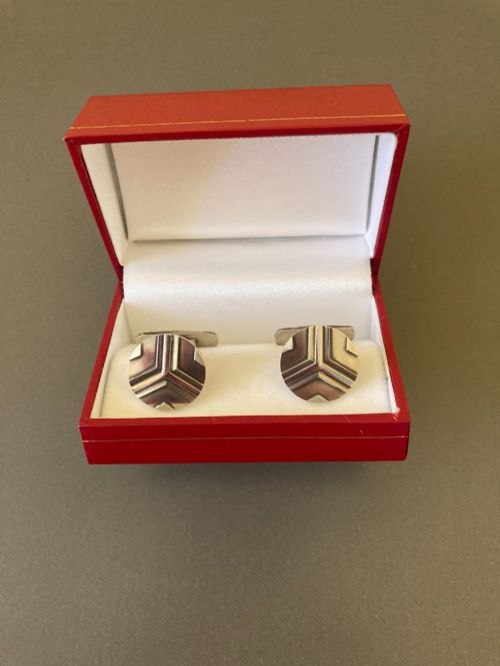


Silver Shirt Cufflinks
Silver shirt cufflinks secure a cuff with precious metal, offering a subtle detail that defines formal and everyday attire alike.
Silver Shirt Cufflinks
Silver shirt cufflinks appear in forms spanning the nineteenth century through the mid-twentieth century, including distinct iterations from the nineteen-thirties, nineteen-fifties, and nineteen-sixties. Buyers encounter items ranging from early toggle buttons originating in Malta to modernist designs from Scandinavia and geometric accessories from the art deco period. These pieces serve to fasten shirt cuffs while displaying the aesthetic preferences of their respective eras.
Art deco examples from around nineteen thirty dominate the selection, frequently featuring enamel work applied to gents accessories. Scandinavian modern pieces, represented by makers such as Georg Jensen, introduce alternative mid-century forms from nineteen fifty. Vintage sportswear themes also emerge through specific motifs like golfers in designs from nineteen sixty.
Materials and Construction
Makers construct these items primarily using silver, sterling silver, and vitreous enamel, supplemented by silver plate, silver-tone metal, chrome plated metal, and brass. Enamel decoration requires fusing powdered glass to a metal surface at high temperatures to create vibrant coloured panels on the face of the cufflink. Metalworking techniques involve shaping solid silver or casting base metals before applying surface finishes.
Toggle mechanisms, rigid bars, and chain links connect the face of the fastener to the backing piece, depending on the period of manufacture. Nineteenth century examples often utilise toggle buttons requiring manual insertion through buttonholes, whereas twentieth century pairs adopt mechanical swivel bars or fixed posts.
Silver Shirt Cufflinks Retail Price Guide 2026
Typical asking prices for silver shirt cufflinks among the pieces listed under this phrase on Sellingantiques today, from the lower quarter to the upper quarter. They describe what is for sale here now, not the wider market.
Listings feature periods spanning the nineteenth century, nineteen-thirty, nineteen-fifty, and nineteen-sixty, with art deco representing the most common style.
Quality Variations
The standard of workmanship depends on the precision of the enamel inlay and the durability of the metal joints. Superior examples exhibit intact vitreous enamel without chipping or crazing, alongside crisp geometric lines characteristic of art deco styling. Lesser versions may rely on base metals like chrome plated metal or silver-tone metal with surface wear visible on the plating.
Maker attribution and design complexity further distinguish the range, particularly in modernist Scandinavian pieces or signed workshop productions. Precision in the hinge mechanisms and the weight of the sterling silver components separate mass-produced items from finer artisan creations.
Georg Jensen
The Silver Shirt Cufflinks Glossary
- Enamel
- A glassy substance fused to the surface of metal through heat to provide colour and pattern. This material defines the face of many art deco designs.
- Toggle
- A pivoting bar or fastening mechanism that passes through a buttonhole to secure a cuff. Nineteenth century Maltese pieces utilise this specific form.
- Sterling Silver
- An alloy consisting of silver and other metals, usually copper, meeting a specific fineness standard. It forms the primary precious metal for many listed cufflinks.
- Vitreous Enamel
- Glass fused directly to metal at high temperatures, known for its glossy finish and longevity. It appears extensively on nineteen-thirties gents accessories.
Silver Shirt Cufflinks: Frequently Asked Questions
How do I date silver shirt cufflinks?
Dating relies on stylistic markers such as geometric enamel patterns from the nineteen-thirties or minimalist forms from nineteen-fifty. Maker marks and the nature of the backing mechanism also indicate the period of production.
Twentieth century pieces often feature swivel fittings, whereas nineteenth century items tend to utilise toggle buttons or rigid posts.
What is the difference between sterling silver and silver plate?
Sterling silver consists of solid precious metal throughout the entire piece, conforming to established fineness standards. Silver plate involves a thin layer of silver applied over a base metal core such as brass or chrome plated metal.
Over time, plated items may show the underlying base metal through areas of friction.
How were enamel cufflinks worn?
Enamel cufflinks secured French cuffs or double-cuff shirts by passing through paired buttonholes. Gents wore them with formal attire, business dress, or casual shirts depending on the design.
The coloured enamel face remained visible on the outside of the wrist while the toggle or bar held the fabric closed.
Are these cufflinks suitable for daily wear?
Solid silver and robust metal construction allow many vintage pairs to withstand regular use. Care is required with enamilled surfaces to prevent impact damage to the glass inlay.
Checking the strength of hinges and toggle bars ensures the pieces remain secure during wear.