
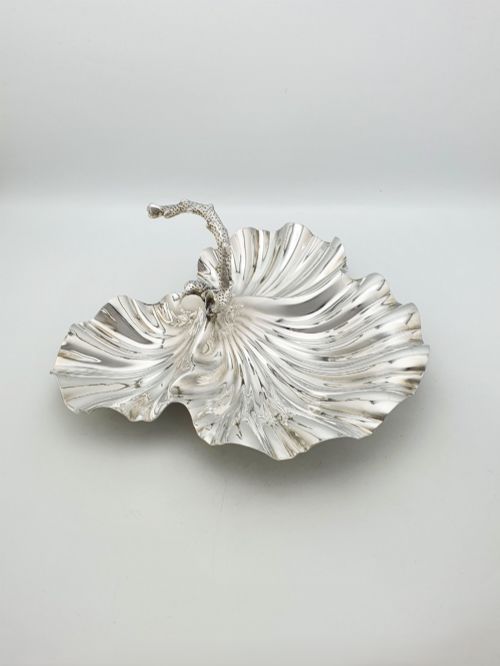
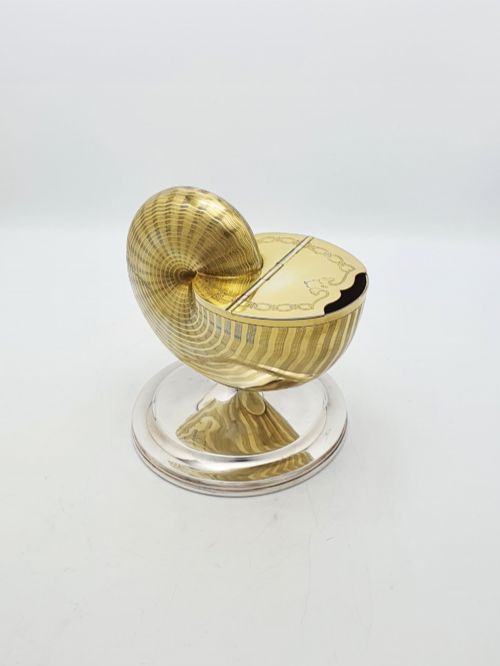
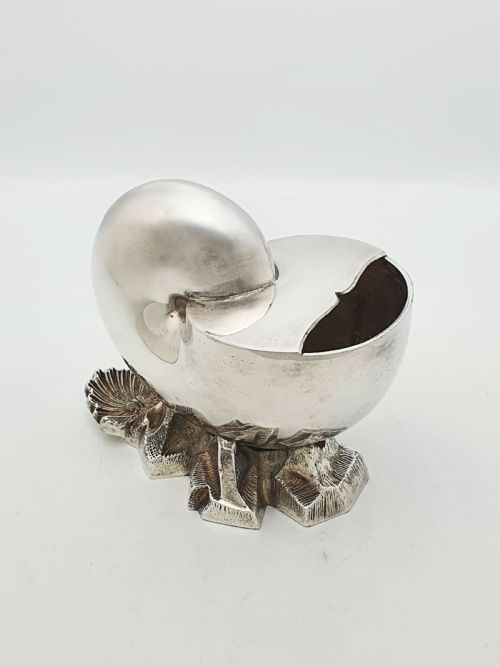


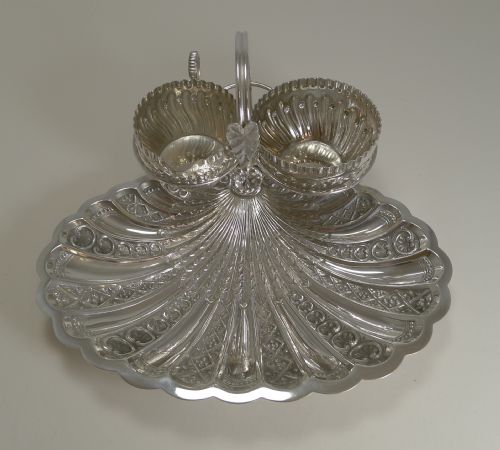
Silver Shell Table Centrepiece
A silver shell table centrepiece brings nautical form to the dining table, offering dramatic coastal decoration for grand entertaining.

Silver Shell Table Centrepiece
A silver shell table centrepiece takes nautical forms such as nautilus, ammonite, and general shell shapes to serve as a striking table decoration. You encounter these pieces across Victorian naturalism, Rococo Revival, and mid-century Irish styles.
The selection on this page ranges from functional biscuit boxes and spoon warmers to decorative dishes, bowls, and candlesticks. Most examples date from the nineteenth century up to the nineteen-sixties, reflecting decades of silver-smithing tradition.
How they were made
Many items utilise silver plate, electroplated nickel silver, or EPNS over a base metal foundation, while select pieces are cast in solid sterling silver. Gilt metal highlights appear on specific nineteenth-century designs to accentuate interior details.
Makers employed specialised techniques to shape rigid metal into realistic marine curves, adding cast elements like stylised coral handles. Heavy gauge construction provides structural integrity for large bowls and folding biscuit boxes.
Victorian diners apparently required piping hot spoons for their dessert, giving rise to the delightfully eccentric shell spoon warmer.
What varies in quality
The depth and preservation of the original plating or gilding distinguish finer examples from standard production. Substantial gauge metal ensures longevity in pieces designed for active service on the dining table.
Elkington·Roberts and Belk·The Alexander Clark
The Silver Shell Table Centrepiece Glossary
- EPNS
- Electroplated Nickel Silver forms a durable base metal layer beneath a silver coating. This technique became widespread during the nineteenth century for tableware.
- Nautilus
- A marine mollusc whose spiral shell inspires many Victorian table ornaments. The natural geometry lends itself well to spoon warmers and decorative dishes.
- Rococo Revival
- A nineteenth-century design movement favouring ornate scrolls, asymmetry, and natural motifs. This style heavily influences the candlesticks and centrepieces in this collection.
- Spoon Warmer
- A Victorian vessel designed to hold hot water and keep dining spoons warm for the course. They frequently take imaginative shell or animal shapes.
- Sterling Silver
- An alloy consisting of pure silver and other metals to increase durability. Items made from this material carry official hallmarks denoting their silver content.
Silver Shell Table Centrepiece: Frequently Asked Questions
What is a spoon warmer?
A spoon warmer is a Victorian tabletop vessel designed to hold hot water for warming silver spoons before serving course dishes. They often double as novelty ornaments in shell or marine shapes.
During formal nineteenth-century dining, guests used warmed spoons for soups or desserts. These functional items sat prominently on the sideboard or table centre.
How do I clean silver plate?
Clean silver plate gently using a non-abrasive silver polish and a soft cloth to protect the underlying metal layer. Avoid harsh scrubbing that can wear away the thin silver coating over time.
Regular dusting with a microfiber cloth helps maintain the lustre of decorative items. Store pieces in dry environments away from direct sunlight.
When were folding biscuit boxes made?
Folding biscuit boxes largely date from the Victorian and Edwardian eras when formal hospitality reached its peak. Manufacturers constructed these clever containers with hinged sides that lowered to reveal biscuits.
They frequently feature elaborate shell motifs and robust mechanisms by notable makers. These pieces served a practical function in the formal drawing room.
What distinguishes Victorian naturalism?
Victorian naturalism embraces realistic depictions of flora and fauna in decorative arts. In tableware, this translates to faithful representations of shells, coral, and marine life.
Craftsmen captured the textures of natural specimens in silver and silver plate. This style reflects the period's fascination with natural history and exploration.