


Silver Rococo Pitcher
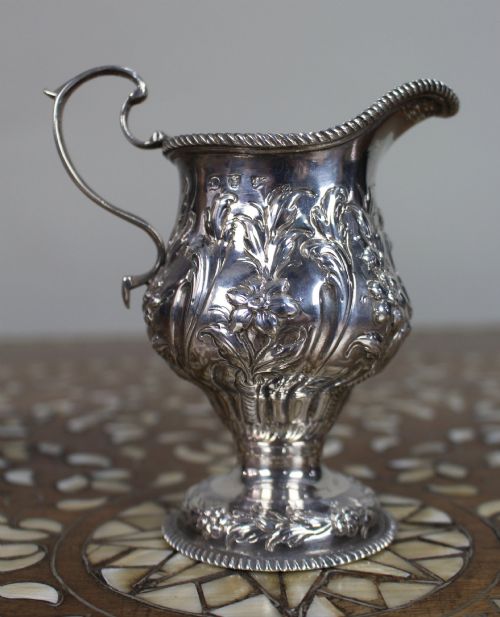
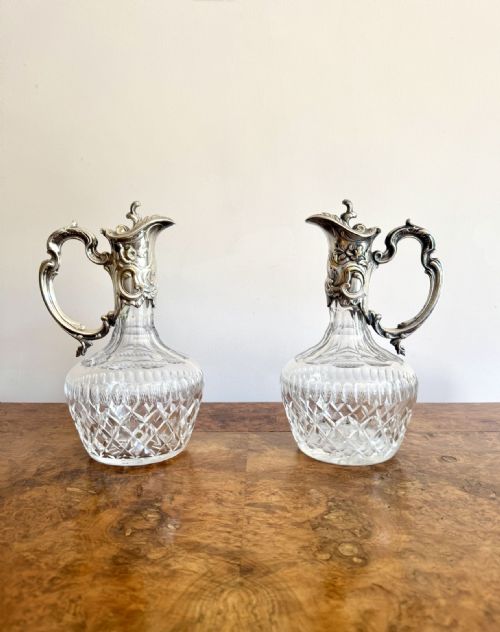
These silver rococo pitcher pieces bring scrolling ornamentation and organic forms into domestic service, prized for their exuberant handles and chased motifs.
Silver Rococo Pitcher
A silver rococo pitcher brings asymmetric curves and naturalistic ornament to the table, spanning forms from cream jugs to large claret jugs and ewers. When searching for a silver rococo pitcher, a buyer encounters domestic vessels shaped by Victorian, Edwardian, and Georgian hands.
The selection here encompasses cream jugs, claret jugs, and ewers alongside traditional pitchers. Pieces range across 18th century, 19th century, Victorian, and Edwardian periods, including French and Georgian revival styles.
Smaller cream jugs and large wine ewers dominate the selection, merging functional pouring vessels with ornate display pieces. Sterling silver, silver plate, and cut glass combine across these forms to create the rococo aesthetic.
How they were made
Silversmiths shaped sterling silver and silver plate through hammering and casting, building up fluid, scrollwork bodies by hand. Cut glass bodies appear paired with silver mounts, uniting heavy metalwork with clear blown vessels.
Chasing and repoussé techniques created the raised floral motifs and C-scroll handles characteristic of the style. London hallmarking traditions recorded the standard of silver, while glass components relied on traditional glassblowing and wheel-cutting.
The listings feature pieces spanning the Georgian, Victorian, and Edwardian eras, utilising sterling silver, silver plate, and cut glass.
What varies in quality
The distinction between standard domestic ware and exceptional pieces lies in the crispness of the chased ornament and the weight of the metal. Heavier gauge silver retains sharper definition in its rococo scrolls and vegetal motifs.
The integration of glass and silver determines the refinement of composite pieces like claret jugs. Precision in the mount fittings and the clarity of the cut glass separate utilitarian items from ambitious cabinet pieces.
The Silver Rococo Pitcher Glossary
- Rococo
- A decorative style characterised by asymmetrical scrolling, shell motifs, and organic plant forms. It emerged in France before influencing British silver design across multiple centuries.
- Ewer
- A large pitcher with a wide spout and elaborate handle, traditionally used for holding water or wine. These pieces often feature sculptural silver mounts.
- Repoussé
- A metalworking technique where the smith pushes and raises the design from the reverse side of the silver sheet. This creates the three-dimensional floral and scroll reliefs seen on these jugs.
- Claret jug
- A pouring vessel designed specifically for serving red wine, typically combining a glass body with a silver handle, collar, and hinged lid.
Silver Rococo Pitcher: Frequently Asked Questions
How do I clean antique silver?
Use a soft cloth and a specialised silver polish designed to remove tarnish without abrading the delicate chased details. Avoid harsh chemical dips that strip the natural patination built up over centuries.
Store pieces in dry conditions away from direct sunlight and rubber materials. Regular, gentle dusting preserves the high-relief rococo ornamentation.
Are these pitchers safe for serving drinks?
Most solid silver and silver-plated pieces remain suitable for serving water, cream, or wine provided the interior is thoroughly rinsed and dried after use. Glass-bodied claret jugs require careful hand washing to protect fragile glass and vintage mounts.
Check for secure handle attachments and intact hinge mechanisms before filling any antique vessel. Modern acidic beverages should not be left sitting in silver vessels for extended periods.
How can I date a silver jug?
Examine the piece for official hallmarks, which often include assay office symbols, date letters, and maker marks stamped directly onto the metal. Georgian and Victorian pieces frequently carry distinct hallmarks that pinpoint the year of creation.
Stylistic shifts, such as the transition from restrained Georgian lines to ornate Victorian rococo revival curves, also indicate the manufacturing period when hallmarks are absent.
What is the difference between a jug and an ewer?
A jug generally serves everyday utilitarian functions with a simple handle and pouring lip, whereas an ewer traditionally serves a decorative or ceremonial role with a more dramatic, sweeping spout and sculptural handle. Ewers frequently appear in larger formats alongside basins or as standalone display items.
In rococo design, both forms utilise asymmetrical curves and naturalistic ornamentation, though ewers typically exhibit more ambitious metalwork.