



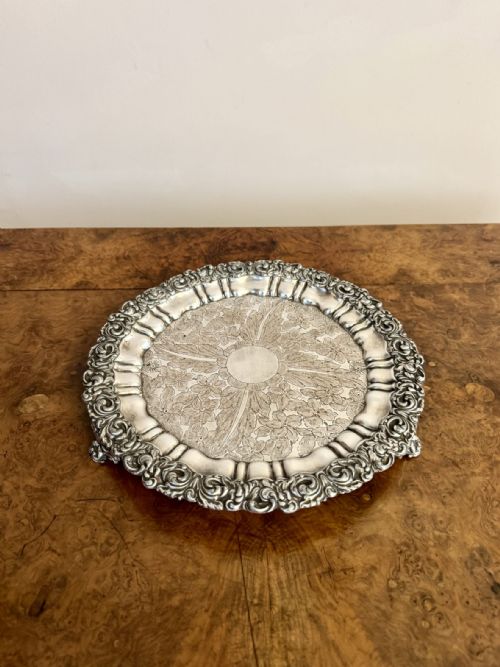


Silver Plated Serving Waiter
A silver plated serving waiter is a sturdy metal tray designed for drinks or tea, combining period craftsmanship with everyday utility.
Silver Plated Serving Waiter
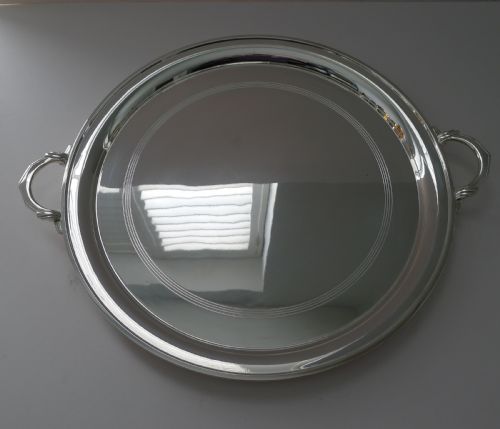
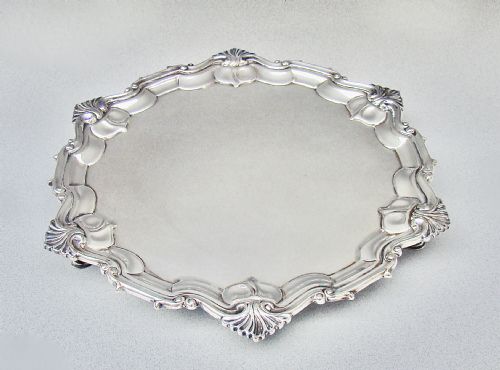
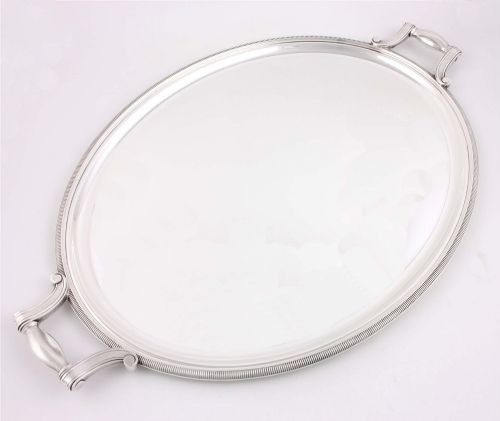
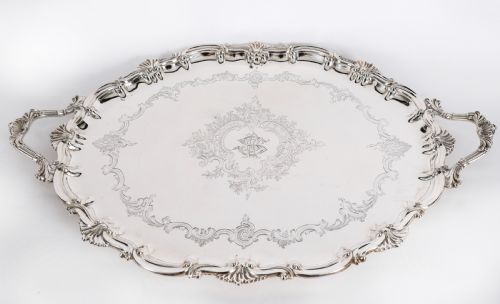
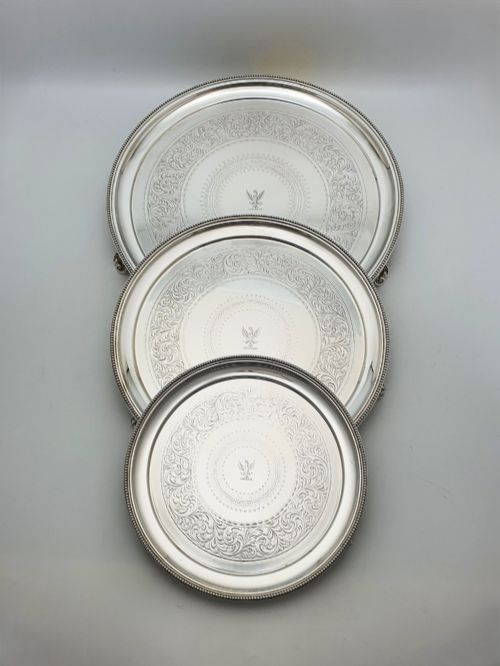
A silver plated serving waiter functions primarily as a display surface for glasses, teapots, or decanters during formal and casual gatherings. When searching for this phrase, buyers encounter various forms including circular salvers, oval platters, and rectangular cocktail trays.
The pieces originating from this selection span the nineteenth and twentieth centuries, taking influence from Victorian, Edwardian, and Art Deco aesthetics. Most examples met on this page date from the Victorian and Edwardian eras, or follow later twentieth-century modernist designs.
Objects range from small circular card trays to monumental presentation platters with handles and raised rims. Makers utilise copper, nickel silver, and base metals as a foundation for silver plating.
How They Were Made
Many early pieces utilise Old Sheffield Plate, a technique fusing a thin sheet of silver onto a copper core before rolling and shaping. Later examples rely on electroplating, where a layer of silver coats a base metal such as nickel silver or EPNS.
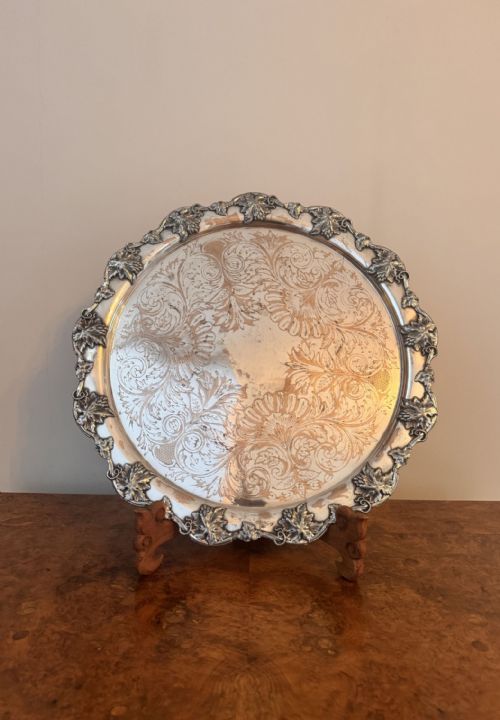
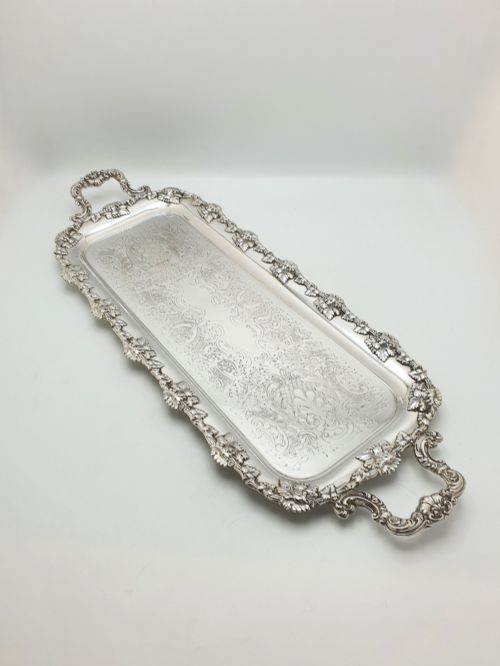
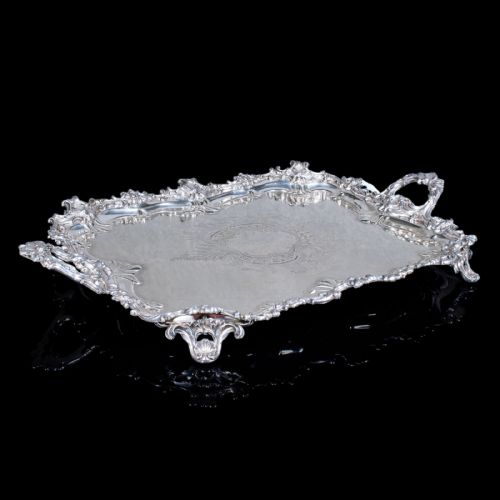
Surface decoration frequently involves hand engraving, chased floral motifs, or applied grapevine borders soldered to the edges. Handles, feet, and galleries are cast separately and attached firmly to the main body of the tray.
Some Victorian waiters feature elaborate engraved grapevines, hinting at decades of enthusiastic Victorian dinner parties.
What Varies in Quality
The thickness and durability of the original silver plating determine longevity, particularly over raised engraved lines and heavily handled rims. Substantial weight and rigid construction separate sturdy serving waiters from lighter, more flexible alternatives.
Crispness in the chased or engraved surface ornamentation reveals the skill of the silversmith. The proportion of handles, feet, and gallery pierced work contributes to the visual balance of the piece.
Mappin & Webb·William Hutton & Sons·Christofle·Thomas Bradbury & Sons·Elkington·John Harrison·Padley Parkin·J B Chatterley & Sons·Walker & Hall·James Dixon & Sons·Peters Hamburg
The Silver Plated Serving Waiter Glossary
- Salver
- A flat tray, usually circular and supported on small feet, traditionally used for presenting letters, visiting cards, or glasses.
- Old Sheffield Plate
- A composite material made by fusing a thin layer of silver to a thick copper base, common in pieces dating before the invention of electroplating.
- EPNS
- Electroplated Nickel Silver, a common base material denoting a silver coating applied electrically over a durable nickel-alloy core.
- Gallery Tray
- A serving tray featuring an upright, pierced metal gallery or railing around the perimeter to secure items during transit.
- Chasing
- A metalworking technique where the artisan pushes and displaces silver with a hammer and punch to create raised decorative patterns without removing metal.
Silver Plated Serving Waiter: Frequently Asked Questions
What is the difference between a salver and a serving tray?
A salver typically describes a formal circular tray supported on small feet, while a serving tray often includes handles and takes rectangular or oval shapes.
Both items function under the broader category of a serving waiter, though salvers lean toward presentation and display.
How do I care for a silver plated serving waiter?
Routine maintenance requires washing the metal in warm soapy water and drying it immediately with a soft cloth to prevent tarnishing.
Occasional polishing with a specialised silver cream preserves the plating without wearing down the underlying base metal.
How can I tell Old Sheffield Plate from electroplated items?
Old Sheffield Plate often reveals a faint line of copper visible along the cut edges or worn spots where the silver layer has thinned.
Electroplated items usually display stamps indicating nickel silver or EPNS beneath a uniform silver coating.
Were these trays used exclusively for tea service?
While many Victorian and Edwardian examples served afternoon tea, numerous pieces accommodate cocktails, decanters, or calling cards.
Cocktail trays became particularly popular during the Art Deco period of the 1920s and 1930s.