

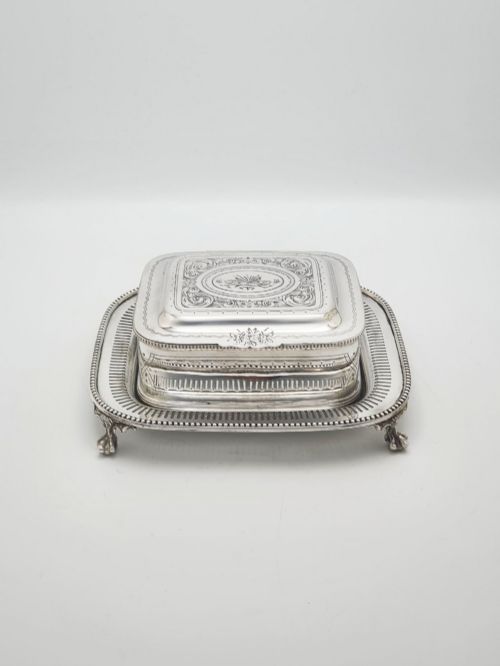
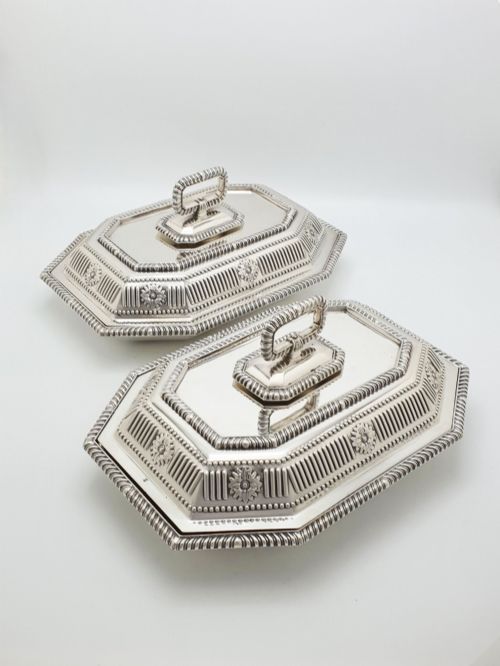
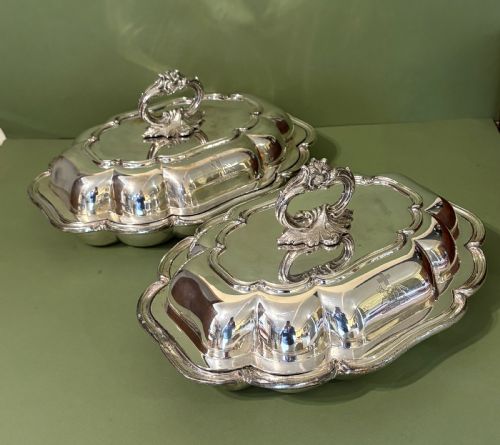


Silver Plated Entrees
Silver plated entrees are handsome dining table centrepieces designed to keep food warm and present it with style.
Silver Plated Entrees
Edwardian examples dominate the current listings, alongside Victorian and 19th-century pieces. These items often appear as matched pairs or complete with their original stands and burners. Makers such as Mappin and Webb, Walker and Hall, Elkington, and Christofle / Gallia contribute to the range of serveware available.
Materials and construction
Makers utilised a base metal such as copper or nickel silver, subsequently applying silver plate or employing the Old Sheffield Plate technique. Electroplated nickel silver, commonly known as EPNS, became prevalent in later Victorian and Edwardian manufacturing.
Some warming dishes and chafing units incorporated ceramic inserts to hold provisions directly above the heat source. The manufacturing process often involved shaping copper or nickel substrates before applying the silver layer and adding decorative cast handles.
Silver Plated Entrees Retail Price Guide 2026
Typical asking prices for silver plated entrees among the pieces listed under this phrase on Sellingantiques today, from the lower quarter to the upper quarter. They describe what is for sale here now, not the wider market.
Listings span the 19th century through the Edwardian period, incorporating materials such as Old Sheffield Plate, copper, ceramic, and EPNS.
Evaluating craftsmanship
The distinction between standard utility items and superior serveware rests upon the weight of the metal and the crispness of the cast mounts. Pieces featuring substantial silver plate over copper or nickel silver retain their integrity through decades of use.
Attention to detail in the handles, feet, and edge enrichment marks the higher tier of production. The reputation of the maker, such as Elkington or Walker and Hall, also indicates the level of original craftsmanship.
Hamilton and Inches·Mappin and Webb·Walker and Hall·Elkington·Cresswick·Dan Holy·Christofle / Gallia
The Silver Plated Entrees Glossary
- Old Sheffield Plate
- A fused composite material made by melting a sheet of silver onto a thicker copper base before rolling them together into sheets for manufacturing. This early method precedes electroplating.
- EPNS
- Electroplated nickel silver, a common base material coated with a layer of pure silver using an electrical current. It replaced older fusing techniques during the 19th century.
- Entree dish
- A covered serving vessel intended for holding portions of food at the dining table. They frequently feature removable handles to allow the lid to double as a secondary dish.
- Warming dish
- A specialised serveware piece designed with a compartment for hot water or a burner beneath the food pan. These items kept courses warm during lengthy formal meals.
- Rollover dish
- A serving vessel featuring a revolving or retractable lid mechanism that rolls back over the body. This clever design allows easy access to the contents from either side of the table.
Silver Plated Entrees: Frequently Asked Questions
How do I use an antique food warmer?
Antique food warmers utilise hot water compartments or small burners to maintain the temperature of dishes during a meal. Fill the lower reservoir with heated water or place a suitable fuel burner beneath the inner vessel.
Ensure the flame or water temperature remains controlled to avoid overcooking the contents. These pieces function well for serving warm vegetables or meats at modern dinner parties.
What is the difference between Old Sheffield Plate and EPNS?
Old Sheffield Plate involves physically fusing a sheet of silver to a copper core through heat and pressure. This technique results in subtle copper telegraphing visible at the edges where the base metal shows through.
EPNS relies on electroplating silver onto a nickel silver base via an electrical bath. This later method produces a more uniform coating without the distinctive copper edges found on older pieces.
Can I use these serving dishes for everyday dining?
Silver plated entrees suit regular use provided you handle them with care and avoid abrasive cleaning agents. Hand washing with warm soapy water preserves the remaining silver layer.
Dry the pieces thoroughly after cleaning to prevent water spots. Their solid construction makes them practical for serving food as well as displaying on a sideboard.
How do I identify the period of an entree dish?
Examination of maker marks, style characteristics, and manufacturing methods helps determine the age of a piece. Georgian and early 19th-century items often employ Old Sheffield Plate, while Edwardian pieces frequently feature EPNS.
Stylistic cues such as Regency borders or Art Deco geometric lines provide further chronological context. Maker stamps often correspond to specific operational dates recorded in trade directories.