



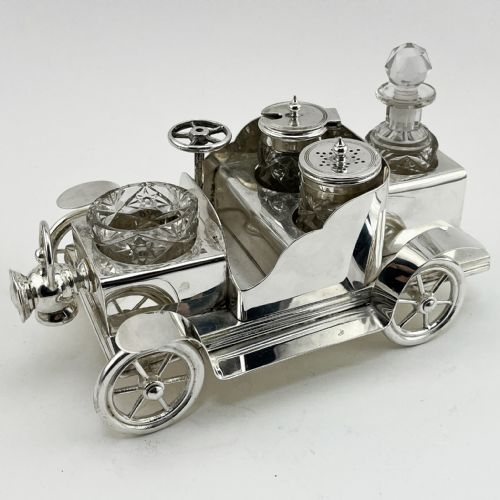


Silver Plated Cruet Bottles
Silver plated cruet bottles bring timeless elegance to the table, offering versatile condiment and decanter storage housed in gleaming metal frames.
Silver Plated Cruet Bottles
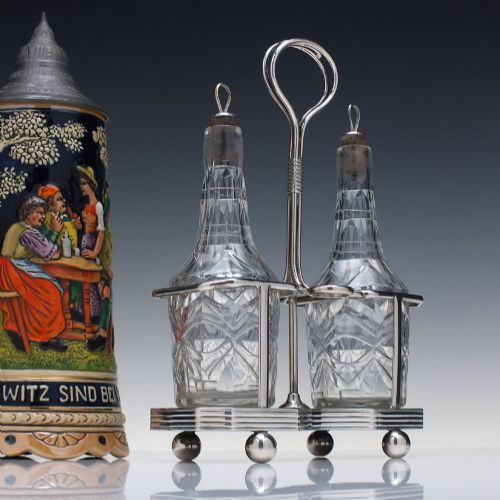
Silver plated cruet bottles represent a range of functional tableware designed to hold condiments, sauces, and liquids within coordinated frames. The selection on this page leans heavily toward Edwardian and Victorian pieces, alongside Georgian examples.
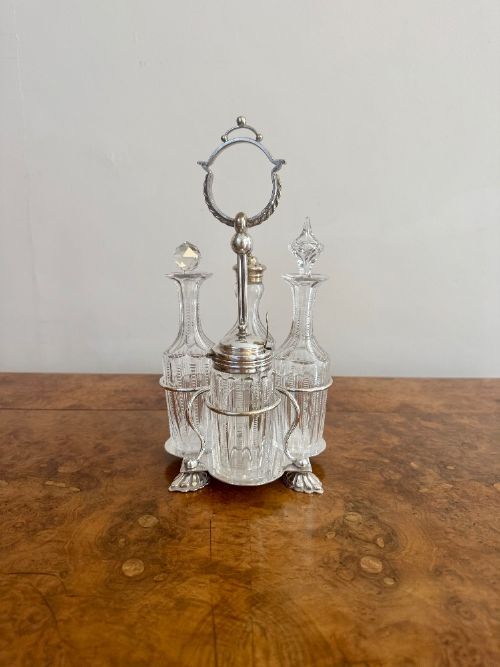
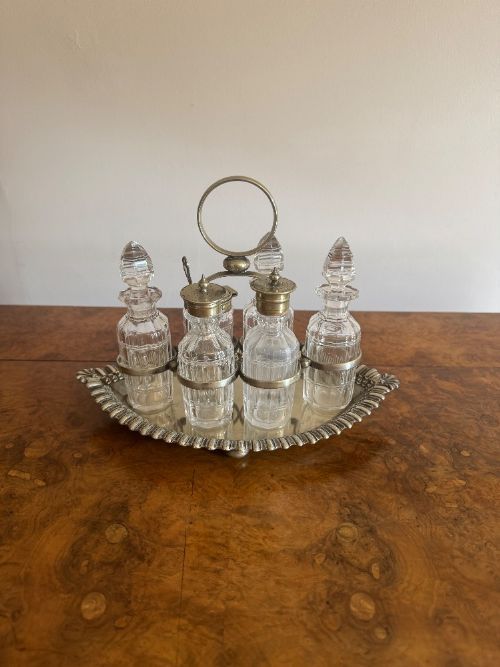
Forms span multi-bottle cruet sets, decanter sets, bottle holders, and individual stands. Buyers frequently encounter sets featuring six or seven bottles arranged in ornate frames, often complete with central carrying handles.
Origins trace across the nineteenth and early twentieth centuries, capturing shifts in dining habits from formal multi-bottle condiment service to decorative decanter storage.
Materials and Construction
Makers utilised silver plate and Old Sheffield plate over base metals to achieve the appearance of solid silver at a more accessible cost. Frames were often shaped with ornate casting and piercing techniques.
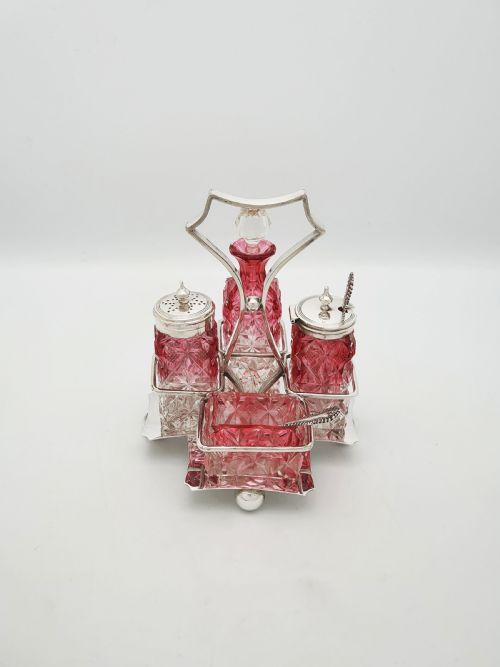
The bottles and vessels themselves were formed from clear glass, cut glass, and cranberry glass, frequently shaped to fit specific apertures within the metal framework.
Silver Plated Cruet Bottles Retail Price Guide 2026
Typical asking prices for silver plated cruet bottles among the pieces listed under this phrase on Sellingantiques today, from the lower quarter to the upper quarter. They describe what is for sale here now, not the wider market.
Evaluating the Pieces
Quality shows in the weight and rigidity of the silver plated frame, alongside the crispness of any chased or pierced decoration. Thicker plating holds up better through decades of polishing.
The integrity of the glass components matters significantly, with superior examples featuring deeply cut patterns that catch the light and bottles that sit securely without wobbling in their designated slots.
Walker and Hall·Wade Wingfield Wilkins
The Silver Plated Cruet Bottles Glossary
- Silver Plate
- A thin layer of silver fused or electroplated onto a base metal such as copper or nickel silver. This technique provided the lustrous finish of solid silver for dining accessories.
- Cranberry Glass
- A rich pink or red glass coloured by the addition of gold chloride during manufacture. It appears frequently in decorative Victorian and Edwardian tableware.
- Old Sheffield Plate
- An early method of fusing a sheet of silver to a thicker copper core by heat and pressure. Pieces produced this way often reveal subtle traces of copper along edges and wear points.
- Cruet Set
- A matched collection of small bottles or jars designed to hold condiments like oil, vinegar, salt, and pepper. They sit together in a dedicated stand or frame for easy transport to the table.
- Cut Glass
- Glassware decorated by cutting patterns into the surface using rotating wheels. The technique creates sharp facets that refract light through the contents of the bottle.
Silver Plated Cruet Bottles: Frequently Asked Questions
What are silver plated cruet bottles?
These pieces are matched glass containers held within decorative metal frames designed to serve condiments or spirits at the dining table. They combine utility with display.
Most examples date from the Victorian and Edwardian eras, reflecting formal dining traditions of the period.
How were cruet sets used?
Hosts placed them centrally on the dining table so guests could season their food with oils, vinegars, and sauces during the meal. Decanter versions held wines or cordials.
The sturdy central rings and handles allowed servants or diners to pass the entire collection safely between seats.
How do I clean the silver plate?
Use a soft cloth and a gentle, non-abrasive silver polish formulated specifically for plated items. Avoid harsh scrubbing that might wear through the thin silver layer to the base metal.
Keep glass components separate during cleaning to protect both the bottles and the metal framework from accidental knocks.
How can I tell the period?
Georgian and early Victorian sets often feature heavier Sheffield plate construction and simpler, classical lines. Edwardian versions tend to display lighter framing and more varied glass cutting.
Maker marks and registration numbers stamped onto the metal frames offer further clues to the exact decade of manufacture.