


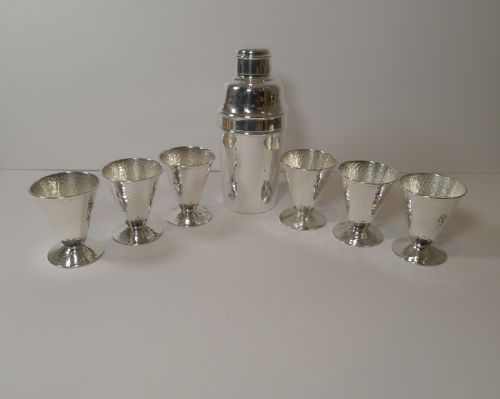


Silver Plated Cocktail Set
A silver plated cocktail set brings the sharp geometry of the interwar period straight to your drinks tray.
Silver Plated Cocktail Set
A silver plated cocktail set comprises coordinated barware designed for the preparation and service of mixed drinks, emerging most frequently from the Art Deco period. These gatherings typically feature a central shaker accompanied by beakers, ice buckets, or tongs, taking forms that span from sleek English engine-turned cylinders to French cased ensembles.
The pieces on this page originate predominantly from the 1920s and 1930s, alongside Edwardian examples and later mid-century items. Buyers encounter everything from simple hammered finishes to comprehensive sets complete with cut glass liners and original presentation cases.
Makers in this category range from prominent English silversmiths to continental ateliers, utilising durable metal bases to create functional items that defined twentieth-century entertaining.
Materials and construction
Makers built these vessels using nickel silver or brass as a base metal, applying a layer of silver plate to achieve a bright reflective surface. Artisans then employed techniques such as engine-turning and hammering to texture the metal bodies of shakers and ice pails.
Details often incorporate contrasting substances, pairing the metallic silver plate with cut glass liners, moulded Bakelite handles, or polished onyx bases. Tongs and draining spoons integrated specialised gripping mechanisms, while fitted cases used satin and velvet linings to secure each component.
Silver Plated Cocktail Set Retail Price Guide 2026
Typical asking prices for silver plated cocktail set among the pieces listed under this phrase on Sellingantiques today, from the lower quarter to the upper quarter. They describe what is for sale here now, not the wider market.
Materials combined in these barware items include silver plate, nickel silver, brass, cut glass, Bakelite, and onyx.
Distinguishing quality in cocktail ware
Quality rests upon the precision of the construction and the integrity of the underlying plating across the entire set. Pieces bearing clear signatures from recognised makers or distinct design houses display a higher degree of execution in their decorative motifs.
The presence of matching components, such as intact sets of beakers or original cut glass liners and tongs, elevates the integrity of an ensemble. Heavier gauge metalwork and crisper surface decoration distinguish superior items from standard commercial production.
Dawson·Maison Barra·Mappin & Webb·Keith Murray·St. Medard, Paris·Macabo
The Silver Plated Cocktail Set Glossary
- Silver Plate
- A thin layer of silver bonded to a base metal such as nickel silver or brass. This technique allowed manufacturers to produce substantial items with the appearance of solid silver at a lower cost.
- Art Deco
- A design style prevalent during the 1920s and 1930s characterised by sleek geometric shapes, stylised motifs, and streamlined forms. It heavily influenced the appearance of cocktail shakers and barware.
- Engine-Turned
- A surface decoration technique involving precise geometric patterns cut into metal by a specialised lathe. This method added texture and visual depth to shaker bodies.
- Bakelite
- An early form of synthetic plastic used for handles, knobs, and decorative accents on mid-century barware. Its durability and distinct coloration made it popular in interwar design.
- Cut Glass
- Glass shaped and patterned by abrasive wheels to create faceted designs. It frequently appears in liners for ice buckets and pails.
Silver Plated Cocktail Set: Frequently Asked Questions
How do I clean a silver plated cocktail set?
Wash components gently in warm water with mild soap and dry them immediately with a soft cloth to protect the silver plate. Avoid harsh abrasives that might wear away the thin layer of silver over time.
For tarnished areas, use a specialised silver polish applied with care, ensuring you clean around any Bakelite or glass elements without submerging them.
Are these vintage cocktail shakers still usable today?
Most shakers and ice buckets remain fully functional for mixing drinks, provided the interior plating is intact and clean. Check that lids and caps seal securely before preparing liquids.
Keep in mind that older plated items require hand washing rather than dishwasher cleaning to preserve their exterior finish and mechanical fittings.
What indicates an Edwardian piece versus an Art Deco one?
Edwardian items, often dating around the turn of the twentieth century, tend to feature more ornate floral or classical ornamentation. They reflect the heavier, more traditional aesthetic of the pre-war era.
Art Deco pieces from the 1920s and 1930s favour streamlined silhouettes, crisp geometric lines, and minimalist surfaces like engine-turning or hammered textures.
Why do some sets include fitted cases?
Fitted cases lined with velvet or satin were designed to protect delicate sets of shakers and beakers during storage or transport. They kept all matching components securely organised in one place.
Such cased ensembles were often purchased as high-end gifts for weddings or special occasions, contributing to their survival in complete condition.