



Silver Pendant Fitting
These silver pendant fittings combine suspended illumination and historical metalwork, bringing period character and layered light to any interior.
Silver Pendant Fitting
A silver pendant fitting encompasses multi-arm chandeliers and single hanging lights suspended from ceilings to illuminate interior spaces. When you search for a silver pendant fitting, you encounter substantial metal and crystal fixtures that bridge practical overhead lighting and decorative art.
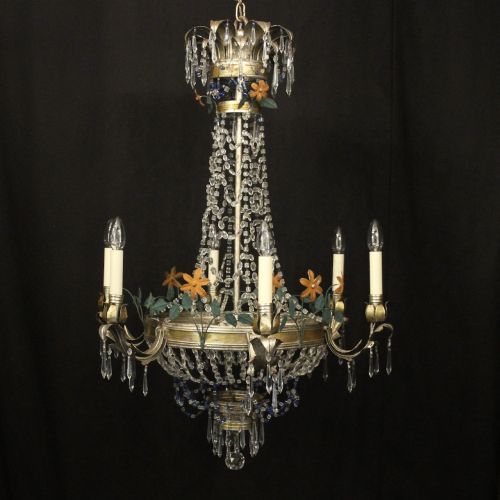
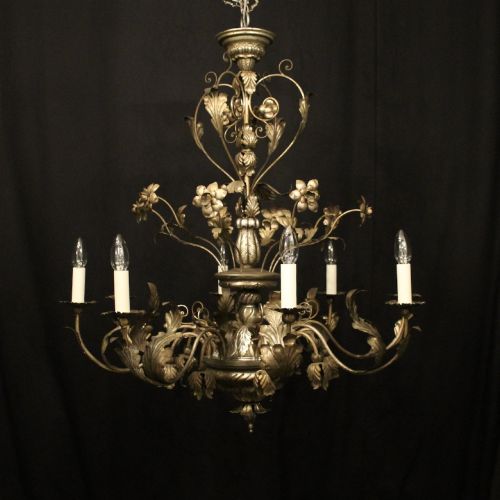
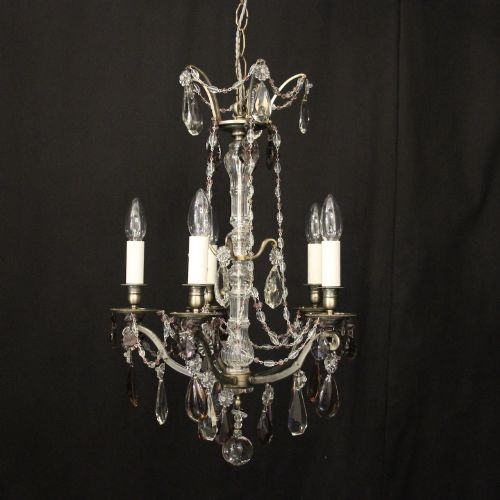
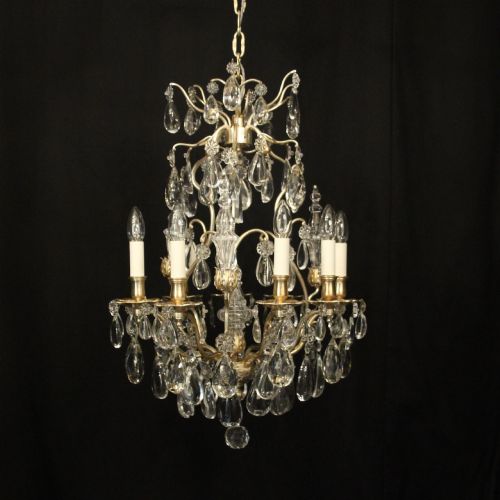
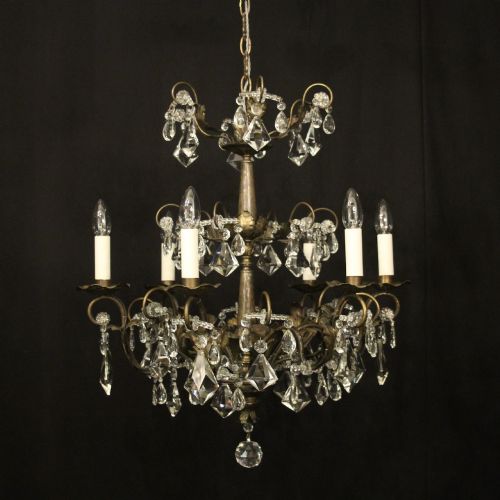
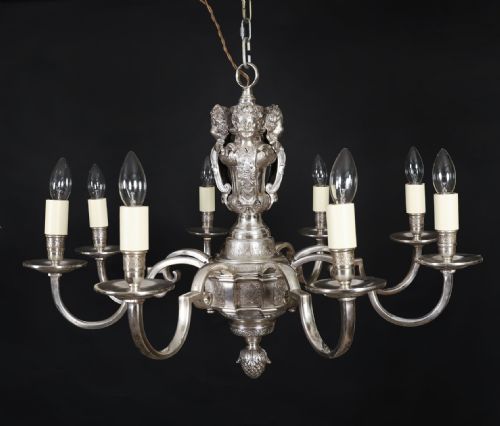
The pieces on this page span the nineteenth century, the Edwardian era, and the nineteen-twenties and thirties, drawing from French, Italian, and English workshops. French chandeliers with silvered bronze, crystal drops, and multiple light arms dominate the selection.
Forms range from compact Art Deco chrome designs to grand fifteen-light creations adorned with cut glass and mercury mirrored elements. Each object functions as a central architectural element within a room, distributing light downwards from its ceiling suspension.
Materials and construction
Makers utilised cast bronze, brass, and metal as structural skeletons, applying silver plating, silver gilding, or chrome finishes to the exterior surfaces. These base metals provide the rigid armature necessary to support multiple arms and heavy glass components.
Crystal, cut glass, and mercury mirrored glass are integrated into the metal frames to refract and multiply the illumination from candles or early electric bulbs. Selected pieces combine faceted drops with gilt bronze work, uniting reflective glass with gleaming metallic surfaces.
Silver Pendant Fitting Retail Price Guide 2026
Typical asking prices for silver pendant fitting among the pieces listed under this phrase on Sellingantiques today, from the lower quarter to the upper quarter. They describe what is for sale here now, not the wider market.
Some nineteenth-century French chandeliers carry fifteen separate light arms, ensuring nobody ever dines in shadow again.
Evaluating the pieces
Quality reveals itself in the crispness of metal casting and the depth of the silver gilt or plate applied to the bronze, brass, or iron structure. Superior examples display refined chasing on the metalwork and careful proportioning across multiple light arms.
The integration of genuine cut crystal or mercury mirrored glass distinguishes finer hanging lights from simpler commercial iterations. Artisans achieved distinction through the harmonious balance between heavy metal armatures and sparkling prismatic glass elements.
The Silver Pendant Fitting Glossary
- Silver Gilded
- Metal coated with a thin layer of silver leaf or powder. This technique provides the reflective sheen of solid silver over a sturdier base metal like bronze or brass.
- Mercury Mirrored Glass
- Glass coated internally with a reflective silvering compound. It creates a dense, dark mirror effect seen in nineteenth-century and early twentieth-century lighting.
- Cut Glass
- Glass shaped and faceted on a wheel to create sharp edges that refract light. It adds brilliance and sparkle to chandeliers and pendant lights.
- Chandelier
- A branched ornamental light fixture suspended from a ceiling. These fixtures hold multiple light sources, ranging from historical candle cups to electric lamps.
- Art Deco
- A design style from the nineteen-twenties and thirties characterised by geometric shapes and modern industrial metals like chrome. It represents a shift away from ornate historical revivals.
Silver Pendant Fitting: Frequently Asked Questions
What is a silver pendant fitting?
A silver pendant fitting is an overhead light fixture suspended from the ceiling by a chain, rod, or cord. These pieces utilise silvered metal, silver plate, or chrome finishes to create a reflective surface that bounces light around a room.
They encompass both multi-armed chandeliers and single hanging lights. The category spans various historical eras, each bringing distinct manufacturing techniques and decorative styles to interior spaces.
How do I hang a heavy antique chandelier?
Hanging a heavy antique lighting fixture requires securing the weight directly to a ceiling joist or structural support using an appropriate steel hook or bracket. Professional installation ensures the ceiling can bear the substantial weight of bronze, brass, and crystal components.
Electrical wiring must also be inspected and adapted to meet modern safety standards while preserving the historic appearance of the fixture.
How do I date a silver pendant fitting?
Dating these fixtures involves examining the materials, construction methods, and stylistic cues present in the design. Edwardian and nineteenth-century examples often feature cast bronze and hand-cut crystal, while nineteen-thirties pieces introduce chrome and streamlined geometric forms.
The presence of specific manufacturing techniques, such as particular casting seams or wiring channels, further helps narrow down the period of production.
How do I clean crystal and silvered bronze?
Cleaning requires gentle dusting with a soft cloth and the careful application of mild, non-abrasive cleaners suited for historic metals and glass. Harsh chemical polishes can strip away delicate silver gilding or plating from the underlying bronze or brass.
Crystal drops can often be wiped down individually while remaining attached to the frame, or removed carefully for a deeper clean.