




Silver Pedestal Lamp
A silver pedestal lamp brings weight and steady height to a room, catching the light in a way ordinary ceramics cannot manage.
Silver Pedestal Lamp
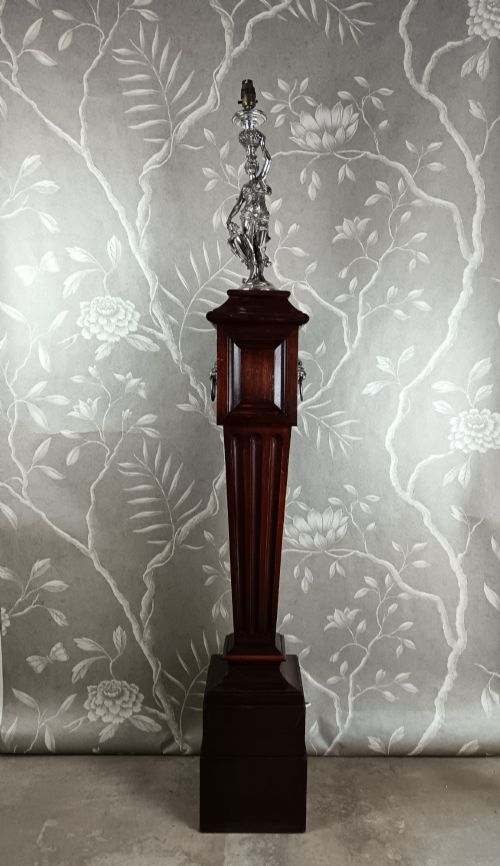
A silver pedestal lamp stands upright on a raised column or base, providing functional illumination while acting as a commanding piece of furniture. Buyers searching for a silver pedestal lamp will find examples ranging from towering floor-standing torcheres to sturdy table lamps designed to sit upon side tables. The selection draws on periods from the late nineteenth century through to the art deco era, reflecting shifts in taste from classical revivalism to modern streamlining.
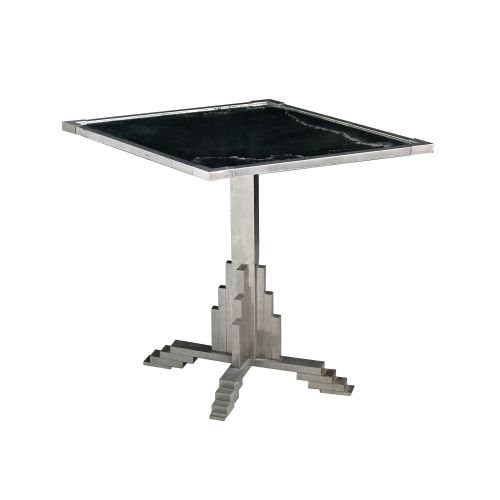
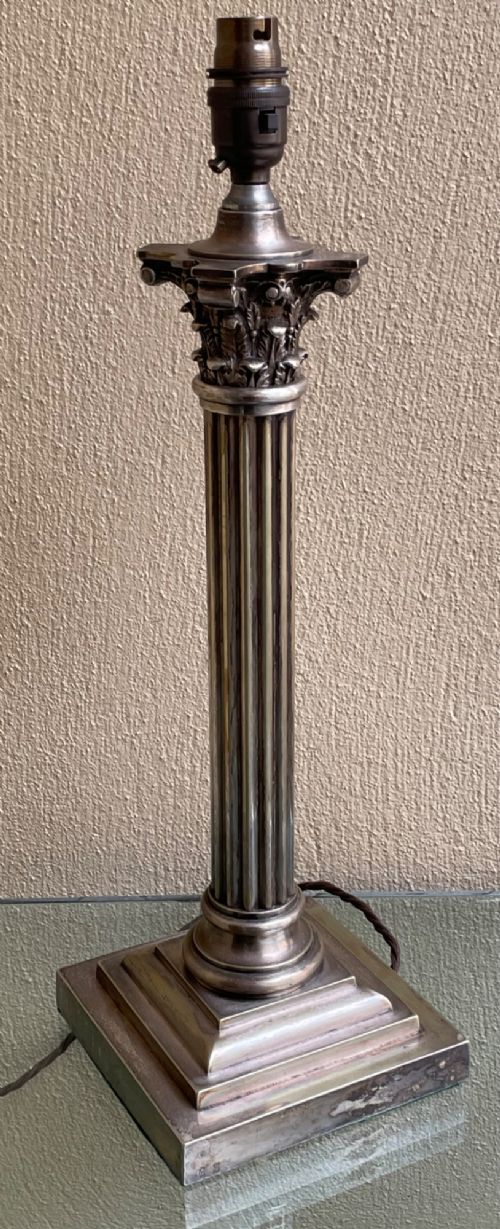
Most pieces on display rely on silver plate over a sturdy core of metal, brass, or chrome plated metal, often paired with secondary materials like mahogany, walnut, mirrored glass, or fabric shades. Forms vary significantly, encompassing classical Corinthian columns, figural statues, and geometric art deco uplighters. Dating ranges from the Victorian period through Edwardian times up to the nineteen-thirties, giving buyers a choice of distinct historical aesthetics.
How they were made
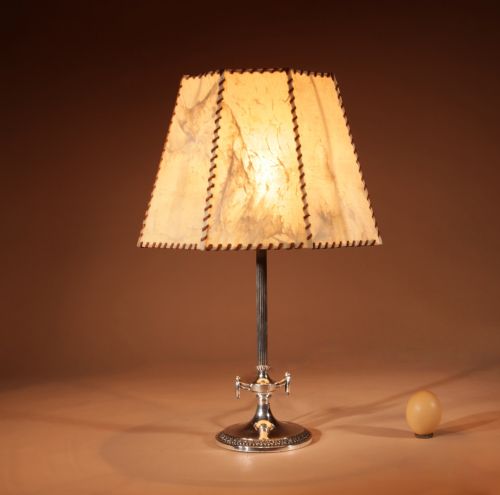
Makers constructed these lamps using durable base metals plated in silver, sometimes combining them with hardwoods such as mahogany and walnut to add structural contrast and visual depth. Elements like mirrored glass and parchment leather appear alongside chrome and brass, demonstrating a readiness to mix reflective surfaces with heavy metals. Surface finishes range from polished white metal to heavy silver plating over cast metal cores.
Casting techniques allowed workshops to produce complex architectural details such as fluted columns and Corinthian capitals with sharp definition. Artisans incorporated figural statuary and stepped geometric tiers, joining metal components securely to wooden bases or mirrored tabletops where the design required extra stability.
Listings feature silver plate over various metals alongside wood, mirrored glass, and parchment leather across pieces dating from the Victorian era to the nineteen-thirties.
What varies in quality
Quality rests upon the weight of the casting and the crispness of the architectural detailing, where deeply struck flutes and well-defined acanthus leaves separate fine work from plain production. The thickness and durability of the silver plating dictate how well the surface survives decades of cleaning and handling.
The choice of secondary materials also marks the tier of the piece, with solid walnut or mahogany bodies and heavy mirrored glass tops indicating higher ambition than simpler metal forms. Maker marks stamped into the metal provide a reliable guide to origin and workshop standards.
WMF
The Silver Pedestal Lamp Glossary
- Torchiere
- A tall floor lamp designed to direct light upwards towards the ceiling rather than down into the room. These pieces often feature slender shafts rising from heavy pedestals.
- Corinthian column
- An architectural order featuring a slender fluted shaft topped by an ornate capital decorated with carved acanthus leaves. Many lamps adopt this classical form in silver plate.
- Silver plate
- A thin layer of silver bonded to a base metal such as brass, copper, or white metal. This technique gave the appearance of solid silver at a lower cost.
- Art Deco
- A design style from the nineteen-twenties and thirties characterised by geometric shapes, streamlined forms, and polished chrome or metal finishes. It succeeded the more ornate Victorian styles.
Silver Pedestal Lamp: Frequently Asked Questions
How do I clean a silver plated lamp?
Use a soft cloth and a specialist silver cleaner designed to lift tarnish without stripping the plated layer from the base metal. Avoid abrasive pads or harsh chemicals that can scratch the polished surface.
Take care around joints and stamped marks where the plating may be thinner. Regular, gentle dusting is often enough to maintain the shine between proper cleans.
Are these lamps heavy?
Many examples possess substantial weight due to their solid metal cores, cast bronze or brass elements, and hardwood components. Floor-standing torcheres and Corinthian column table lamps rely on this mass for stability.
Smaller art deco uplighters and side tables are lighter but still built to support the height of the standard and shade without tipping.
Can I use modern lightbulbs?
Most antique lamps accommodate modern screw or bayonet bulbs provided the wattage matches the historical wiring capacity. It is wise to have older fittings checked by a qualified electrician before daily use.
LED bulbs run cooler and draw less power, which helps protect vintage shades and parchment elements from heat damage over time.
How do I distinguish Victorian from art deco lamps?
Victorian pieces favour historical revivals, employing classical motifs like fluted Corinthian columns, heavy silver plating, and rich woods such as walnut and mahogany. They lean towards ornamentation and traditional craftsmanship.
Art deco lamps embrace geometric lines, stepped pedestals, chrome plated metal, and parchment leather. Their forms are streamlined and reflect the modernist aesthetics of the nineteen-twenties and thirties.