

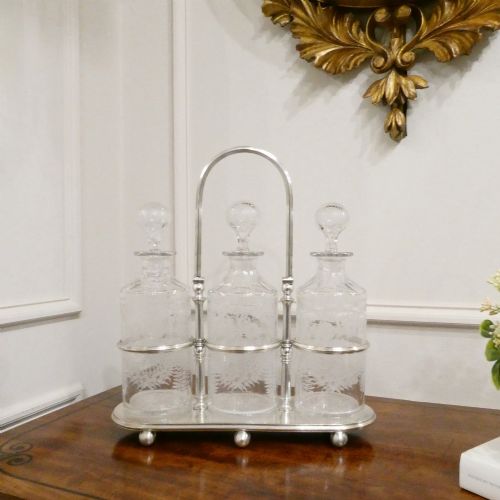
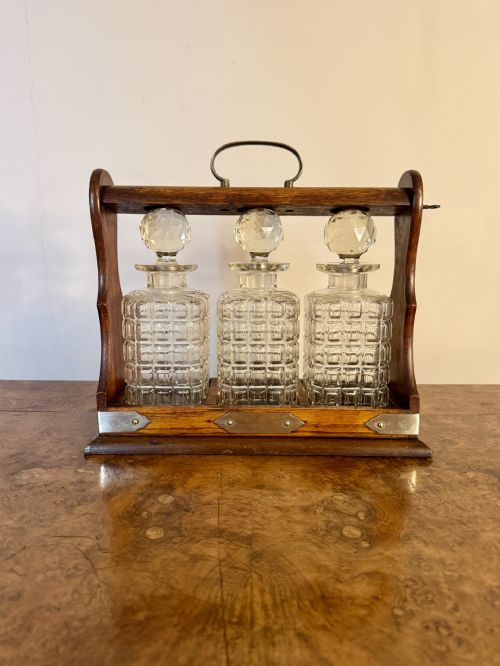
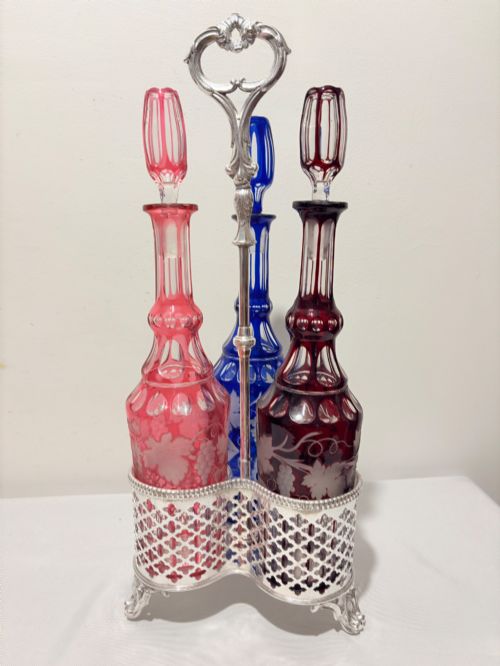
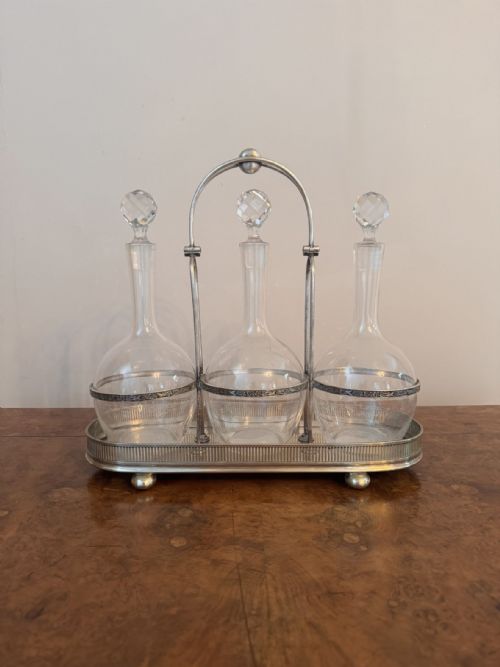


Silver Liquor Stand
A silver liquor stand holds the bottles that keep the evening hospitality close at hand.
Silver Liquor Stand
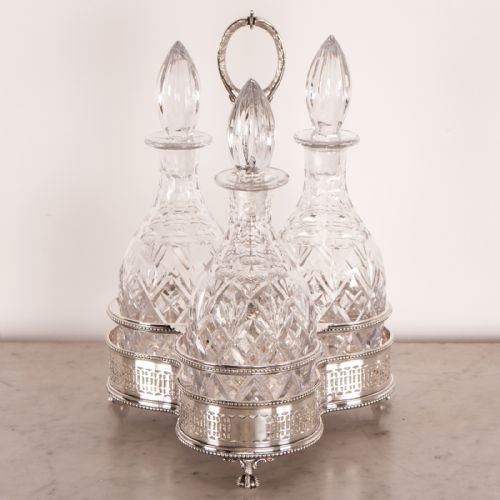
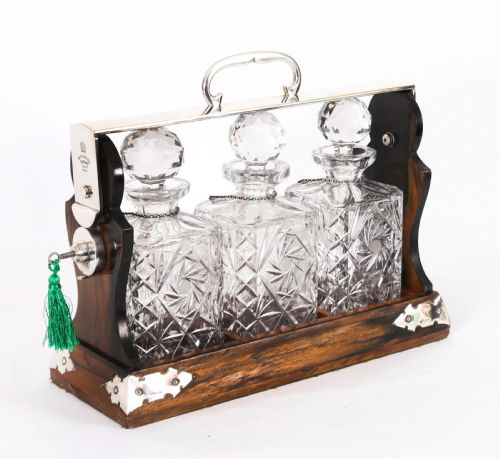
A silver liquor stand brings together structured frames and glass vessels to hold spirits securely in the parlour or dining room. The pieces matching this description take several forms, from open bottle holders to lockedtantaluses and revolving barrel sets.
Victorian and Edwardian versions dominate the selection here, spanning the latter half of the nineteenth century and the opening years of the twentieth. Oak, coromandel wood, and silver plate form the structural basis for most frames found in this group.
Makers housed bottles in fitted cruets, stands, and locking wooden boxes to protect expensive spirits from household staff. Buyers encounter everything from simple three-bottle frames to elaborate travelling bars fitted with cut crystal decanters.
Construction and materials
Makers utilised heavy silver plating over base metal, alongside Old Sheffield Plate, to give frames the appearance and lustre of solid silver without the prohibitive weight. Timber frames relied upon dense hardwoods like oak and exotic coromandel wood to house the glass securely.
Glass vessels required skilled cutting by hand to produce faceted decanters that caught the candlelight in Victorian dining rooms. Metal locking mechanisms and hinge mounts needed precise engineering to secure the bottles within their frames.
Silver Liquor Stand Retail Price Guide 2026
Typical asking prices for silver liquor stand among the pieces listed under this phrase on Sellingantiques today, from the lower quarter to the upper quarter. They describe what is for sale here now, not the wider market.
Listings feature oak, coromandel wood, silver plate, and cut crystal across Victorian and Edwardian periods.
Judging the work
Quality rests in the weight of the silver plate and the precision of the timber joinery holding the frame together. Better pieces use thick crystal decanters with original matching stoppers rather than later replacements.
Makers who incorporated working locks with functional keys and stamped maker marks elevated standard barware into secure display pieces. The complexity of the frame, from simple stands to locking tantalus boxes, dictates the level of craftsmanship involved.
Walker and Hall·Betjemann·Elkington·Hukin and Heath·Philip Ashberry·Mappin Brothers
The Silver Liquor Stand Glossary
- Tantalus
- A locking drink stand that displays decanters while preventing access to the contents without a key. The metal bar locks over the stoppers to keep servants from sampling the spirits.
- Silver Plate
- A base metal coated with a thin layer of silver through electroplating or older fusion methods. It provides the shine of solid silver at a lower production cost.
- Old Sheffield Plate
- An early method of fusing a thin sheet of silver to a thicker copper core before shaping. This technique creates a durable material visible along exposed edges where the copper shows through.
- Cut Crystal
- Glass containing lead oxide that increases its weight and brilliance, shaped by deep wheel-cutting. The sharp facets refract light intensely.
- Cruet
- A fitted stand designed to hold condiment bottles or small spirit decanters together on the table. Frames usually include a central carrying handle.
Silver Liquor Stand: Frequently Asked Questions
What is a tantalus?
A tantalus is a locking liquor stand that holds decanters firmly in place beneath a metal bar.
It earned its name because guests could see the whiskey inside, but could not pour a drink without the key.
How do I date these pieces?
Dating relies on stylistic clues, registered design marks, and maker hallmarks stamped onto the metal frames.
Victorian pieces often display heavier cast ornamentation, while Edwardian examples lean toward cleaner lines and simpler oak housings.
Are the decanters original?
Many sets retain their original cut glass decanters, which fit precisely into the carved wooden bases or silver plated rings.
Because glass frequently broke over time, replacement decanters do occur in older frames.
How do I clean the silver plate?
Silver plate requires gentle cleaning with a soft cloth and a specialised cream formulated for plated items.
Harsh abrasive polishes will wear away the thin silver layer down to the base metal beneath.