

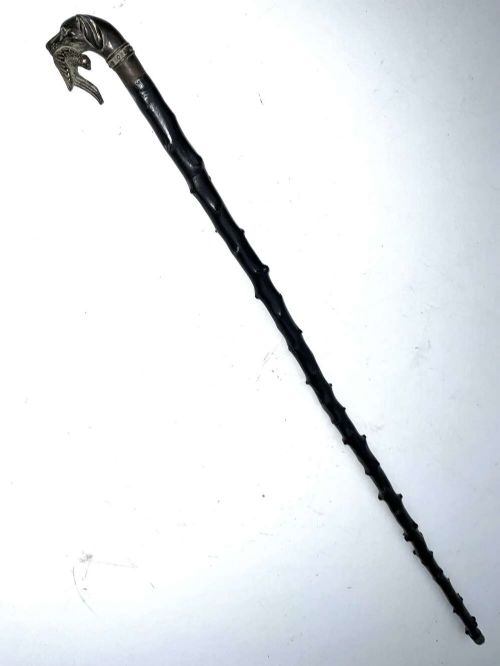
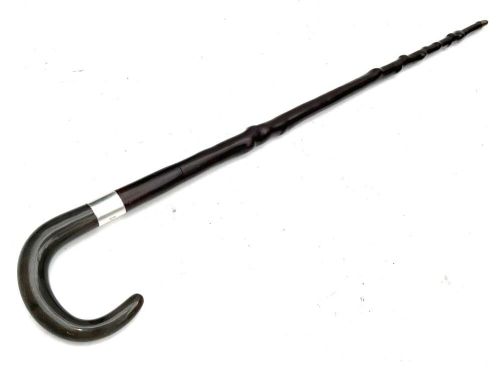
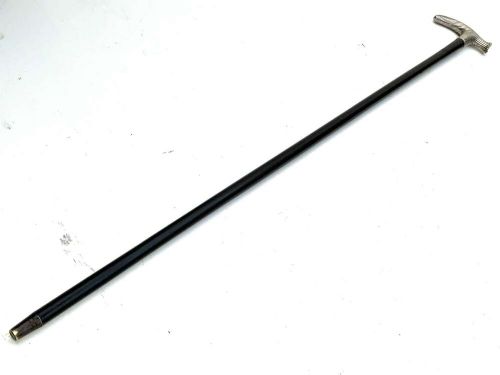
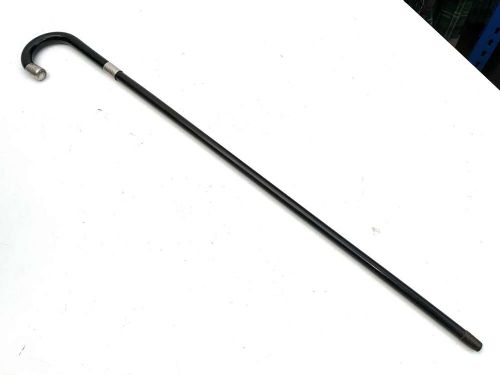



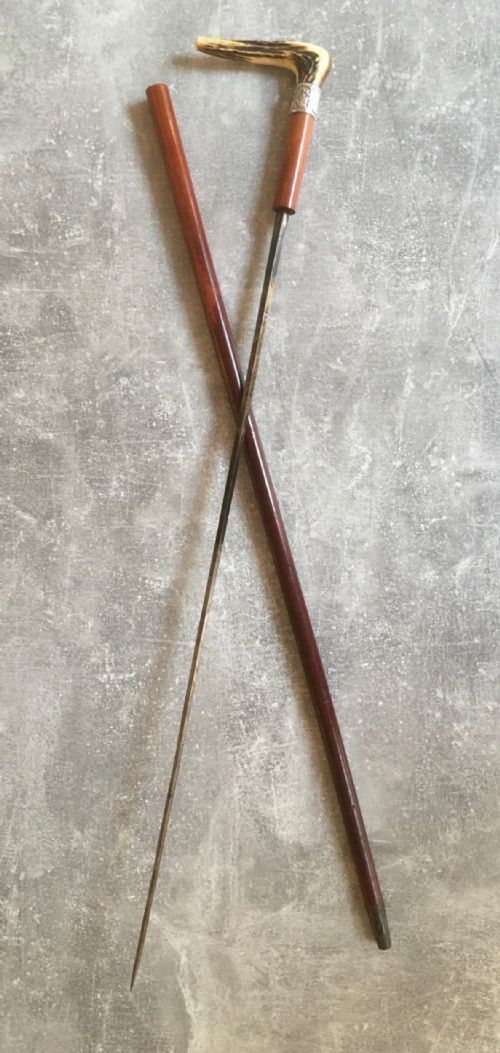


Silver Handled Sword Stick
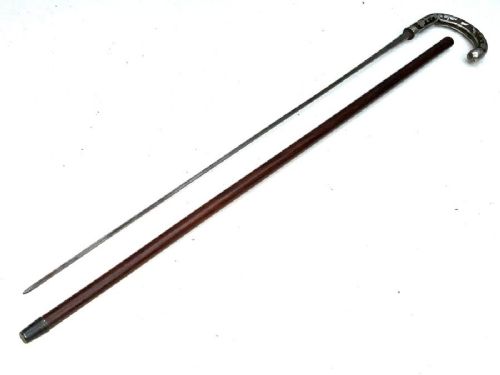
A silver handled sword stick conceals a functional blade beneath the guise of a gentleman's everyday walking support.
Silver Handled Sword Stick
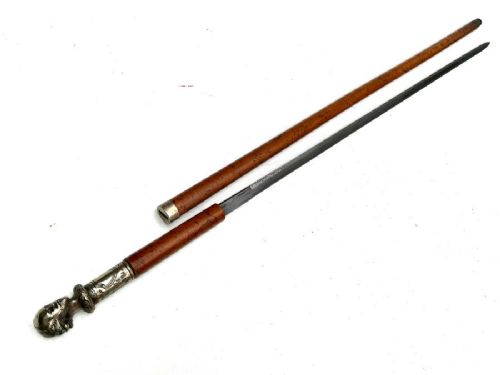
A silver handled sword stick serves as both a discreet personal defence implement and a gentleman's walking accessory from the nineteenth and early twentieth centuries. These pieces combine a standard walking cane with a concealed steel blade, housed securely within a wooden or cane shaft.
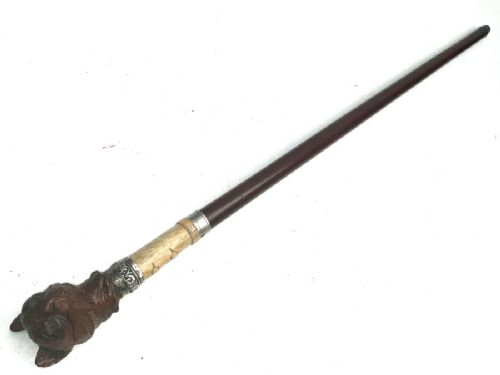
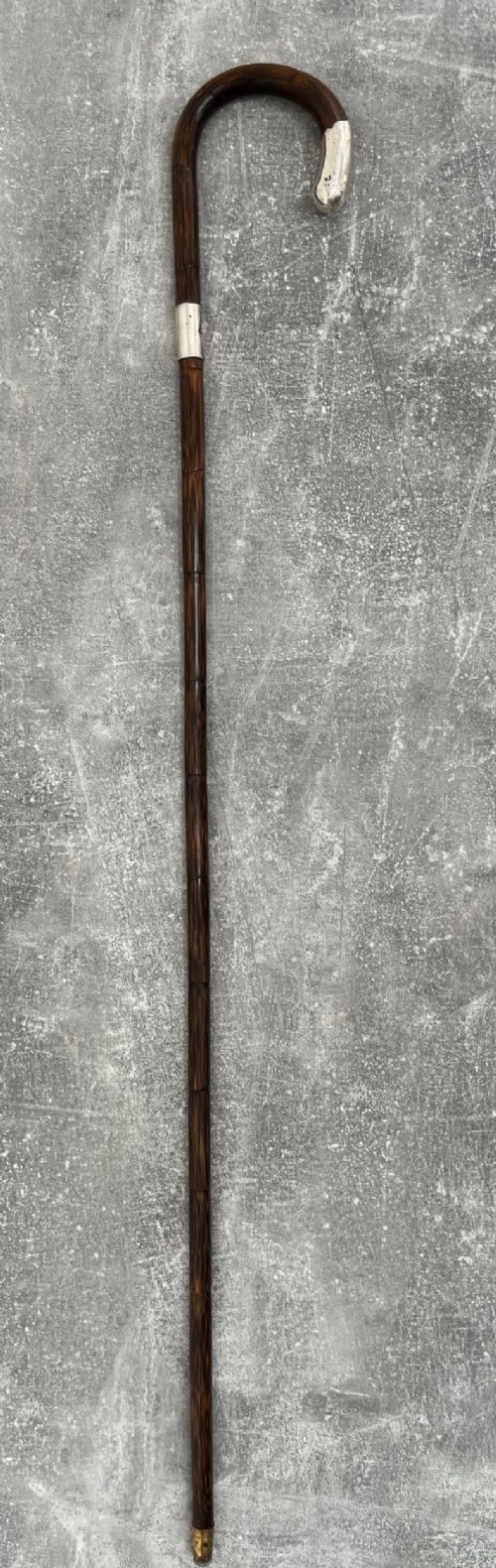
Most examples encountered on this page date from the Victorian and Edwardian eras, spanning the late nineteenth century up to the 1930s. Common forms include malacca cane shafts fitted with silver collars, alongside variants featuring horn, bone, antler, and root ball handles.
Specialised iterations appear with military or fraternal associations, including Imperial German and Imperial Russian pieces, as well as Masonic designs. Certain specimens incorporate maker marks or specific blades such as Wilkinson or Toledo outputs.
How They Were Made
Craftsmen built these pieces using natural materials for the shafts, frequently selecting malacca cane, bamboo, rosewood, chestnut, or heavy wood. These shafts were hollowed out precisely to accommodate a fitted steel blade, often secured with a locking mechanism or friction fit.
The mounts and handles utilised sterling silver, frequently decorated with repoussé work, alongside bone, horn, antler, and brass. Blades were forged from tempered steel, sometimes sourced from established makers like Wilkinson or imported from Toledo.
Silver Handled Sword Stick Retail Price Guide 2026
Typical asking prices for silver handled sword stick among the pieces listed under this phrase on Sellingantiques today, from the lower quarter to the upper quarter. They describe what is for sale here now, not the wider market.
Listings feature silver, steel, wood, horn, malacca cane, metal, bone, and brass across nineteenth and twentieth century pieces.
What Varies in Quality
The calibre of a silver handled sword stick depends largely on the integrity of the materials and the precision of the join between handle and shaft. Superior pieces display crisp hallmarking on the silver mounts and seamless alignment when the blade is sheathed.
Blade quality distinguishes standard walking aids from high-grade commissions, with branded or specially forged steel indicating superior manufacturing. The complexity of the handle, whether carved horse heads, repoussé silver knops, or moulded horn, further elevates the standard of the piece.
BRIGG·Wilkinson
The Silver Handled Sword Stick Glossary
- Malacca cane
- A strong, speckled rattan native to Southeast Asia, highly prized for walking stick shafts due to its flexibility and resilience. It forms the foundation of many traditional sword sticks.
- Repoussé
- A metalworking technique where silver is hammered from the reverse side to create a raised, ornamental design in relief. This method decorated many silver collars and knops.
- Knop
- A rounded knob or ornamental handle fitted to the top of a walking stick. In these pieces, the knop often conceals the release mechanism for the internal blade.
- Root ball handle
- A natural handle formed from the dense root mass of a tree, trimmed and polished for use on a walking cane. These offer an organic, robust grip.
- Toledo blade
- A steel blade produced in Toledo, Spain, an historic centre renowned for producing exceptionally tempered and flexible steel. Such blades add notable provenance to a sword stick.
Silver Handled Sword Stick: Frequently Asked Questions
How do you release the blade on a sword stick?
Most sword sticks utilise a simple push-button catch, a twist-lock mechanism, or a friction fit concealed beneath the silver collar or handle. Pulling the handle straight up releases the steel blade from the wooden scabbard shaft.
Care must be taken when operating older mechanisms, as wood shrinkage over the decades can alter the fit between the blade and the interior channel.
What woods and materials were used for the shafts?
Makers predominantly selected malacca cane, bamboo, chestnut, and rosewood for the outer shafts because of their straight grain and durability. These natural materials were hollowed out by hand to house the steel blades securely.
Other natural additions include horn, bone, and antler, which provided alternative textures for both the shafts and the grip handles.
How do you date a silver handled sword stick?
Dating relies primarily on the silver hallmarks stamped on the mounts or collars, which record the assay office and year of assay. Stylistic details such as Victorian repoussé work or Edwardian proportions also help narrow the period.
Blade etchings and maker stamps provide additional chronological markers, connecting the piece to specific workshops or military suppliers active in the nineteenth and early twentieth centuries.
Were sword sticks carried for self-defence?
Gentlemen during the Victorian and Edwardian periods carried sword sticks as personal protection items when navigating poorly lit or unfamiliar urban streets. The cane doubled as a standard walking aid while keeping a concealed weapon immediately accessible.
Certain examples indicate specific military or official use, such as Imperial German and Russian pieces associated with officers.