

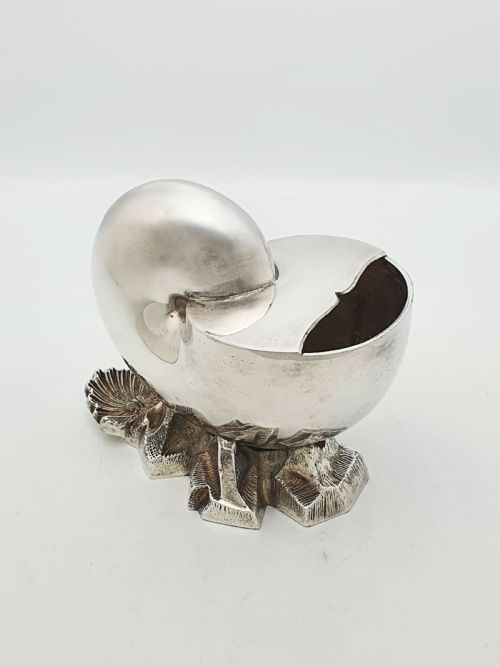


Silver Gravy Warmer
These silver gravy warmer pieces bring practical refinement to the dining table, offering a clever way to keep sauces warm.
Silver Gravy Warmer
A silver gravy warmer, often referred to as an argyll or spoon warmer, is a specialised piece of serveware designed to keep sauces and gravies at the correct temperature during a meal. The selection spans the eighteenth, nineteenth, and twentieth centuries, capturing Georgian and Victorian dining traditions.
You will most commonly encounter silver plated and Old Sheffield plate examples on this page, alongside novelty forms such as nautilus shells, ammonites, and shoes. These table decorations and tableware items reflect the playful and inventive design tastes of the Victorian era alongside formal Georgian utility.
The objects take various functional shapes, including urn-shaped bodies, sauce boat designs, and dedicated argylls with internal heating compartments. These pieces range from plain crested bodies to unusual novelty styles produced by makers like Padley Parkin and Staniforth.
How they were made
Construction relies heavily on silver plate, Old Sheffield plate, and EPNS over a base metal alloy, combined with organic elements like wood, ebony, and cane for handles and insulators. These materials provided the necessary durability and thermal properties for holding hot liquids without transferring excessive heat to the grip.
The manufacturing techniques visible across these listings include fused plating methods for Old Sheffield plate and electroplating for later Victorian pieces. Artisans shaped metal alloy bodies into naturalistic shell forms, plain urns, and conventional sauce boat silhouettes, sometimes incorporating crests.
Silver Gravy Warmer Retail Price Guide 2026
Typical asking prices for silver gravy warmer among the pieces listed under this phrase on Sellingantiques today, from the lower quarter to the upper quarter. They describe what is for sale here now, not the wider market.
Listings feature items spanning the eighteenth and nineteenth centuries, including Victorian and Georgian periods.
What varies in quality
Quality in a silver gravy warmer depends on the crispness of the casting and the execution of the plating method, whether Old Sheffield plate or later electroplating. Finer examples display sharp detailing on novelty forms like nautilus shells and shoes, maintaining structural integrity across handles and hinges.
The sophistication of the internal design for thermal retention also separates standard items from superior pieces. Well-executed crests, substantial metal weights, and the integration of materials such as ebony or cane indicate higher standards of period manufacture.
Padley Parkin and Staniforth
The Silver Gravy Warmer Glossary
- Argyle
- A vessel designed for keeping gravy warm, typically featuring a double wall or an internal compartment for hot water. This ensures sauces remain at serving temperature throughout the meal.
- Old Sheffield Plate
- An early composite material made by fusing a thin sheet of silver to a thicker copper base. Pieces produced this way exhibit a distinctive warm lustre.
- EPNS
- Electro Plated Nickel Silver, a common base material coated with a layer of pure silver using electrical current. This technique became widespread during the nineteenth century.
- Nautilus Shell
- A marine mollusc form frequently utilised by Victorian silversmiths for novelty tableware. These naturalistic shapes are both decorative and functional.
- Sauce Tureen
- A covered ceramic or metal vessel used for serving sauces at the dining table. They frequently match larger service sets from the Georgian and Victorian periods.
Silver Gravy Warmer: Frequently Asked Questions
How do I clean a silver plated gravy warmer?
Clean silver plated and Old Sheffield plate items using a gentle, non-abrasive silver polish and a soft cloth. Avoid harsh scrubbing that might wear away the thin silver layer over the base metal alloy.
Take particular care around organic handles made from wood, ebony, or cane, ensuring they remain dry and protected from excessive moisture during cleaning.
What is the difference between silver plate and Old Sheffield plate?
Old Sheffield plate is an early fusion material where a sheet of silver is physically bonded to a copper base through heat and pressure. This method produces a rich depth that differs from later chemical plating.
Silver plate and EPNS rely on electrical currents to deposit silver onto a base metal alloy, a technique that became standard practice during the nineteenth century.
How were novelty spoon warmers used?
Novelty spoon warmers, shaped like nautilus shells, ammonites, or shoes, held warm water to heat the bowls of silver spoons before serving chilled desserts or rich sauces. This prevented the cutlery from chilling the food.
They served as both practical tableware items and decorative conversation pieces during Victorian dinner parties, often matching elaborate tablescapes.