

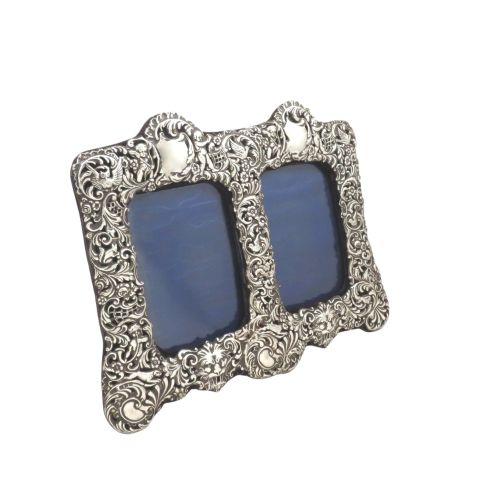


Silver Double Frame
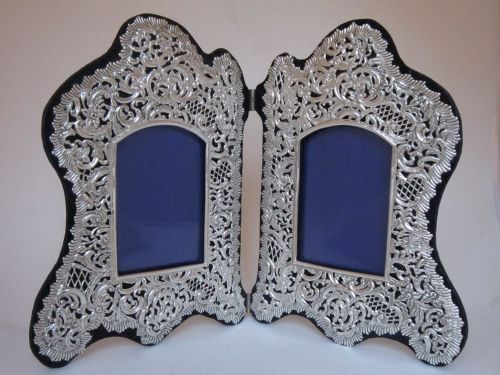
These silver double frames are hinged companions for portraits, forged from sterling silver and silver plate across the Victorian, Edwardian and later periods.
Silver Double Frame
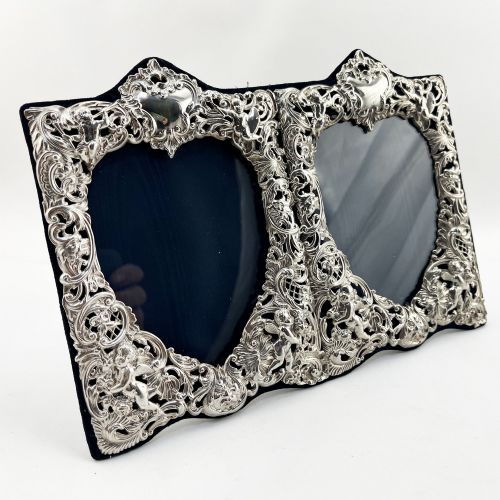
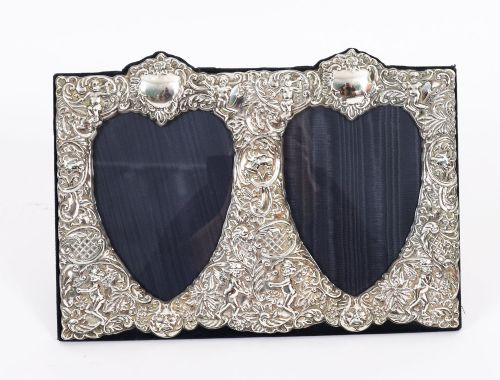
A silver double frame is primarily encountered as a hinged picture or photo frame designed to display two images side by side. The examples appearing under this search phrase span Victorian, Edwardian and early twentieth century eras, showcasing forms from simple rectangular mounts to heart shapes.
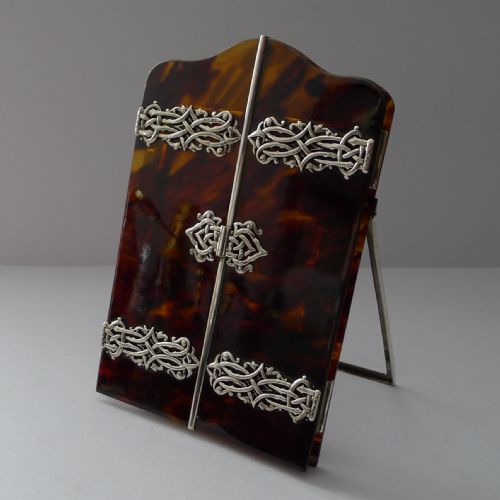
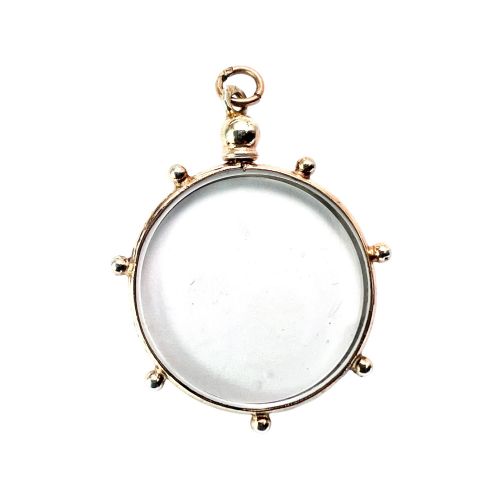
Beyond standard photograph frames, the category widens to include tortoiseshell mounts, gold on silver glass top screw locket pendants, and various silver plated stands such as condiment sets and liqueur holders. Buyers navigating these listings will most frequently meet sterling silver and silver plate constructions bearing hallmarks from Sheffield and other British assay offices.
Materials and construction methods
Makers utilised sterling silver and silver plate over supportive structures, often incorporating glass viewing panels, wooden backs and plush velvet linings. Metalwork techniques combined sheet silver pressing with delicate chasing, piercing and repoussé work, particularly evident in Victorian Rococo Revival and heart-shaped designs.
Specialist materials such as tortoiseshell and cut glass appear combined with silver mounts, while structural elements like stepped oak frames support portrait canvases in related pieces. Hinges joining the two apertures require precise engineering to ensure the dual panes fold evenly without straining the precious metal.
Silver Double Frame Retail Price Guide 2026
Typical asking prices for silver double frame among the pieces listed under this phrase on Sellingantiques today, from the lower quarter to the upper quarter. They describe what is for sale here now, not the wider market.
Several frames feature intertwined double hearts, ready to enshrine photographic evidence of Victorian affections.
Assessing quality in dual frames
Quality rests upon the weight of the metal, the crispness of the chased or pierced ornamentation, and the structural integrity of the central hinge. Heavier gauge sterling silver mounts retain their shape and detail far better than thin electroplated alternatives over base metals.
The integration of secondary materials such as tortoiseshell, bevelled glass, and original wooden or velvet backs distinguishes superior examples. Maker marks and clear assay stamps provide definitive evidence of origin and metallurgical standard, elevating pieces produced by notable workshops.
William Comyns·Hardy Brothers·Hukin and Heath
The Silver Double Frame Glossary
- Sterling silver
- An alloy consisting of ninety-two point five percent silver by mass, with the remainder being other metals such as copper. This standard is denoted by specific hallmarks on British silver items.
- Silver plate
- A layer of silver applied to a base metal, commonly utilised to produce domestic wares and frames during the nineteenth and twentieth centuries. It offers the appearance of solid silver at a different cost.
- Tortoiseshell
- The shell of certain turtle species historically used to veneer or inlay luxury items like photograph frames. It is frequently mounted beneath pierced silver tracery.
- Hallmark
- An official stamp applied by an assay office to indicate the purity of a precious metal, the place of testing, and the year of manufacture.
- Repoussé
- A metalworking technique where the metal is hammered from the reverse side to form a raised design in relief on the front.
Silver Double Frame: Frequently Asked Questions
How do I date a silver double frame?
Dating relies heavily on the assay office hallmarks stamped directly into the silver mount, which indicate the exact year of testing.
Stylistic indicators such as Victorian Rococo Revival scrolls or Edwardian restraint also help assign pieces to specific decades between eighteen-ninety and nineteen-thirty.
Can these frames accommodate modern photographs?
Most antique frames hold standard photographic prints, though aperture sizes and shapes varied considerably across the Victorian and Edwardian periods.
Heart-shaped and oval openings may require trimming modern prints to fit the exact interior dimensions of the mount.
How should I clean antique silver frames?
Maintenance requires a soft cloth and a reputable silver cleaner formulated to remove tarnish without abrading the delicate chased details or underlying materials.
Care must be taken to avoid getting cleaning agents onto adjacent velvet backings, tortoiseshell inlays, or glass panels.