

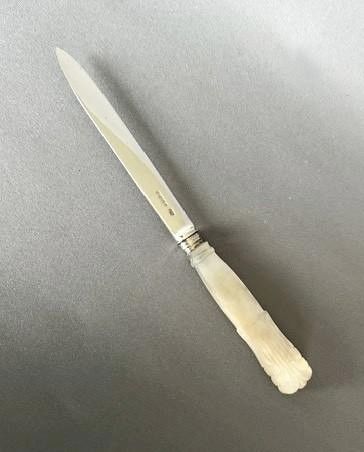
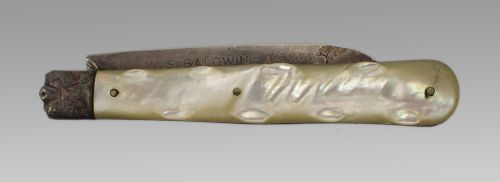
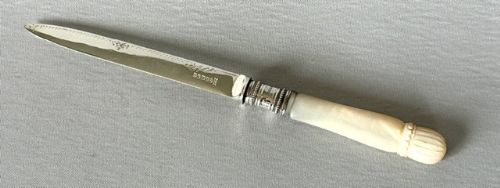
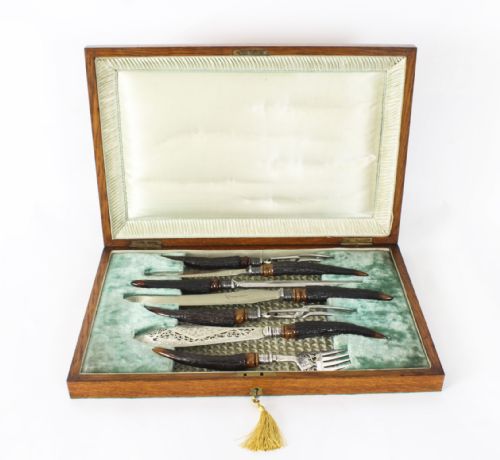
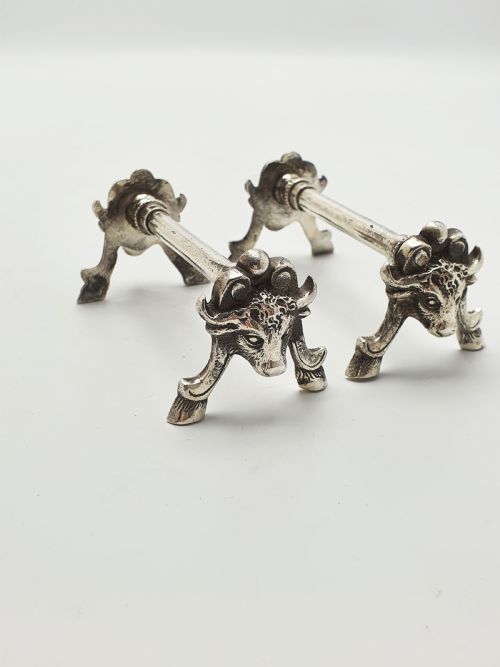


Silver Carving Knife
A silver carving knife brings genuine weight and theatre to the dining table, cutting through joints with the balance only proper period steel and silver can provide.
Silver Carving Knife
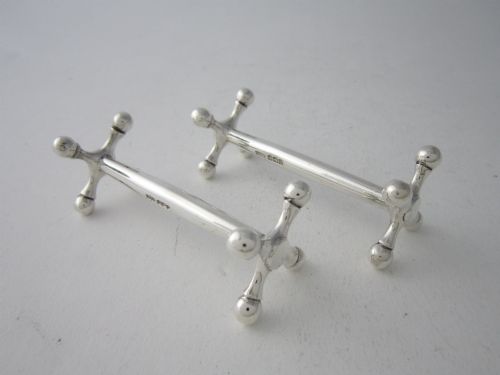
A silver carving knife forms part of a broader family of dining and cutting implements that turn up alongside serving sets, fruit knives, and knife rests. Buyers searching for a silver carving knife encounter Victorian and later Edwardian examples featuring substantial handles and robust blades.
The material combination typically pairs a bright metal handle with a functional steel edge designed for practical service at the table. Many surviving pieces appear alongside matching forks within fitted presentation boxes or larger carving sets.
While dedicated standalone carving knives share space with fish servers and fruit cutlery, the core group centres on robust Victorian and early twentieth-century table implements. These items reflect the heavy dining customs of the nineteenth and early twentieth centuries.
Materials and construction
Handles employ tactile natural materials including mother-of-pearl, stag antler horn, and solid silver or silver plate, shaped to provide a secure grip during use. These organic elements are pinned or collared securely to the metallic tang.
Blades and tines utilise hardened steel to hold a sharp edge, paired with sterling silver or silver-plated mounts and ferrules. This division of labour ensures the cutting edge remains functional while the handle displays decorative brilliance.
Silver Carving Knife Retail Price Guide 2026
Typical asking prices for silver carving knife among the pieces listed under this phrase on Sellingantiques today, from the lower quarter to the upper quarter. They describe what is for sale here now, not the wider market.
Current listings span the nineteenth and twentieth centuries, featuring materials such as sterling silver, silver plate, mother-of-pearl, and stag antler.
Assessing quality and craftsmanship
Quality rests in the proportional weight of the piece and the snugness of the fit between the handle and the blade collar. Superior items maintain rigid alignment without looseness in the joint where handle meets metal.
The refinement of the engraving on the silver mounts and the uniform polish of the mother-of-pearl or antler set the better examples apart from standard utility ware. Fitted presentation boxes lined in velvet also elevate the standing of a surviving set.
The Silver Carving Knife Glossary
- Sterling silver
- A silver alloy containing 92.5 percent pure silver by mass, widely utilised for quality handles and mounts. It bears hallmarks that indicate the assay office and year of manufacture.
- Silver plate
- A thin layer of silver applied over a base metal foundation, common in nineteenth-century cutlery and serving sets. It offers the visual appeal of solid silver at a different scale of production.
- Mother-of-pearl
- The iridescent internal layer of pearl oyster shells, carved into smooth scales for knife handles. Its natural shimmer catches the light during dining.
- Stag antler
- The shed horn of a stag, textured and shaped for knife grips to provide a rugged, non-slip surface. It is a hallmark of nineteenth-century carving equipment.
- Ferrule
- The metal ring or cap that strengthens the junction where the handle meets the blade. A tight ferrule protects the internal tang from moisture and loosening.
Silver Carving Knife: Frequently Asked Questions
How do I clean an antique silver knife?
Wash the piece by hand in warm soapy water and dry it immediately with a soft cloth to protect the metal and handle materials. Avoid soaking items with organic handles like mother-of-pearl or antler in water.
Store silver items away from rubber and damp environments to prevent tarnishing. Gentle polishing with a dedicated silver cloth maintains the surface without harming engraved details.
Can I still use these knives for carving?
Many Victorian and Edwardian carving implements remain structurally robust enough for occasional dining use. The steel blades are forged for cutting, though older edges require careful handling.
Hand washing is essential for preserving antique materials that would suffer in a modern automatic dishwasher. Treat them with the respect due to their age and construction.
What does silver plate mean on cutlery?
Silver plate indicates that the implement has a base metal core coated with a thin layer of pure silver. This technique allowed Victorian makers to produce grand dining items at a more accessible cost.
Over decades of use, heavy polishing can reveal the darker base metal beneath the silver layer. Inspecting high-wear areas helps determine the condition of the plating.
How do I date a Victorian knife?
Dating relies on examining any stamped hallmarks, the style of the handle, and the shape of the blade or serving implement. Victorian pieces often display registration marks or maker stamps alongside assay office symbols.
Boxed sets and fitted cases can also retain original retailer labels that narrow down the decade of production. Comparing handle materials like stag antler or mother-of-pearl provides further stylistic clues.