



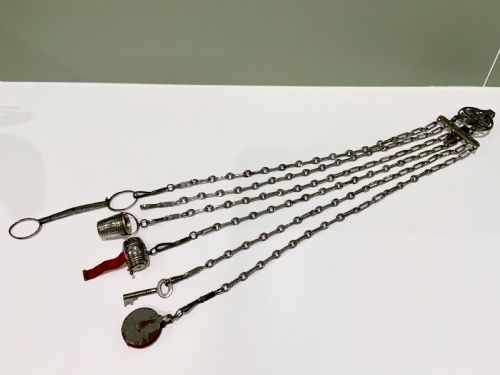


Silver Belt Accessory
A silver belt accessory is a wearable piece of metalwork that fastens or adorns dress, prized for intricate detail.
Silver Belt Accessory
A silver belt accessory encompasses items designed to secure or ornament clothing, principally taking the form of belt buckles, chatelaines, and waist belt clasps. These pieces often serve both a practical fastening function and a decorative purpose, reflecting personal taste.
The selections available span Victorian, Edwardian, and Arts and Crafts styles, alongside Straits Chinese and Caucasian traditional work. Buyers most frequently encounter sterling silver and white metal variants from the nineteenth century and early nineteen hundreds.
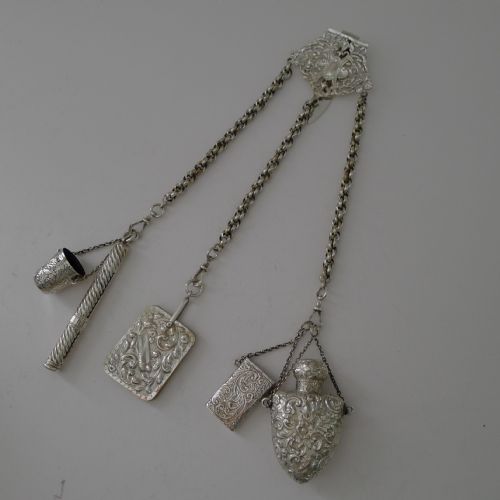
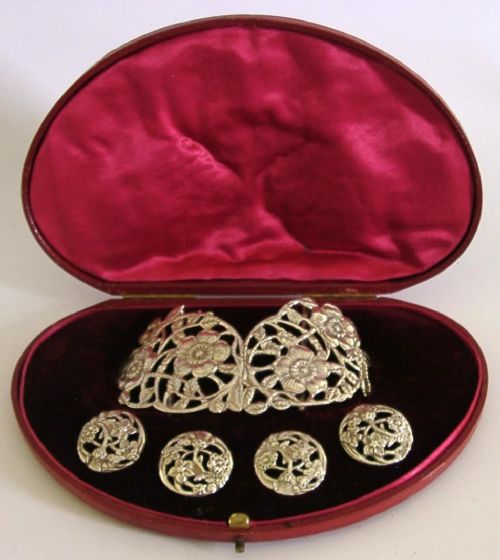
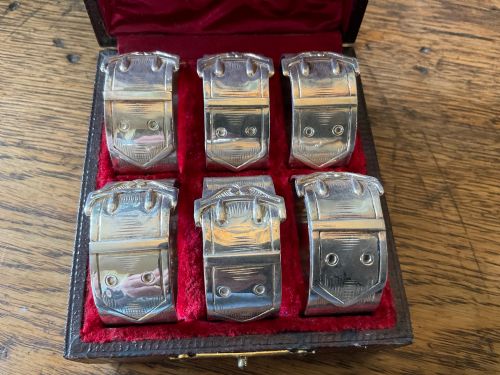
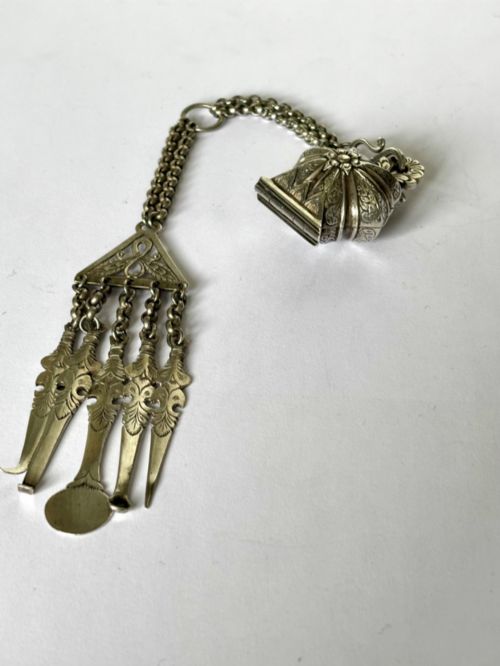
Beyond standard buckles, the category includes functional chatelaines equipped with hanging tools and vinaigrettes, as well as matched sets featuring buttons or napkin rings modelled as belt buckles.
Materials and construction methods
Makers utilised sterling silver, silver plate, and white metal as primary foundational elements, frequently pairing solid silver with gilt highlights or coloured enamel details. Supplementary materials such as velvet and leatherette appear in period presentation cases.
Construction techniques involve metal shaping, casting, and piercing, complemented by detailed chasing and engraving to produce floral and heraldic motifs. Items like chatelaines combine multiple suspended implements linked by delicate chains to a central belt clip.
Silver Belt Accessory Retail Price Guide 2026
Typical asking prices for silver belt accessory among the pieces listed under this phrase on Sellingantiques today, from the lower quarter to the upper quarter. They describe what is for sale here now, not the wider market.
Listings feature sterling silver, white metal, enamel, and Straits Chinese gilt work across Victorian and Edwardian periods.
Differentiating quality across pieces
The standard of workmanship dictates the distinction between ordinary and superior examples, particularly visible in the crispness of repoussé relief and hand-engraved surface patterns. Pieces executed with deep relief and fine chased detailing demand greater skill than simpler stamped designs.
Completeness and originality further define the upper tier, especially for multi-part chatelaines retaining their full complement of hanging tools or matched cased sets of buttons and buckles. The integration of high-grade enamel or gilding adds considerable refinement to the finished metalwork.
William Comyns And Sons·Liberty And Co
The Silver Belt Accessory Glossary
- Sterling silver
- An alloy containing ninety-two point five percent silver by mass, representing the standard for British plate and precious metal objects.
- Chatelaine
- A decorative belt hook worn with a series of suspended chains carrying functional household tools such as scissors, keys, or vinaigrettes.
- Vinaigrette
- A small ornamental box containing a perforated grille and a sponge soaked in aromatic vinegar, often suspended from a chatelaine.
- Repoussé
- A metalworking technique where the artisan hammers the material from the reverse side to form a raised design in relief.
- White metal
- An imprecise trade term applied to various silvery alloy compositions that do not conform to sterling silver standards.
Silver Belt Accessory: Frequently Asked Questions
How were chatelaines worn?
Chatelaines were hooked directly onto the waistband or belt of a skirt or dress, allowing the wearer to suspend useful daily implements. The main clip secured the apparatus while dangling chains held items within easy reach.
This arrangement kept utilitarian objects accessible while demonstrating social status and personal organisation.
What styles are common?
Common styles include ornate Victorian floral designs, Arts and Crafts enamel work, and regional variants like Straits Chinese Peranakan gilt silver. Each style brings distinct regional motifs and manufacturing techniques to the metalwork.
These varied aesthetic movements influenced the decorative surface patterns applied to buckles and chatelaines.
How do I care for antique silver?
Antique silver accessories benefit from gentle handling and minimal cleaning to preserve original patination and fine engraved details. Avoid aggressive chemical dips that strip away age-appropriate surface mellowing.
Store pieces in dry conditions, using acid-free tissue or fitted presentation cases where available.