

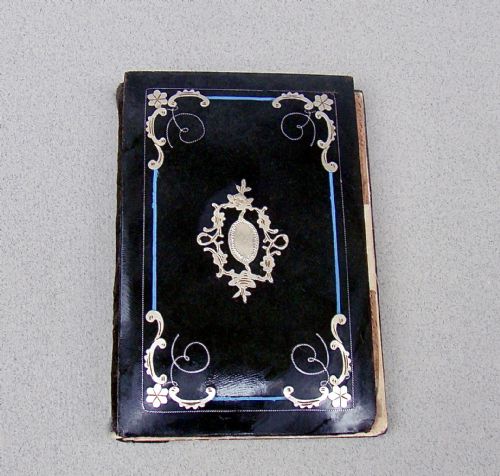
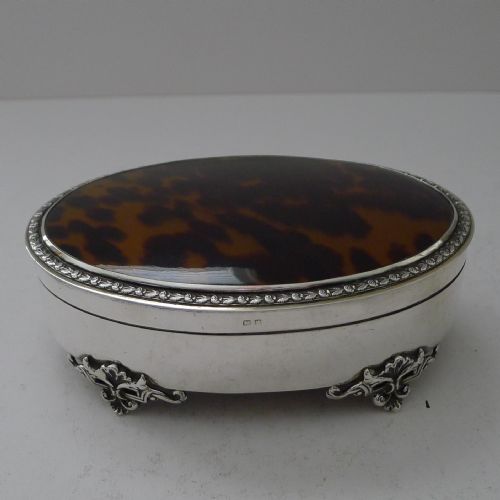

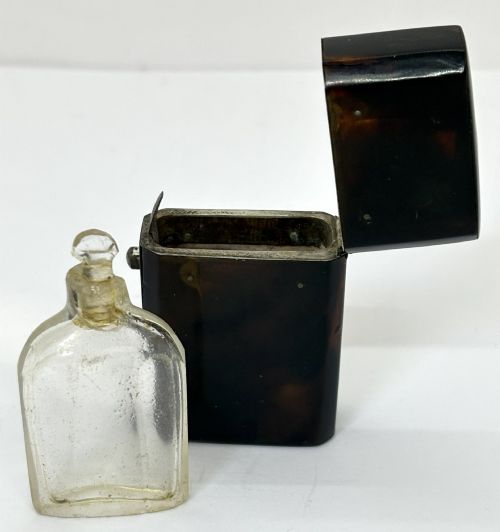


Silver and Tortoiseshell Case
A silver and tortoiseshell case marries rich amber-mottled shell with crisp precious metal, offering a tactile small luxury that collectors prize for its sheer elegance.
Silver and Tortoiseshell Case
When you search for a silver and tortoiseshell case, you are looking at small personal containers that combine warm, organic shell with gleaming metal mounts. These pieces range from Georgian scent bottle holders and snuff boxes to larger Victorian jewellery boxes and card cases.
On this page, you are most likely to meet 19th-century and early 20th-century examples spanning the Victorian, Edwardian, and Georgian periods. The forms vary from slim aide-memoires and spectacle holders to fitted dressing cases and desk clocks.
Materials and Construction
The makers of these items worked with genuine tortoiseshell, often backed with foil or coloured paper to enhance its translucent warmth, combined with sterling silver or silver gilt. Many pieces feature intricate silver inlay, known as pique work, or delicate metal mounts securing the shell plates.
Interiors frequently rely on secondary materials such as glass, bone, velvet, mother of pearl, and leather to line fitted compartments and secure delicate contents like scent bottles or cards.
Silver and Tortoiseshell Case Retail Price Guide 2026
Typical asking prices for silver and tortoiseshell case among the pieces listed under this phrase on Sellingantiques today, from the lower quarter to the upper quarter. They describe what is for sale here now, not the wider market.
Listings feature items spanning the 18th century, Victorian era, and 1920, showcasing materials like bone, velvet, and mother of pearl.
Assessing Quality
The distinction between standard items and exceptional pieces lies in the crispness of the silver work and the depth of the tortoiseshell figure. Finer examples display precise inlay and seamless joints between the shell and the silver mount.
Superior pieces also maintain the integrity of their internal fittings, such as original velvet linings and intact glass bottles, whereas simpler versions rely on basic construction without specialised internal compartments.
The Silver and Tortoiseshell Case Glossary
- Tortoiseshell
- A decorative material obtained from the shell of certain turtle species, valued for its translucent amber and brown mottled patterns. It responds well to heat, allowing craftsmen to press and mould thin plates.
- Sterling silver
- An alloy of silver containing ninety-two point five percent silver and seven point five percent other metals, usually copper. This standard ensures durability while maintaining a bright, reflective finish.
- Aide-memoire
- A small memorandum book or diary fitted with a writing tablet and pencil, often housed in a decorative outer case. They were carried for noting appointments and social reminders.
- Snuff box
- A small hinged container designed to hold powdered tobacco for nasal ingestion. These pocket-sized objects allowed for elaborate exterior decoration including precious metals and shell.
Silver and Tortoiseshell Case: Frequently Asked Questions
What are these tortoiseshell cases used for?
These small containers served various personal functions in daily life, from holding calling cards and sewing implements to protecting spectacles and snuff.
Fitted versions accommodated delicate scent bottles or jewellery, keeping valuable personal items secure during travel or social visits.
How do I date a silver and tortoiseshell piece?
Dating relies on examining the silver hallmarks, the overall style of the metal mounts, and the construction methods used for the interior.
Victorian and Edwardian pieces often display distinct design motifs and standard assay marks that help narrow down the period of manufacture.
How should I care for tortoiseshell?
Tortoiseshell requires gentle treatment to preserve its natural moisture and avoid warping or cracking over time. Keep pieces away from direct sunlight, extreme temperature changes, and excessive moisture.
Dusting lightly with a soft cloth keeps the surface clean without stripping the natural sheen of the shell.
Are these cases made of real tortoiseshell?
Antiques from the Georgian, Victorian, and Edwardian periods generally utilise genuine tortoiseshell derived from sea turtles. Later or alternative items sometimes incorporate early plastics or celluloid to mimic the mottled appearance.
Examining the natural grain, weight, and warmth to the touch helps distinguish genuine shell from synthetic substitutes.