

Silver and Pearl
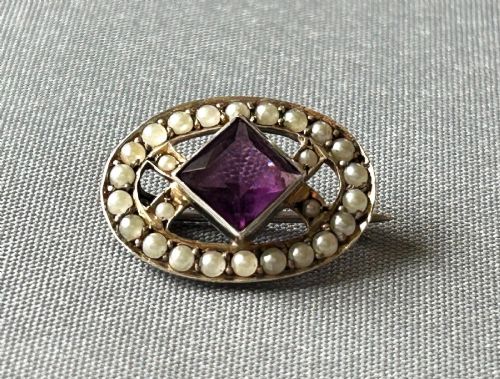
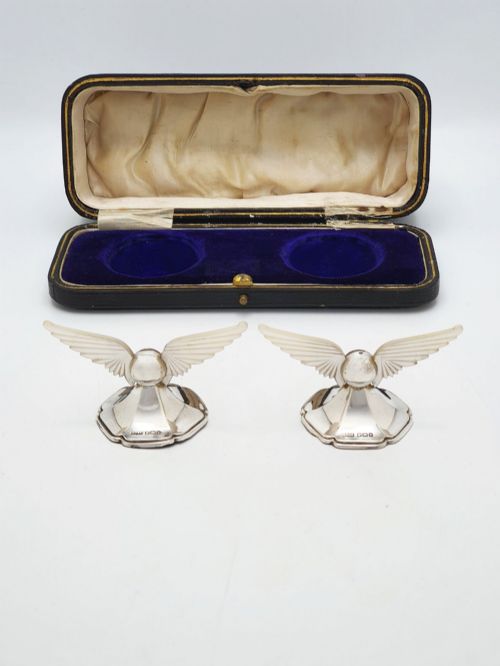
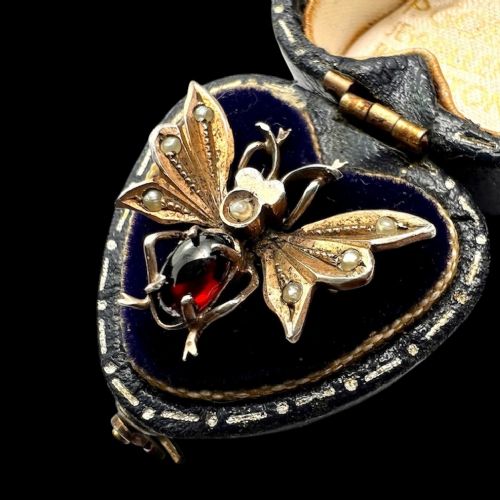
When you search for silver and pearl, you find items pairing precious metal with nacre, spanning Georgian, Victorian and Edwardian periods.
Silver and Pearl
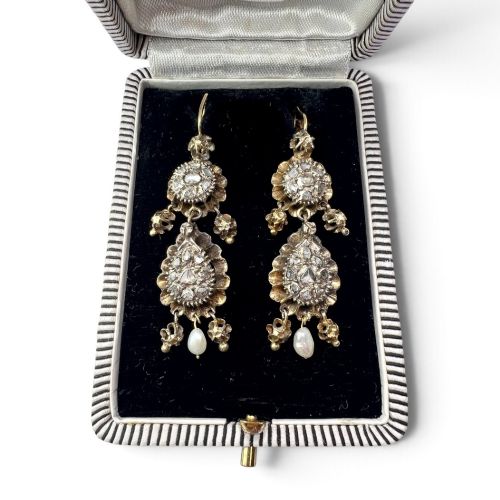
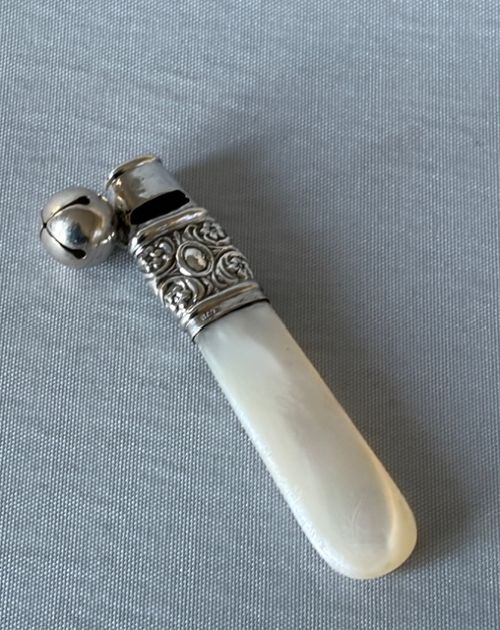
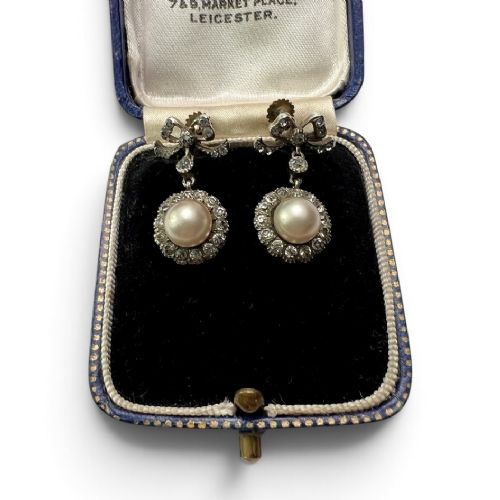
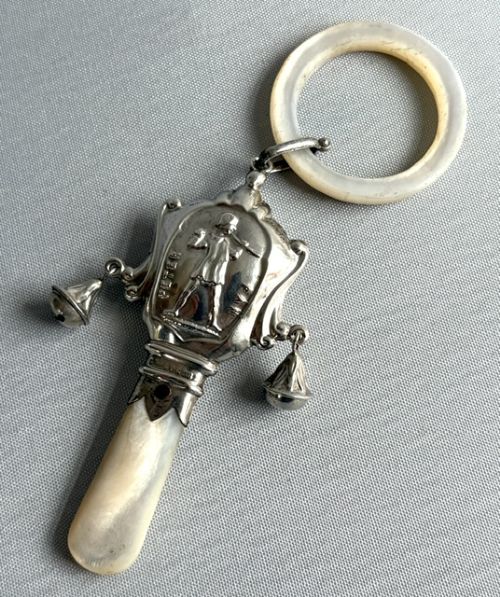
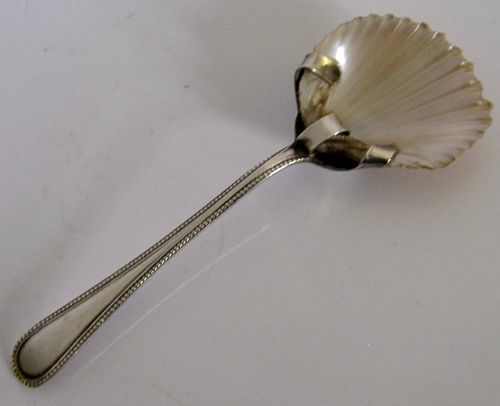
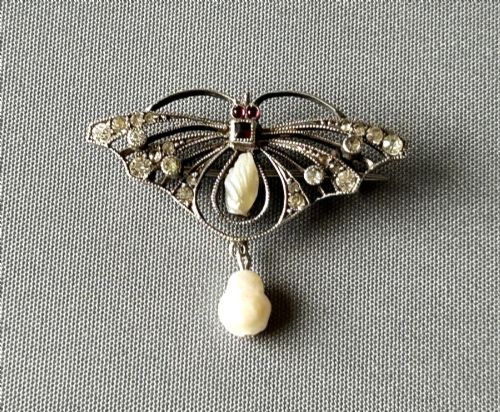
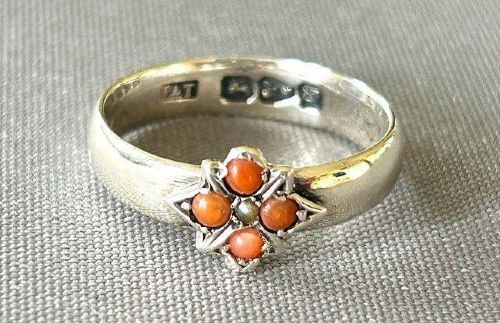
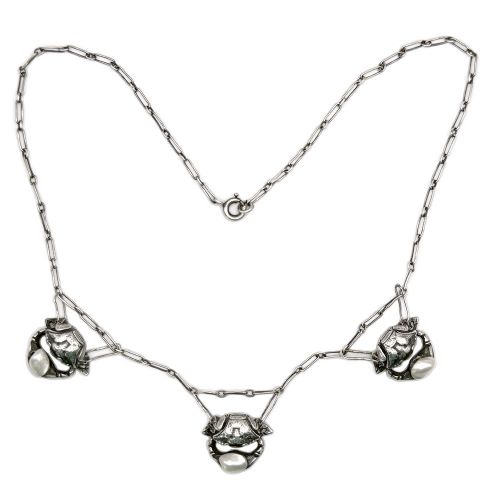
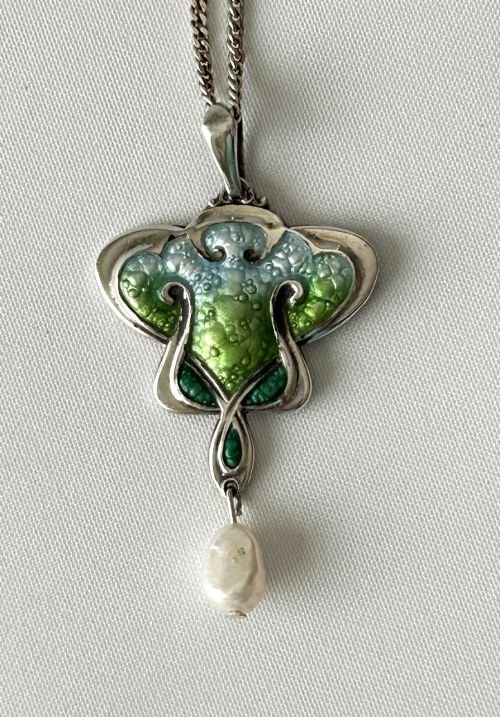
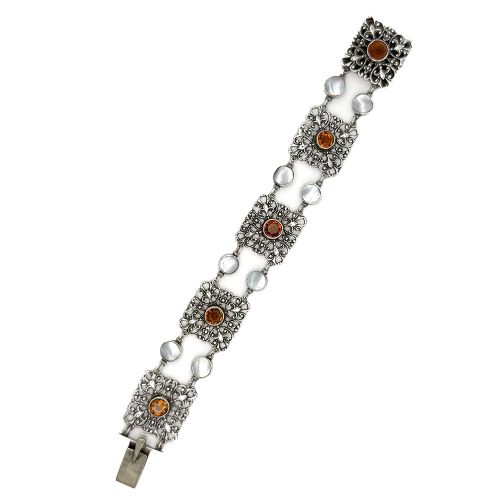
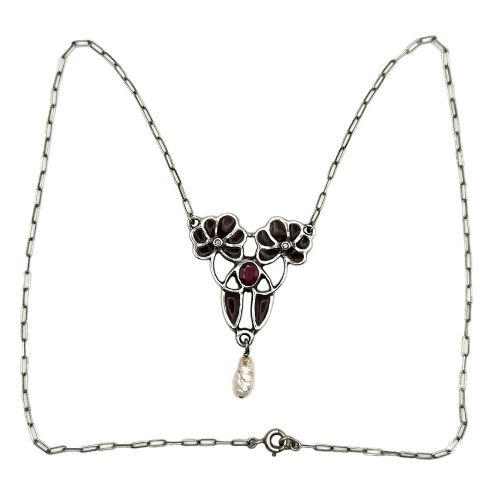
Silver and pearl items unite the cool gleam of sterling or silver gilt with the iridescent sheen of mother-of-pearl or organic pearls. You will encounter functional desk accessories, personal ornaments like pendants and bracelets, and dining implements spanning multiple eras.
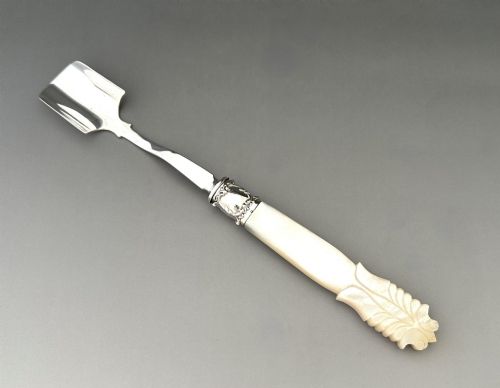
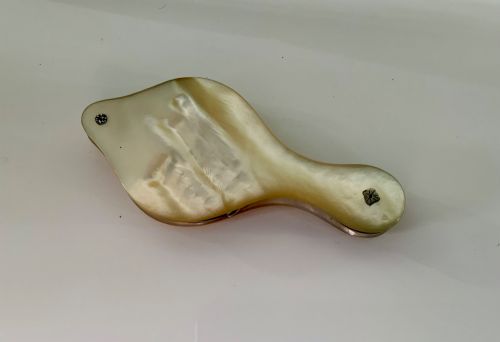
The selection here encompasses Georgian utility pieces, ornate Victorian lockets, Edwardian pendants, and mid-century clasped necklaces. Items range from carved fruit knives and letter openers to elaborate brooches and multi-strand pearl necklaces.
How they were made
Makers shaped sterling silver into mounts, blades, and clasps, frequently employing filigree, cast techniques, or silver gilt. Mother-of-pearl was carved, polished, and inlaid into handles for fruit knives, magnifying glasses, and card cases.
Jewellery incorporates river pearls, blister pearls, and cultured pearls alongside gemstones such as amethyst, citrine, and turquoise. Artisans of the Art Nouveau and Arts & Crafts periods added plique-à-jour and standard enamels to silver frameworks.
Silver and Pearl Retail Price Guide 2026
Typical asking prices for silver and pearl among the pieces listed under this phrase on Sellingantiques today, from the lower quarter to the upper quarter. They describe what is for sale here now, not the wider market.
Listings feature items spanning the Georgian, Victorian, Edwardian, and mid-century periods, utilising silver, mother-of-pearl, enamel, and diamonds.
What varies in quality
Quality rests in the precision of the silver smithing and the depth of the nacre on pearl components. Superior items display crisp engraving, secure stone settings, and balanced proportions between metal and organic material.
The sophistication of decorative techniques, such as plique-à-jour enamel work or detailed carving on mother-of-pearl panels, distinguishes standard utility pieces from exceptional collector examples.
Henry Miault·Amy Sandheim·Archibald Knox·Liberty & Co·Crisford & Norris·Murrle Bennett
The Silver and Pearl Glossary
- Mother-of-pearl
- The iridescent inner layer of mollusc shells, utilised for carved handles, card cases, and decorative inlays.
- Plique-à-jour
- An enamelling technique where enamel is applied in cells without a backing, resembling miniature stained glass.
- Marcasite
- Small polished pyrite stones faceted and set into silver to provide a sparkling, metallic border.
- Silver gilt
- Sterling silver coated with a thin layer of gold, adding warmth to brooches and decorative items.
- Blister pearl
- A pearl that forms attached to the inner shell of an oyster rather than within the mantle tissue.
Silver and Pearl: Frequently Asked Questions
How do I clean silver and pearl items?
Clean silver components gently with a specialised polishing cloth while avoiding harsh dips that can damage organic pearls or enamel.
Keep moisture and chemical sprays away from mother-of-pearl and pearls to preserve their natural lustre.
Are these pieces suitable for daily use?
Many items like letter openers and necklaces were built for regular handling, though antique pieces demand careful treatment.
Delicate Edwardian pendants and antique fruit knives benefit from gentle care rather than heavy everyday tasks.
How do I date a silver and pearl piece?
Examine the overall design style, such as organic Art Nouveau curves or geometric Art Deco lines, alongside any hallmarks.
Materials like blister pearls and specific enamel techniques also point towards particular decades between the Georgian era and the mid-century.
What is the difference between river pearls and cultured pearls?
River pearls form naturally in freshwater mussels, often displaying organic, baroque shapes unique to each specimen.
Cultured pearls are grown with human intervention inside molluscs, typically resulting in rounder, more uniform gems found in later necklaces.