


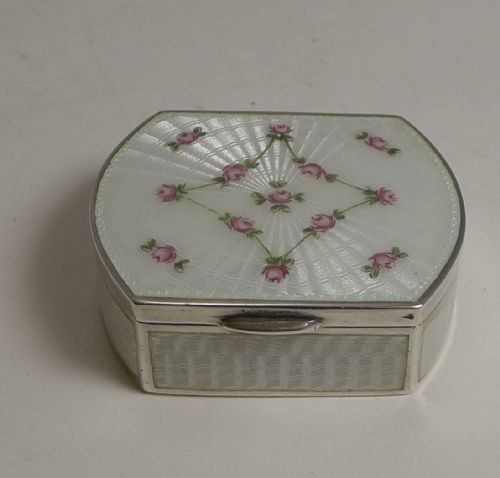


Silver and Enamel Pill Box
A silver and enamel pill box is a miniature pocket container combining precious metal and colourful vitreous work, prized for its decorative detail and historical craftsmanship.
Silver and Enamel Pill Box
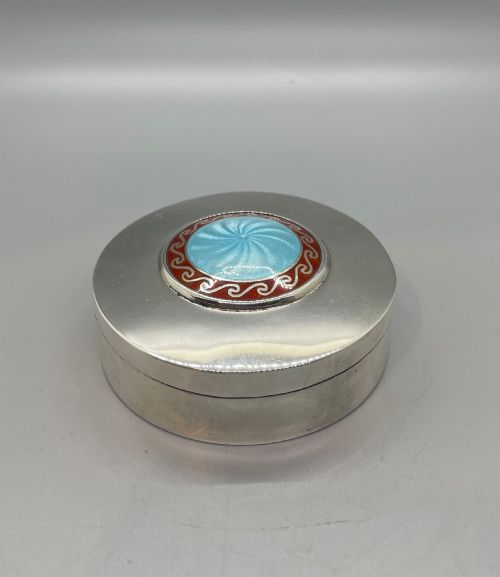
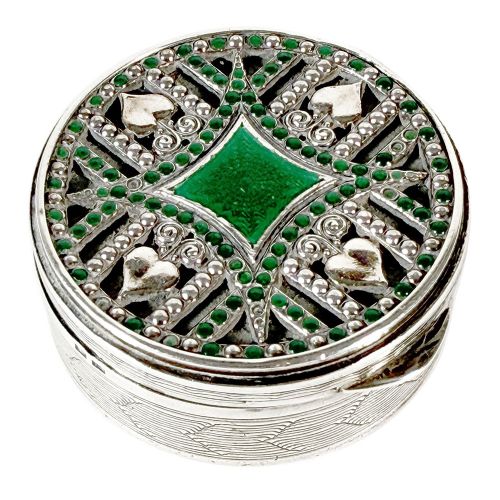
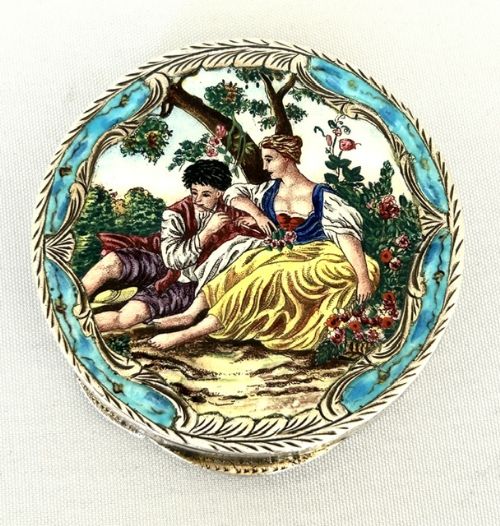
A silver and enamel pill box brings together precious metalwork and decorative glass fusion, serving as a pocket-sized container originally intended for medicines, breath fresheners, or small cosmetics. The pieces seen here span from the nineteenth century through the Edwardian era into the Art Deco period, encompassing compacts, snuff boxes, and small trinket forms. Buyers seek these items for their intricate designs and tangible connection to historical vanity accessories.
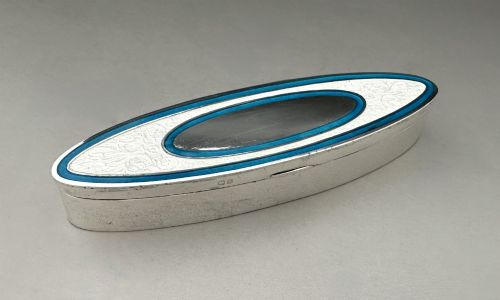
The version most commonly encountered on this page is the Edwardian or early twentieth-century guilloche enamel box, often originating from British, Austrian, or French workshops. These cylindrical or oval containers typically feature engine-turned engraving beneath translucent coloured enamel, mounted in sterling silver or silver-gilt. Alongside these, occasional porcelain-lidded pieces and Russian revival cloisonne examples appear.
Materials and construction
The foundation of these pieces relies on silver, sterling silver, and silver-gilt, shaped to form the base and hinged lid of the container. Makers applied structural elements through casting or stamping, frequently incorporating darkened metal or gilding to accentuate specific design motifs.
Vitreous and guilloche enamel provide the primary surface decoration, fused to the metal substrate through high-temperature firing. Some examples integrate painted porcelain panels or intricate cloisonne wirework to delineate the colourful geometric and floral patterns.
Silver and Enamel Pill Box Retail Price Guide 2026
Typical asking prices for silver and enamel pill box among the pieces listed under this phrase on Sellingantiques today, from the lower quarter to the upper quarter. They describe what is for sale here now, not the wider market.
Listings feature pieces from the Edwardian period, 1900, 1910, 1920, 1930, and the 19th Century.
Factors of quality
Quality in these containers is dictated by the precision of the underlying engine-turning and the clarity of the vitreous coating. Finer examples display crisp, uniform geometric engraving that catches the light evenly through transparent enamel layers, whereas simpler pieces show softer surface work.
The execution of the hinged mechanism and the tightness of the lid closure also separate standard utility items from exceptional decorative pieces. Well-made boxes retain firm alignment between base and cover, with gilding and enamel intact across high-wear edges.
George Adam Scheid·Khlebnikov
The Silver and Enamel Pill Box Glossary
- Guilloche
- A decorative engraving technique where a mechanical lathe cuts a precise, intricate repeating pattern into a metal surface. This creates the shimmering, textured background seen beneath translucent enamel.
- Vitreous enamel
- Glass powder melted and fused to metal at high temperatures. It forms a durable, glossy coloured surface that resists fading over time.
- Silver-gilt
- Silver that has been coated with a thin layer of gold on its surface. This technique provides the rich appearance of solid gold while utilising a silver base.
- Cloisonne
- An ancient enamelwork method where thin metal wires are soldered to a metal base to form compartments. These spaces are then filled with coloured paste and fired.
- Rouge pot
- A small container specifically designed to hold cheek cosmetic. They share similar diminutive proportions and hinged construction with pill boxes.
Silver and Enamel Pill Box: Frequently Asked Questions
How do I date an enamel box?
Dating relies on stylistic markers such as Edwardian symmetry, Art Nouveau curves, or Art Deco geometric forms. Hallmarks stamped on the silver components provide specific assay office and year indications.
Examining the construction methods and enamel colours also helps narrow down the period of manufacture. Pieces from the nineteenth century often feature heavier gilding and distinct revivalist motifs.
Are these boxes made of solid silver?
Most examples are constructed from sterling silver or standard silver, often marked accordingly on the rim or base. Some pieces incorporate silver-gilt, which adds a gold wash over the silver structure.
Internal mounts and hinges are generally formed from the same metal to ensure durability. Certain continental pieces utilise specific regional purity standards rather than British sterling marks.
How should I clean my silver box?
Enamel surfaces require gentle cleaning with a soft, damp cloth and mild soap to avoid scratching. Harsh chemical dips or abrasive silver polishes will damage the vitreous glass and remove gilding.
Silver mounts can be carefully treated with a non-abrasive polishing cloth, taking care not to rub the enamel edges. Store the box in a dry environment away from direct sunlight to preserve the colours.