

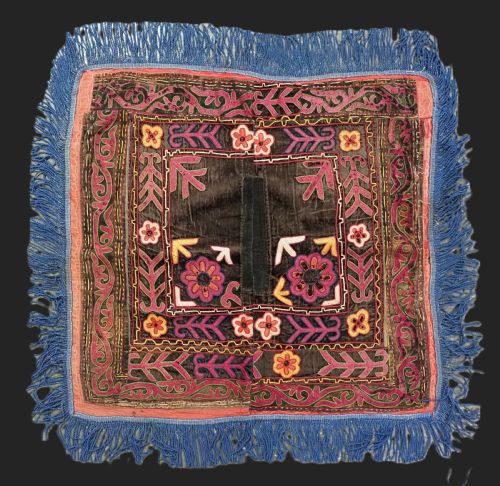


Silk Velvet Textile
These silk velvet textile pieces bring rich texture and historical handwork into a room, spanning centuries of global needlecraft and weaving traditions.
Silk Velvet Textile
A silk velvet textile encompasses wall hangings, panels, traditional garments, and framed works gathered from various global traditions. Buyers seeking a silk velvet textile will encounter historic fragments, embroidered panels, and decorative garments dating from the seventeenth century through the early twentieth century.
The selection ranges from Central Asian tribal ilgich dowry embroideries and red velvet dresses to Anglo-Indian green velvet works and European ciselé pile pieces. Wall hangings and pilaster panels form a significant portion of the offerings, alongside framed textile art and traditional jackets adorned with metallic thread.
How they were made
These items combine silk and velvet grounds with intricate needlework utilising metal threads, gold thread, silver thread, sequins, and cotton elements. Artisans employed specialised techniques such as ciselé velvet cutting, where loops are selectively cut and uncut to create pattern, alongside detailed surface embroidery.
Makers constructed garments and wall hangings by applying metallic brocade work and heavy embroidery directly onto silk velvet or cotton foundations. The integration of metal threads and sequins required steady hand manipulation to secure complex motifs onto dense pile fabrics.
Silk Velvet Textile Retail Price Guide 2026
Typical asking prices for silk velvet textile among the pieces listed under this phrase on Sellingantiques today, from the lower quarter to the upper quarter. They describe what is for sale here now, not the wider market.
Styles represented across the inventory include 17th Century Baroque, 18th Century Rococo, Central Asian Tribal, Central Asian Traditional, Anglo-Indian, and Southeast Asian.
What varies in quality
Quality rests upon the density of the velvet pile, the intricacy of the metal thread work, and the structural preservation of the ground fabric. Superior examples display precise ciselé cutting or dense, secure embroidery with minimal thread loss across the surface.
The complexity of design and the origin of the piece also influence the distinction between standard items and finer works. Pieces featuring extensive gold and silver thread or elaborate tribal motifs demonstrate greater artisan skill in execution.
The Silk Velvet Textile Glossary
- Ciselé velvet
- A velvet technique where the pile is selectively cut and uncut to form a patterned relief design. This method creates texture and contrast within the textile surface.
- Pilaster hanging
- A long, narrow decorative textile designed to ornament architectural pillars or wall spaces. These vertical panels often feature repeating motifs.
- Ilgich
- A traditional embroidered dowry hanging produced by Central Asian tribal groups. They typically incorporate geometric and symbolic motifs intended for domestic display.
- Brocade work
- A decorative weaving or embroidery technique where supplementary threads, often metallic, are laid onto the ground fabric to form raised patterns. This adds weight and visual richness to garments and panels.
Silk Velvet Textile: Frequently Asked Questions
How do I hang a textile?
Wall hangings require careful mounting methods that distribute weight evenly across the upper edge. Utilising a padded sleeve or conservation framing prevents tension damage to historic fibres.
Direct pinning should be avoided to protect silk and velvet grounds from permanent fibre distortion. Professional mounting ensures the piece remains secure over time.
Can I wear antique garments?
Historic garments often feature delicate silk velvet and fragile metal threads that suffer under physical stress. Wearing them risks tearing the ground fabric and abrading the delicate pile.
Displaying garments on custom support forms is the preferred method for preservation. This allows the construction and embroidery to be appreciated without handling damage.
How do I clean old velvet?
Cleaning historic textiles requires specialised conservation techniques rather than standard washing methods. Water and conventional detergents can permanently damage silk pile and corrode metallic threads.
Dust removal should be limited to gentle surface brushing with a soft tool. Professional textile conservators must handle deep cleaning or structural repairs.
What periods are available?
The available pieces span from the seventeenth century through the early twentieth century. Seventeenth and eighteenth-century examples often feature European ciselé velvet, while later pieces include Central Asian and Indian works.
Each period utilises distinct regional techniques and decorative motifs. Dating relies on stylistic analysis of the embroidery, weave, and construction methods.