

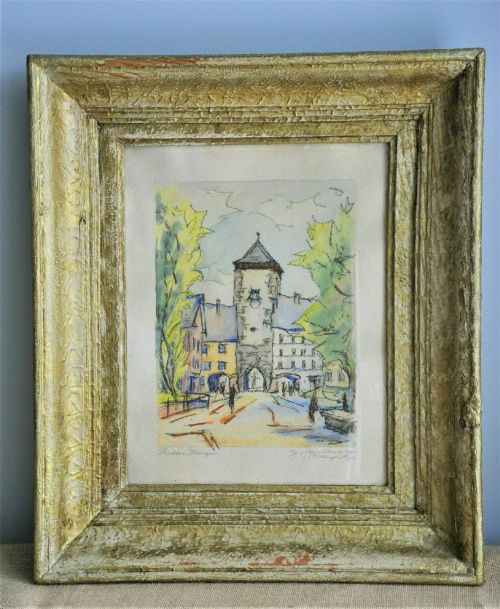
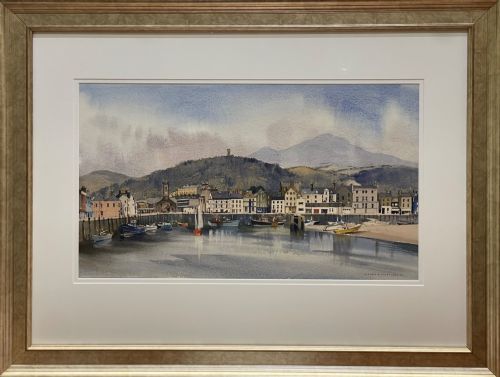
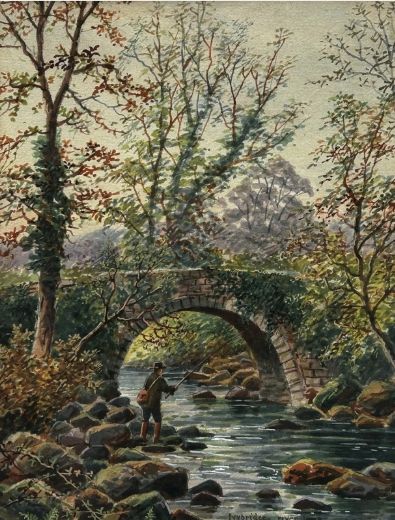
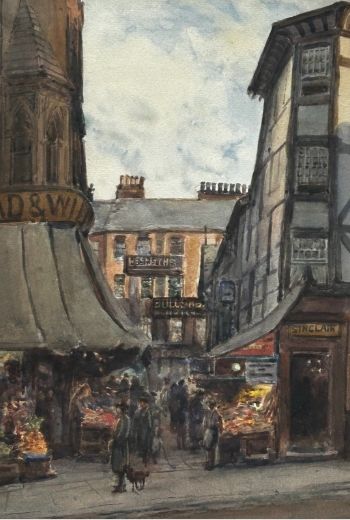


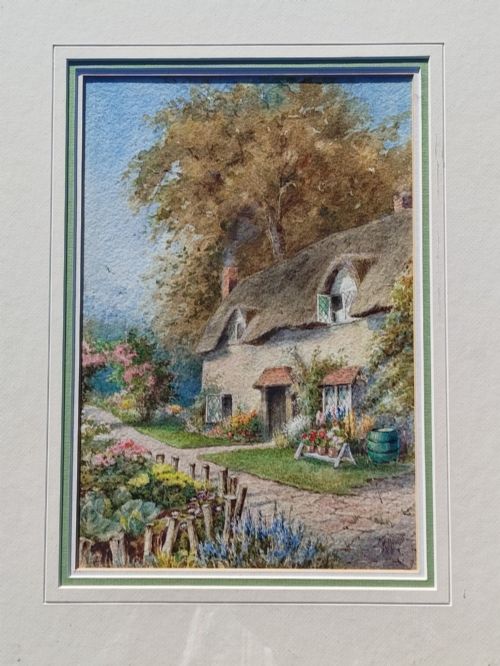
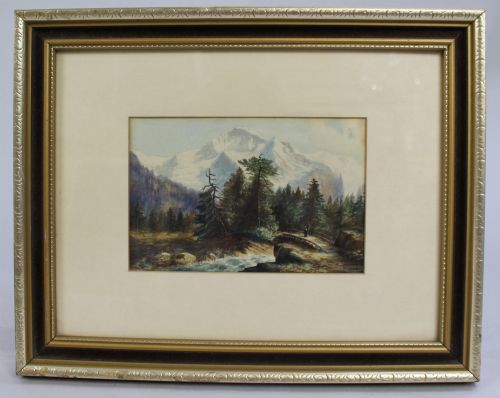
Signed Watercolor Painting
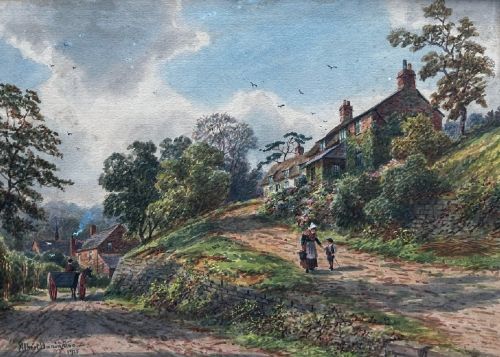
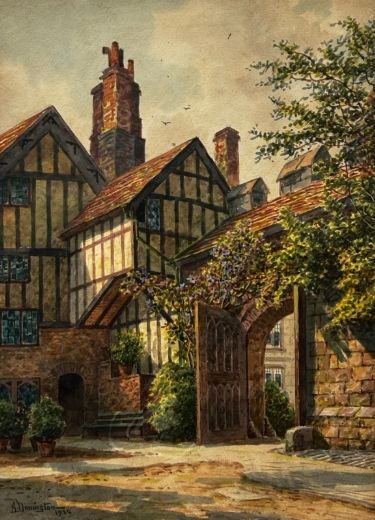
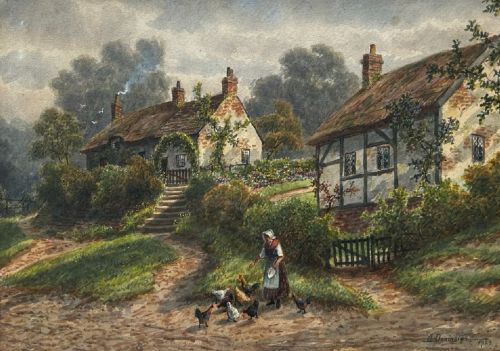
A signed watercolor painting brings the delicate interplay of pigment and paper from the nineteenth and twentieth centuries directly into a room.
Signed Watercolor Painting
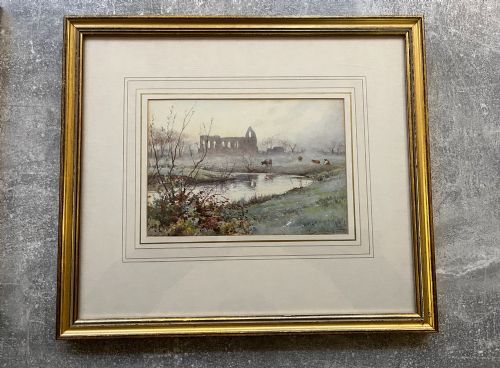
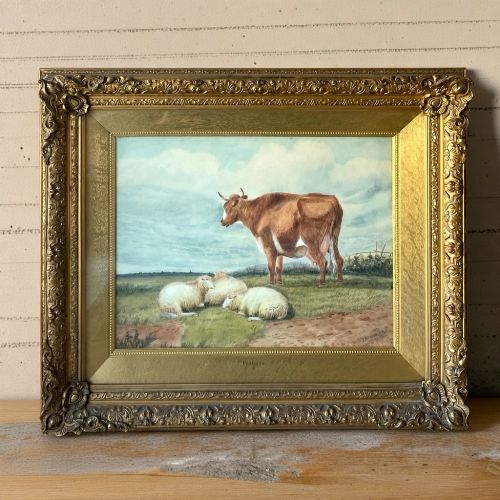
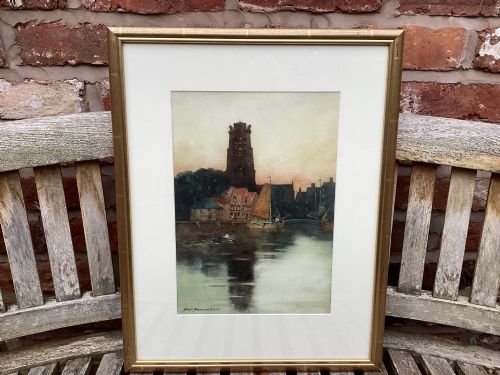
A signed watercolor painting represents a direct encounter with an artist's hand, carrying personal inscriptions, monograms, or full signatures that anchor the work to a specific creator. When exploring this category, buyers frequently encounter works executed on paper or silk, housed within period frames of wood or gilt wood.
The selection ranges widely across the nineteenth and twentieth centuries, spanning Victorian landscapes, Edwardian coastal scenes, and mid-century British compositions. These pieces document topography, maritime scenes, and botanical studies created by named professional painters and Royal Academy exhibitors.
How they were made
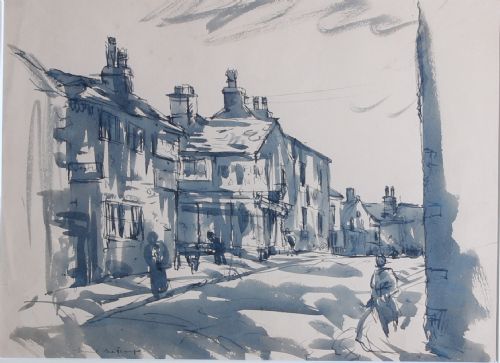
These works rely primarily on watercolor pigment suspended in water, applied directly to absorbent paper or stretched silk to create translucent washes and sharp linear details with ink. Artists frequently incorporated bodycolour or gouache for opaque highlights, while occasionally setting delicate miniature portraits behind protective glass.
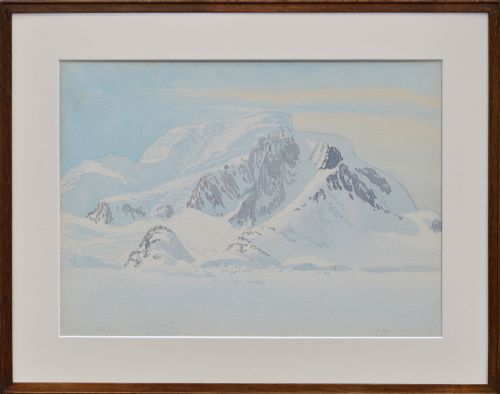
Framing forms an integral part of the physical object, utilising traditional wood or gilt wood mouldings, sometimes complemented by gold leaf accents. The support materials range from heavy textured wove paper to fine Chinese silk, all preserved beneath glass to protect the fugitive pigments from atmospheric moisture.
Signed Watercolor Painting Retail Price Guide 2026
Typical asking prices for signed watercolor painting among the pieces listed under this phrase on Sellingantiques today, from the lower quarter to the upper quarter. They describe what is for sale here now, not the wider market.
Listings feature works executed on paper, watercolor pigment, and silk, housed in wood and gilt wood frames.
What varies in quality
The strength of a signed watercolor painting depends on the confidence of the brushwork and the artist's command of light and atmosphere across the composition. Skilled handling achieves luminosity within the paper itself, whereas lesser works rely on heavy, overworked pigments that obscure the natural tooth of the support.
The historical significance of the subject and the clarity of the artist's signature or monogram elevate certain examples above standard topographical records. Additionally, the survival of the original frame and the preservation of the paper tone without excessive foxing or fading determine the overall integrity of the piece.
Muriel Metcalfe·W.L. Guest·Harry Bright·Robert George Talbot Kelly·William Taylor Longmire·David Law·Guido Bach·George Lorain Stampa·George Fotherly Hargitt·Thomas Miles Richardson Jnr·James Orrock·William Henry Earp·William Cannon·John R Prentice·A. Mitchell·A. Marie Parsons·Robert Leslie Howey·William Banks Fortescue·Vincent Clare·R. Hurst·Alfred G. Morgan·Russell Sidney Reeves·George F Pennington·Dame Elisabeth Frink
The Signed Watercolor Painting Glossary
- Watercolour pigment
- Finely ground colour particles mixed with a water-soluble binder, used to create transparent washes on paper.
- Gilt wood
- Timber framing treated with a thin layer of gold leaf or metallic gilt, common in period presentations.
- Monogram
- A cipher or intertwining set of initials used by an artist to sign a work instead of a full name.
- Shan Shui
- Traditional Chinese landscape painting executed with brush and ink on materials such as silk or paper.
- Bodycolour
- Watercolor paint mixed with a white pigment to make it opaque, adding solid highlights to a transparent wash.
Signed Watercolor Painting: Frequently Asked Questions
How do I date an antique watercolor?
Dating relies on a combination of visible artist signatures, period framing styles, and the watermark or texture of the underlying paper support. Many works include handwritten inscriptions on the reverse or front that record the exact year of creation.
Contextual clues such as costume details in figurative pieces or topographical landmarks further narrow the period of execution.
Why are watercolors framed under glass?
Watercolor pigments and the paper supports themselves remain highly sensitive to ultraviolet light, dust, and atmospheric moisture. Glass creates a necessary barrier that prevents fading and physical degradation over decades of display.
Period frames often retain their original glass, which adds to the authenticity and historical preservation of the artwork.
What is the difference between a signature and a monogram?
A full signature provides the artist's written surname or given name, offering direct confirmation of authorship. A monogram uses intertwined initials or a distinct cipher designed by the artist to mark the composition discreetly.
Both serve to authenticate the piece, though research into period exhibition records is sometimes required to match a monogram to a specific painter.
Where should I hang a watercolor painting?
Watercolors require placement away from direct sunlight and high humidity areas like kitchens or unventilated bathrooms to protect the delicate pigments. Interior walls receiving indirect, ambient light offer the safest environment for long-term display.
Pairing the piece with a neutral wall colour helps emphasise the subtle tones and translucent washes characteristic of the medium.