






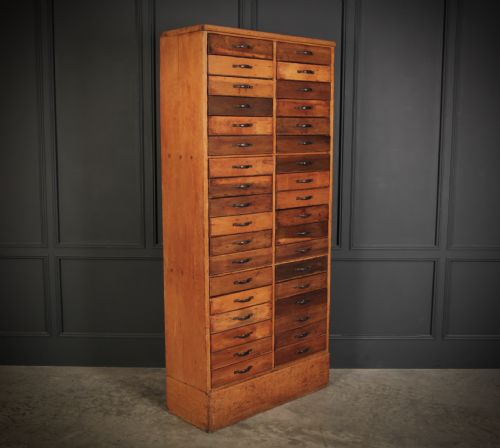


Shop Fitting Chest of Drawers
A shop fitting chest of drawers offers robust utility and commercial history, built to organise haberdashery, drapery, and hardware with enduring practicality.
Shop Fitting Chest of Drawers
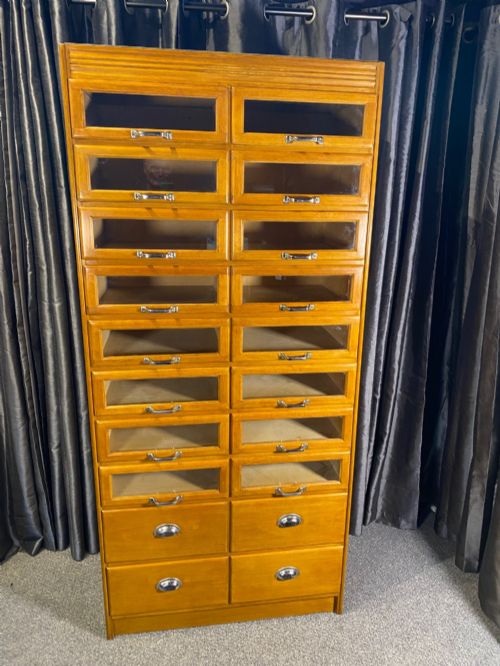
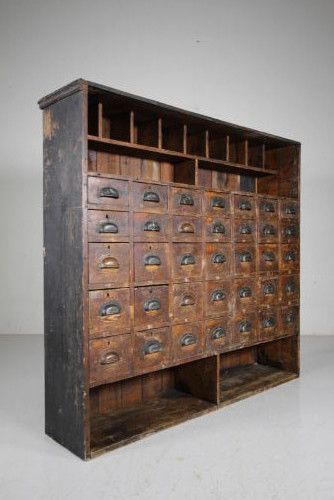
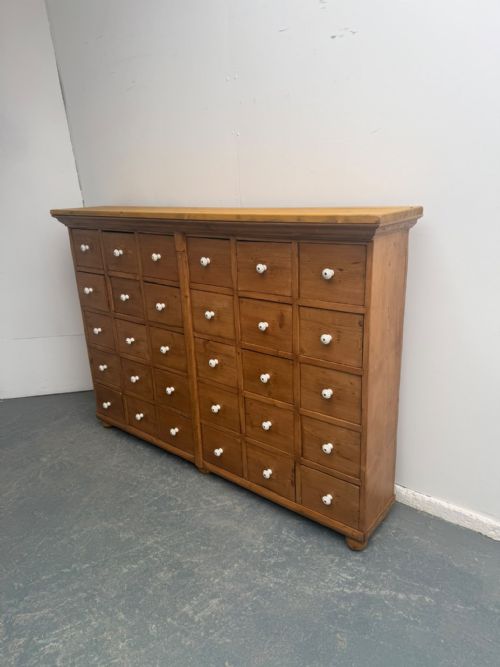
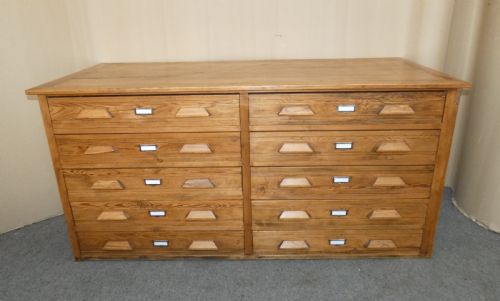
A shop fitting chest of drawers is a substantial commercial storage unit designed for retail environments, frequently taking the form of large banks of drawers or haberdashery cabinets. These pieces originate from periods spanning the nineteenth century through to the 1930s, reflecting the heavy demands of Victorian and early twentieth-century merchants.
Buyers encountering this selection will most frequently find pine constructions, often painted in original colourways such as white, cream, or light green, alongside examples in mahogany, fruitwood, and walnut. Forms range widely from multi-drawer banks and drapers counters to specialised jewellers cabinets and sign-written merchant chests.
Origin points vary between English workshops, French provincial sources, and Hungarian iterations, demonstrating how utilitarian furniture was adapted across Europe for commercial display and stock management.
Materials and construction methods
Construction relies heavily on sturdy timbers such as pine and mahogany, selected for their ability to withstand the daily friction of heavy retail use. Many pieces incorporate numerous small drawers configured in banks, requiring precise joinery to ensure smooth operation across dozens of compartments.
Surface finishes include original painted treatments in various colours, polished hardwood grains, and applied sign-writing that denotes the original commercial purpose or merchant. Hardware details typically feature metal pulls and brass handles designed to endure constant handling in busy shop environments.
Shop Fitting Chest of Drawers Retail Price Guide 2026
Typical asking prices for shop fitting chest of drawers among the pieces listed under this phrase on Sellingantiques today, from the lower quarter to the upper quarter. They describe what is for sale here now, not the wider market.
Listings feature pieces spanning the Victorian era through to the 1930s, constructed in pine, mahogany, walnut, and fruitwood.
Indicators of quality and distinction
Quality in these commercial units rests upon the scale and integrity of the multi-drawer configuration, where substantial banks containing twenty or more drawers demand superior internal framing. The survival of original paint finishes, authentic sign-writing, and period hardware elevates a piece above standard utilitarian storage.
The choice of timber also marks distinction, shifting from functional painted pine to richly figured mahogany, walnut, or fruitwood in pieces intended for high-end retail counters or jewellers shops.
Luxmore's of Ilfracombe·Chadwick’s Sewing Cottons·Smiths Agricultural merchants of Stafford
The Shop Fitting Chest of Drawers Glossary
- Bank of drawers
- A large chest featuring a high density of small drawers arranged in rows and columns, originally utilised in shops for sorting small goods.
- Haberdashery cabinet
- A specialised commercial display and storage unit designed for sewing supplies, threads, and textiles, often featuring glass panels or numerous shallow drawers.
- Sign-written
- The presence of hand-painted business names, merchant details, or stock information directly onto the timber or drawer fronts.
- Shop fitting
- Fixtures and furniture built specifically for the interior layout and merchandising needs of a retail establishment.
Shop Fitting Chest of Drawers: Frequently Asked Questions
What is a shop fitting chest of drawers?
A shop fitting chest of drawers is a heavy-duty commercial storage unit built for nineteenth and early twentieth-century retail environments to organise stock.
These pieces range from multi-drawer haberdashery banks to drapers counters and jewellers cabinets designed for heavy daily use.
How were these drawers used originally?
Merchants utilised these banks of drawers to sort and display small retail goods, haberdashery items, sewing cottons, and drapery behind shop counters.
Many units served a dual purpose as both functional storage and customer-facing retail counters within busy mercantile establishments.
How do I live with a shop fitting chest?
These substantial chests provide exceptional storage capacity for modern homes, fitting well in kitchens, home offices, or living spaces as statement storage.
Their deep or numerous compartments allow for extensive organisation of everyday items while bringing distinct commercial history into an interior.
How do I identify the period of a cabinet?
Dating relies on timber selection, construction techniques, hardware styles, and the presence of original painted finishes or commercial sign-writing.
Victorian and early twentieth-century examples display specific joinery methods and hardware designs characteristic of their working origins.