





Sheraton Table Mirror
Sheraton table mirror designs offer refined mahogany and satinwood frames that bring period elegance to a dressing surface.
Sheraton Table Mirror
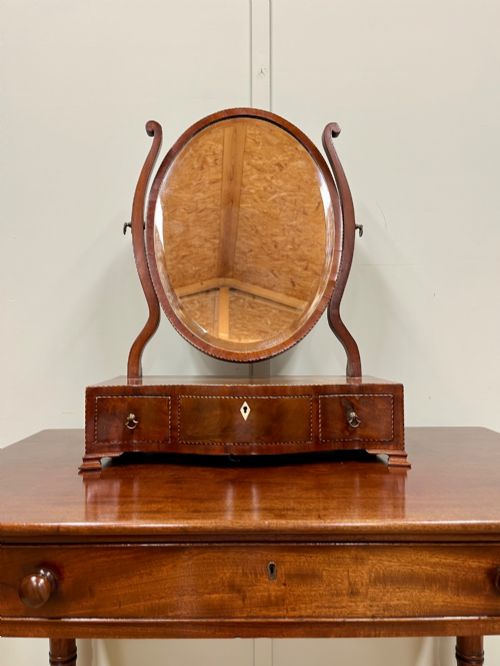
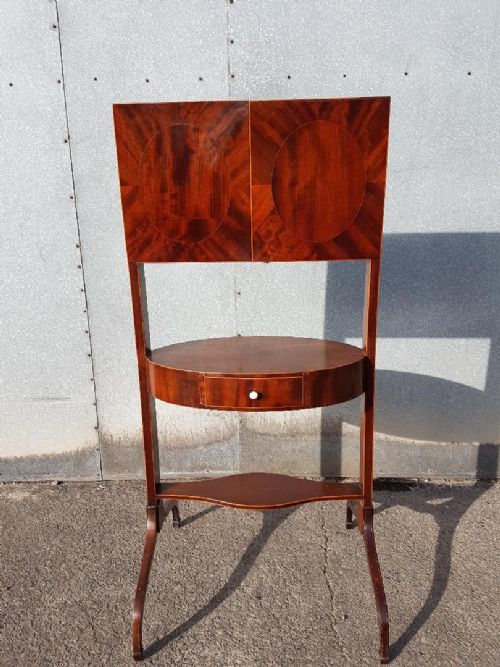
When you search for a sheraton table mirror, you encounter pieces spanning the Georgian, Regency, and Edwardian periods, alongside later Sheraton Revival interpretations. The form typically consists of an adjustable glass plate set within a freestanding frame, supported by upright arms atop a box base containing small drawers.
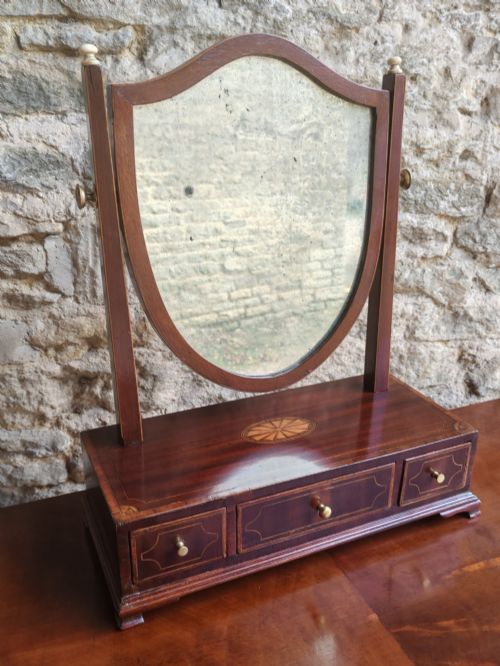
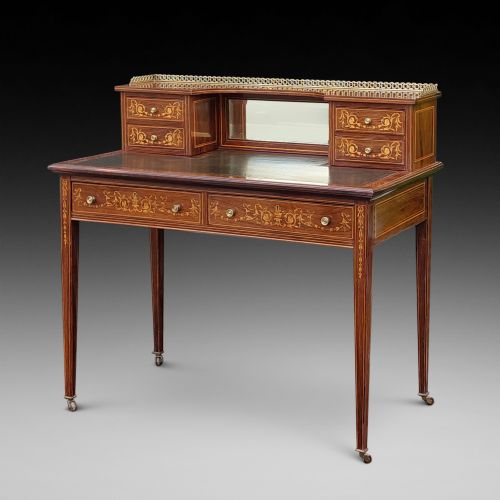
The versions most frequently met on this page combine mahogany or satinwood construction with delicate stringing and inlaid details. Examples range from shield-shaped and oval plates of the eighteenth century to rectangular mirrors housed within Edwardian dressing table mirrors and larger writing furniture.
Materials and construction methods
Cabinetmakers utilised dense timbers such as mahogany, rosewood, and harewood, frequently selecting flame mahogany veneers for the main surfaces. Satinwood inlay and contrasting string lines define the linear geometry associated with the style.
Glass plates were silvered by hand and held within frames pivoting on brass screw knobs or bone-tipped screws. The small box bases beneath the mirror frames often feature dovetail joinery and tiny turned feet.
Sheraton Table Mirror Retail Price Guide 2026
Typical asking prices for sheraton table mirror among the pieces listed under this phrase on Sellingantiques today, from the lower quarter to the upper quarter. They describe what is for sale here now, not the wider market.
Listings span the 18th Century, Georgian, Regency, Victorian, and Edwardian periods, utilising mahogany, satinwood, rosewood, and brass.
Distinctions in construction and material quality
The standard of timber selection and veneer matching dictates the visual impact of a piece, with figured flame mahogany and crisp satinwood inlay marking out superior examples. Plain secondary timbers and heavy, unsympathetic restorations lower the overall integrity of a mirror.
Proportion and the delicacy of the support arms separate standard production from finer cabinet work. Original brass hardware, clean glass bevelling, and intact box drawers demonstrate careful preservation over the centuries.
Maple & Co·Gillows
The Sheraton Table Mirror Glossary
- Toilet mirror
- A small freestanding mirror designed to sit upon a dressing table or chest of drawers. These pieces often incorporate small drawers in the base for storage.
- Shield shaped
- A mirror plate cut into the outline of a heraldic shield. This silhouette is particularly common in Georgian examples.
- Stringing
- Thin lines of contrasting timber inlaid into the surface of the wood. It outlines panels and drawers on Sheraton pieces.
- Bone-tipped screw
- A threaded fastener with a small bone cap used to secure the pivoting arms of the mirror plate. They allow the glass angle to be adjusted.
- Bonheur du jour
- A small ladies writing desk featuring a mirrored superstructure or small cabinet above the writing surface. Several examples appear alongside standard table mirrors in this tradition.
Sheraton Table Mirror: Frequently Asked Questions
What is a sheraton table mirror?
A sheraton table mirror is a portable dressing glass set into a wooden frame, supported by upright arms on a small drawer base. They date from the Georgian era through to Edwardian revival periods.
These pieces were designed for bedroom use, allowing individuals to adjust the glass angle while seated at a dressing table.
How do I date a table mirror?
Dating relies on timber choice, plate shape, and the construction of the base. Eighteenth-century pieces often feature shield or oval plates with fine mahogany grain, while Edwardian versions use lighter satinwood and hand-painted motifs.
Hardware such as brass or bone-tipped pivot screws also provides clues to the manufacturing decade.
Where should I place a table mirror?
These mirrors sit comfortably on top of chests of drawers, console tables, or dedicated dressing desks. They require a stable surface with enough depth to support the freestanding box base.
Keep them away from direct sunlight to protect the mahogany veneers and delicate satinwood inlay from fading.
Are the mirror plates original?
Many eighteenth-century and Georgian mirrors have replacement glass due to foxing or breakage over centuries of use. Original plates often display minor blemishes, slight distortion, or lighter mercury silvering.
Examining the backing boards and fixings helps determine whether the glass has been replaced.