




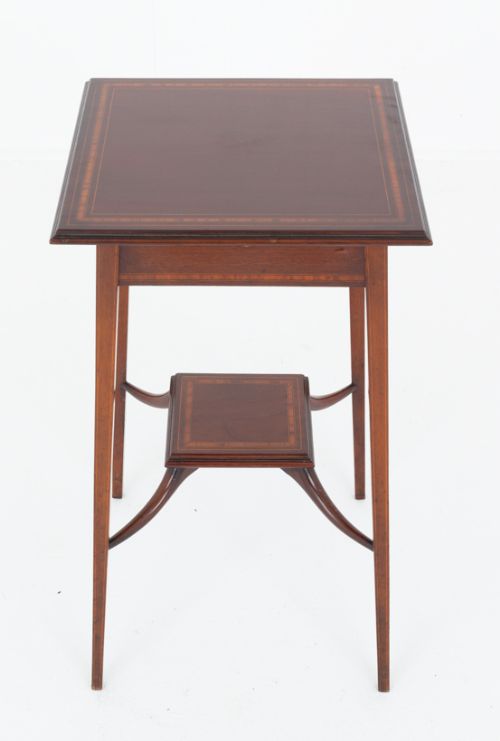


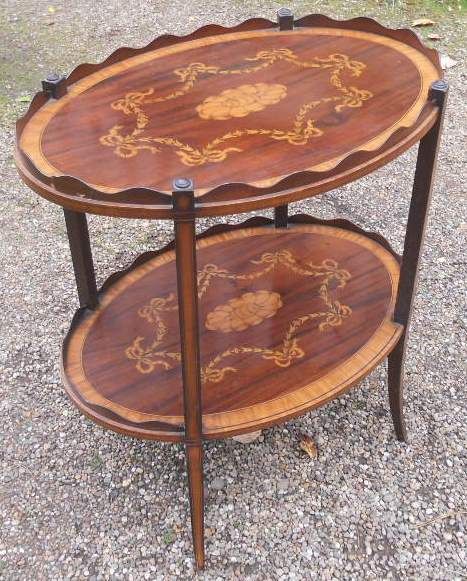


Sheraton Revival Plant Stand
These Sheraton revival plant stands bring neoclassical grace to any room, offering slender proportions and refined marquetry that elevate everyday greenery.
Sheraton Revival Plant Stand
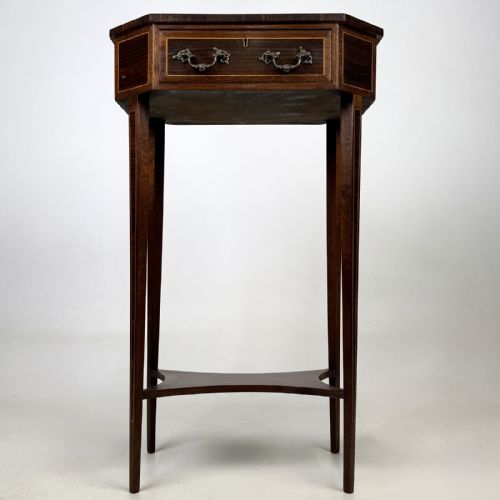
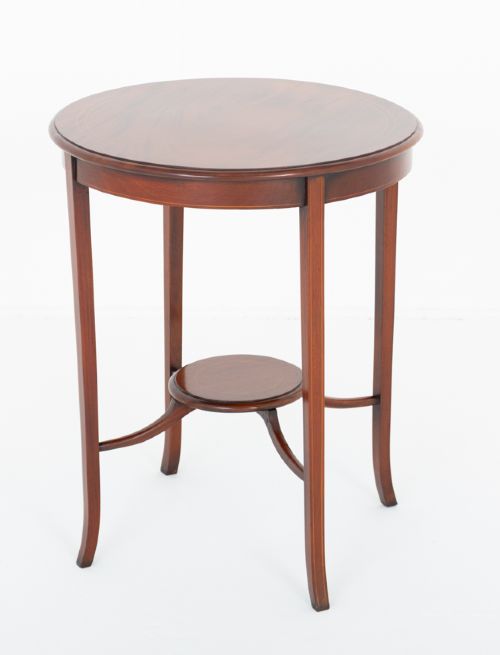
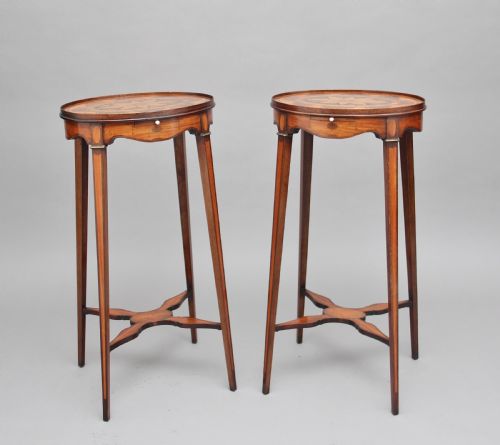
A sheraton revival plant stand takes inspiration from late eighteenth-century neoclassical furniture, reinterpreted during the Edwardian period and late Victorian eras. Buyers seeking these pieces encounter slender tables, urn stands, and jardiniere supports designed to display indoor plants and flowers.
The examples gathered here span from eighteen-eighty through to nineteen-twenty, encompassing Edwardian and Victorian aesthetic sensibilities. Most pieces rely on mahogany and satinwood construction, frequently accompanied by intricate stringing and contrasting timber inlays.
Forms vary from circular and octagonal occasional tables to tall urn stands, torchere supports, and tiered etageres. While some serve strictly as plant holders with metal or ceramic liners, others function equally well as lamp tables or side pieces.
Materials and Techniques
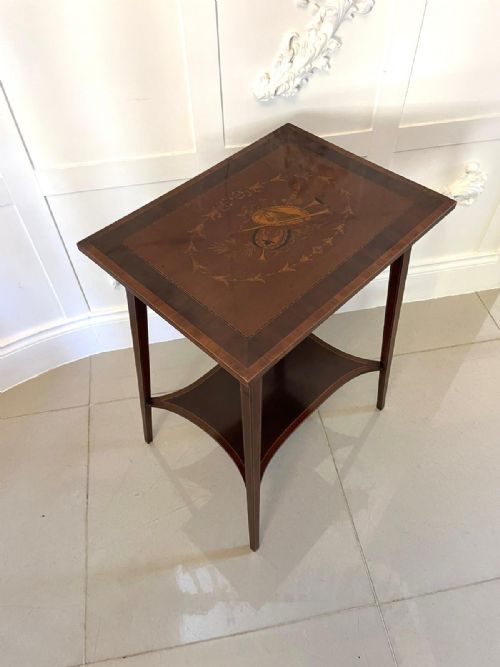
Cabinetmakers utilised solid and veneered mahogany as the primary structural timber, often selecting flamed grains for visual depth on top surfaces. Satinwood provides a bright contrasting element, employed both for full surfaces and delicate bandings.
Inlay work defines the aesthetic, incorporating boxwood, ebony, and bone to create classical swags, urn motifs, and geometric borders. Occasional mounts in brass and ormolu add functional highlights and structural accents to the tables.
Sheraton Revival Plant Stand Retail Price Guide 2026
Typical asking prices for sheraton revival plant stand among the pieces listed under this phrase on Sellingantiques today, from the lower quarter to the upper quarter. They describe what is for sale here now, not the wider market.
Some nineteenth-century makers expected owners to actually water plants inside the furniture, hiding ingenious removable metal buckets beneath polite neoclassical facades.
Assessing Craftsmanship
Quality rests upon the precision of the timber inlay and the selection of figured veneers rather than plain wood. Crisp execution of stringing and well-matched grain patterns separate standard production from superior workshop output.
Structural integrity depends on stable joints across multi-tiered designs and sturdy leg construction that supports weight safely. Secondary details such as hand-painted decoration, ormolu mounts, and original brass fittings elevate the standing of an individual piece.
The Sheraton Revival Plant Stand Glossary
- Sheraton Revival
- A late nineteenth and early twentieth-century design movement mimicking the neoclassical style of Thomas Sheraton. It favours light proportions, tapered legs, and classical inlay motifs.
- Jardiniere
- An ornamental stand or receptacle designed to hold a plant or flower pot. In this period, they often featured lead or metal liners to protect the wood.
- Torchere
- A tall, slender stand historically used to hold a torch or candle, later adapted for lamps and tall decorative plants. They feature elevated platforms supported by single or multi-column shafts.
- Stringing
- A narrow strip of contrasting wood or bone inlaid into a channel on the furniture surface. It creates delicate linear borders around table tops and drawer fronts.
- Satinwood
- A pale, lustrous hardwood native to Ceylon and India, prized for its golden sheen. It frequently appears as a veneer or full surface timber on high-status decorative tables.
Sheraton Revival Plant Stand: Frequently Asked Questions
What is a sheraton revival plant stand?
A sheraton revival plant stand is a decorative piece of furniture produced around the late nineteenth and early twentieth centuries. These tables draw inspiration from eighteenth-century neoclassical designs, featuring slender legs and delicate woodwork.
They serve primarily to elevate potted plants and flowers within domestic interiors, combining functional support with refined decorative arts.
How do I date a plant stand?
Dating relies on examining the timber species, construction methods, and prevailing stylistic markers recorded in the piece. Edwardian and late Victorian examples often show specific combinations of mahogany, satinwood inlay, and brass fittings.
Secondary woods used inside the construction and the style of the turning on the legs also provide clear chronological indicators for the era of manufacture.
Were these stands only used for plants?
While designated as plant stands or jardinieres, many of these tables function perfectly as lamp tables, wine tables, or occasional display surfaces. Their versatile heights and stable tops made them useful for holding small decorative objects in period drawing rooms.
Many surviving pieces feature flat wooden tops rather than recessed metal liners, showing they were interchangeable with standard side tables.
How do I care for inlaid satinwood?
Satinwood and mahogany surfaces require gentle dusting with a soft, dry cloth to protect the polished finish. Avoid placing furniture in direct sunlight or near heat sources to prevent the delicate boxwood and ebony inlay from lifting.
Applying a traditional beeswax polish occasionally helps nourish the timber and maintain the natural lustre of the veneer without damaging the wood.