



Sheraton Corner Stand
A sheraton corner stand sits neatly into unused room angles, combining practical display space with refined period cabinetwork.
Sheraton Corner Stand
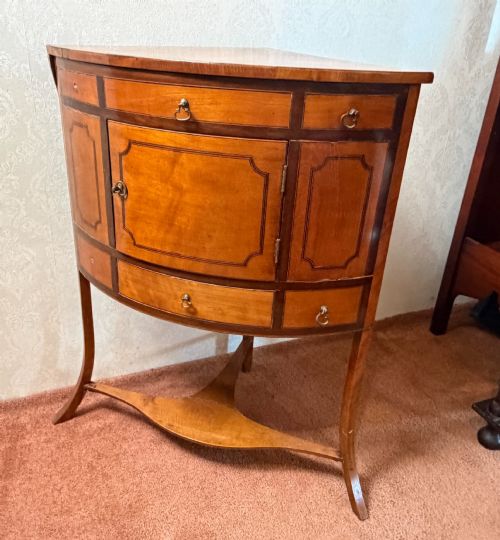
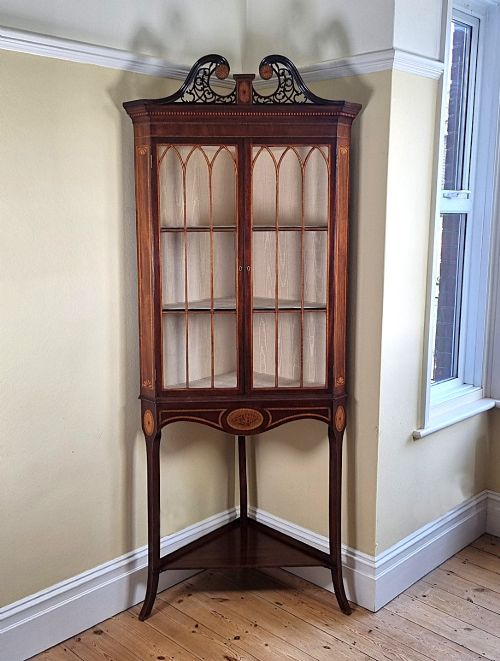
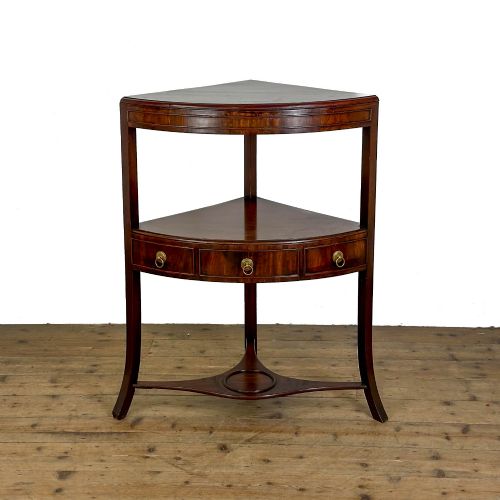
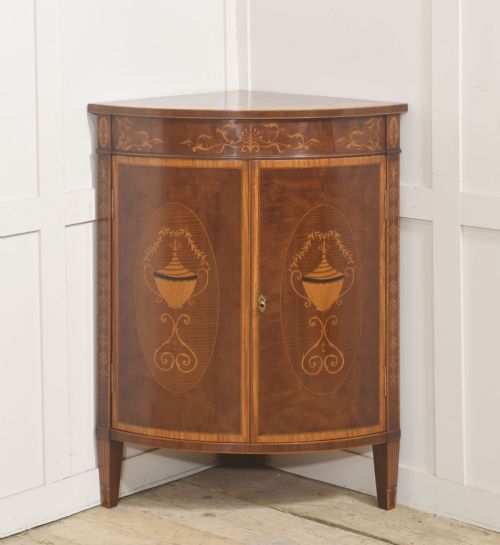
A sheraton corner stand comprises various forms designed to utilise empty room intersections, including corner cabinets, washstands, cupboards and occasional tables. These pieces span several distinct eras such as the Georgian and Edwardian periods, alongside nineteenth-century revivals.
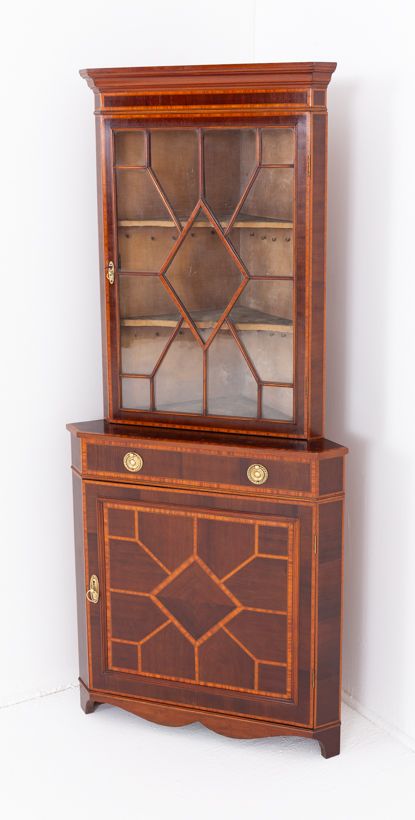
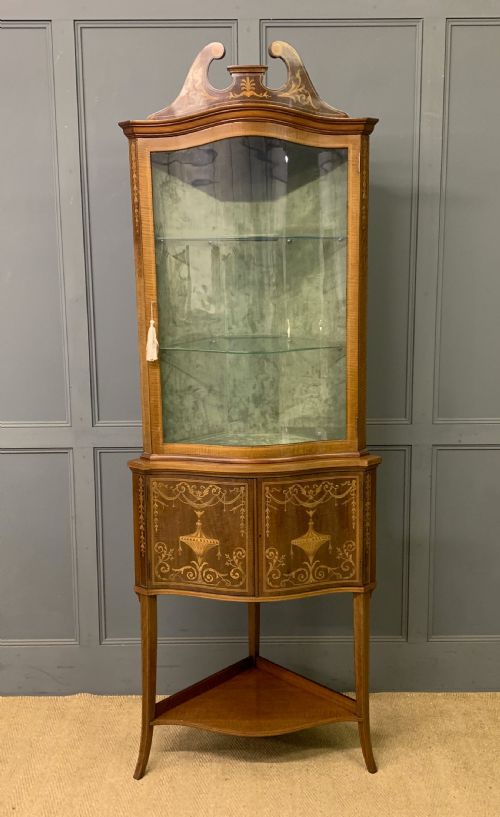
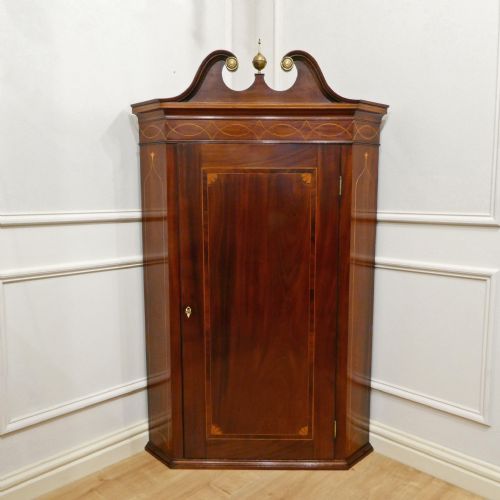
Buyers will most frequently encounter Edwardian and nineteen-hundred examples featuring inlaid mahogany construction. These range from glazed hanging cupboards to standing double door cabinets and bow front pieces.
Early iterations from the eighteenth century appear alongside later Victorian and Edwardian interpretations. The selection demonstrates how makers adapted classic corner furniture styles across different centuries.
Materials and construction
Makers utilised mahogany as the primary timber, complemented by satinwood and rosewood veneers. Structural elements frequently incorporate delicate stringing and contrasting timber details.
Inlay work defines the decorative vocabulary of these pieces, employing boxwood and satinwood inlay to create geometric and classical motifs. Glazed doors and mirrored sections appear on cabinet variations to lighten the substantial wooden forms.
Brass hardware serves as functional and decorative punctuation on doors and stands. Construction methods range from eighteenth-century cabinet joinery to later Edwardian workshop production.
Sheraton Corner Stand Retail Price Guide 2026
Typical asking prices for sheraton corner stand among the pieces listed under this phrase on Sellingantiques today, from the lower quarter to the upper quarter. They describe what is for sale here now, not the wider market.
Listings demonstrate a strong presence of Edwardian items alongside eighteenth-century Georgian examples, predominantly utilising mahogany, satinwood and rosewood.
Judging execution and refinement
The precision of the inlay work distinguishes finer pieces from simpler workshops. Crisp contrast in the satinwood and boxwood details against the dark mahogany ground indicates superior cabinetmaking.
Proportion and the handling of the curved bow front elements dictate the visual success of the piece. Well-balanced doors that hang true within their frames reflect careful initial construction and subsequent stability.
The choice of secondary timbers and the quality of the glass in glazed doors separate standard production from exceptional examples. Selection of figured mahogany veneers elevates the overall presence of the standing cupboards.
The Sheraton Corner Stand Glossary
- Sheraton Revival
- A late nineteenth and early twentieth century style that reinterprets the lighter neoclassical furniture designs of the eighteenth century. This aesthetic frequently employs mahogany paired with elaborate satinwood and boxwood inlay.
- Bow front
- A convex curved cabinet face that softens the sharp geometry of corner furniture. This shaping requires skilled woodworking to ensure the doors and frame align correctly.
- Inlay
- A decorative technique where contrasting pieces of wood are fitted into recesses carved into the primary surface. Boxwood and satinwood are typical choices for creating borders and motifs.
- Standing corner cupboard
- A tall cabinet designed to rest upon the floor and fill a room angle completely. These pieces often feature upper glazed sections above lower wooden cupboards.
- Stringing
- Thin lines of contrasting timber inlaid into the surface of furniture to create delicate borders. This linear detail is characteristic of neoclassical and revival cabinetwork.
Sheraton Corner Stand: Frequently Asked Questions
How do I fit a sheraton corner stand into a modern room?
These pieces use previously empty angles to provide surface or storage space without protruding into the main floor area. They anchor room layouts by drawing the eye to corners that might otherwise remain bare.
Matching the timber tone to existing furniture helps integrate the piece into contemporary interiors. Placing a lamp or display objects on top enhances their utility.
What is the difference between Georgian and Edwardian sheraton corner stands?
Georgian examples date from the eighteenth and early nineteenth centuries, displaying period timber patination and traditional hand construction. They represent the original era of neoclassical design.
Edwardian pieces and nineteen-hundred revivals recreate these classic proportions during later decades. These revival items often feature extensive satinwood inlay and varied cabinet configurations.
Can I use a corner washstand as a regular table?
Washstands were originally built to hold washing basins and pitchers in bedrooms. Their surface layout often includes specific wells or tiers suited for display rather than heavy writing.
Placing decorative objects on the lower tiers makes good use of their stepped design. They function well as occasional display furniture in hallways or reception rooms.
How do I identify inlaid mahogany furniture?
Mahogany provides a deep reddish-brown base timber that darkens gracefully over time. Inlay appears as lighter contrasting woods, such as satinwood or boxwood, set flush into the surface.
Examining the grain around the inlay helps confirm genuine craftsmanship rather than surface printing. Close inspection reveals the physical joins between the different timber species.