




Shallow Mahogany Drawers
Shallow mahogany drawers offer compact storage for collections, manuscripts, and specimens.
Shallow Mahogany Drawers
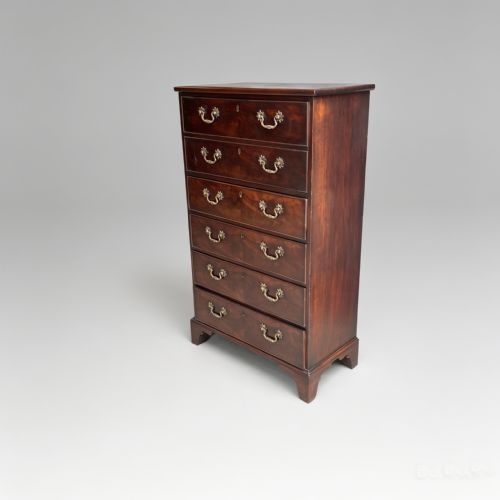
When buyers search for shallow mahogany drawers, they look at pieces designed to hold specimens, collections, manuscripts, or small instruments rather than bulky clothing. These items span periods from the seventeenth century through the Edwardian era, taking forms such as collectors cabinets, specimen chests, folio cabinets, and narrow chests of drawers.
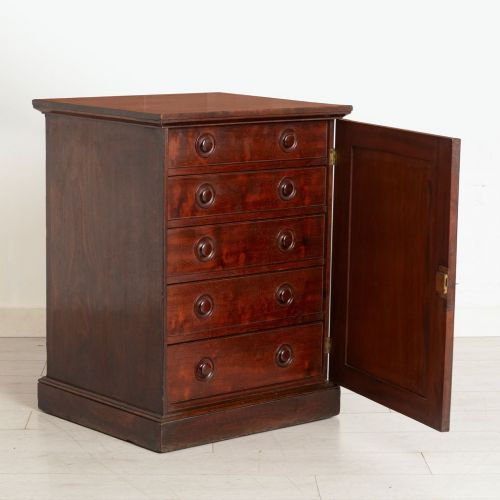
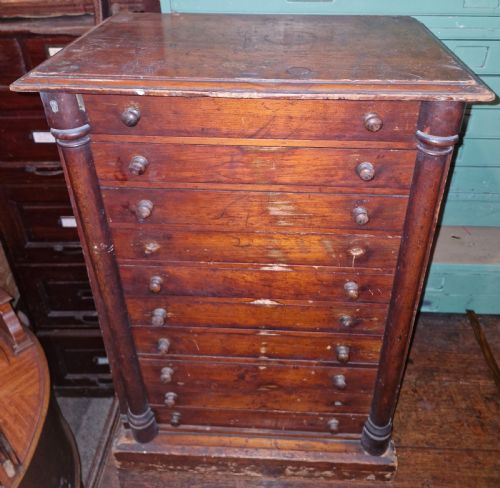
The version most commonly met on this page is the multi-drawer cabinet intended for natural history or scientific collections, such as microscope slides, eggs, or watches, though standard narrow drawer chests also appear. These pieces originate across Georgian, Regency, Victorian, and Edwardian periods.
The proportions are deliberately shallow to prevent small items from becoming buried or damaged in deep tiers. Workshops constructed these forms to sit on tables, floors, or within larger bookcases, using solid timber or choice veneers.
Materials and construction techniques
Makers utilised solid mahogany and flame mahogany veneer, occasionally combining secondary timbers with burr walnut or incorporating boxwood inlay for decorative contrast. Structural stability was paramount given the heavy load of numerous small drawers, requiring dense hardwoods.
Brass fittings such as drop handles, campaign-style flush pulls, and locking mechanisms appear frequently on these cabinets to secure contents safely. Glass doors protect open bookcases or display cabinets, while internal divisions in drawers keep delicate objects separated.
One exceptional Victorian survival includes two extra drawers beyond its stated twenty-four, perhaps built to satisfy a very persistent collector.
Judging quality in shallow drawer cabinets
The distinction between ordinary and exceptional pieces rests on the density of the drawer layout and the precision of the joinery. Cabinets featuring thirty or forty precisely fitted drawers demand far greater cabinet-making skill than standard four-drawer chests.
Quality also shows in the choice of face timbers, such as figured flame mahogany or burr walnut, and the survival of original brass hardware and working locks. Maker attribution to known workshops elevates a piece significantly beyond unmarked vernacular examples.
Brady of Edmonton·Lamb of Manchester·Charles William Schofield·Standish
The Shallow Mahogany Drawers Glossary
- Specimen cabinet
- A piece of furniture fitted with many shallow drawers designed for housing natural history items. These often include internal glass covers or specialised slots for slides and eggs.
- Folio cabinet
- A tall or floor-standing cabinet featuring wide, shallow drawers built to store large sheets of paper, prints, or maps. They are characteristically deep in plan but very low in individual drawer height.
- Flame mahogany
- A veneer cut from the fork of the mahogany tree where the branch joins the trunk, producing a striking, flamy figure. Cabinet makers reserved this expensive material for drawer fronts.
- Secretaire
- A desk form incorporating a writing drawer or fall front combined with sets of drawers. In shallow proportions, these integrate a writing surface without extending far out into a room.
- Boxwood inlay
- Narrow strips or stringing of pale boxwood set flush into darker mahogany surfaces to create geometric borders. It provides a crisp linear contrast on Georgian and Regency pieces.
Shallow Mahogany Drawers: Frequently Asked Questions
What were shallow mahogany drawers originally used for?
These cabinets and chests were built to organise and protect delicate items such as insect collections, botanical specimens, microscope slides, and engineering tools.
Because the drawers are shallow, objects could be laid out flat and viewed immediately without rummaging through stacked layers.
How do I date a mahogany collectors cabinet?
Dating relies on architectural styling, construction methods of the drawer linings, and the type of brass hardware fitted to the piece.
Georgian and Regency examples show hand-cut dovetails and simpler carcase lines, while Victorian and Edwardian iterations often feature patent locks and massive multi-drawer configurations.
Are all shallow drawer pieces made of solid mahogany?
Most cabinets combine solid mahogany frames and drawer rails with flame mahogany veneers applied to primary display surfaces.
Secondary timbers such as oak or pine frequently form the hidden interior drawer boxes to maintain structural stability over decades of use.
How should I care for antique mahogany furniture?
Keep these pieces away from direct heat sources and sudden humidity fluctuations to prevent the mahogany timber and delicate veneers from splitting.
Apply a traditional beeswax polish occasionally to nourish the grain, avoiding silicone-based sprays that damage historic polished finishes.