

Sevres Porcelain Urns
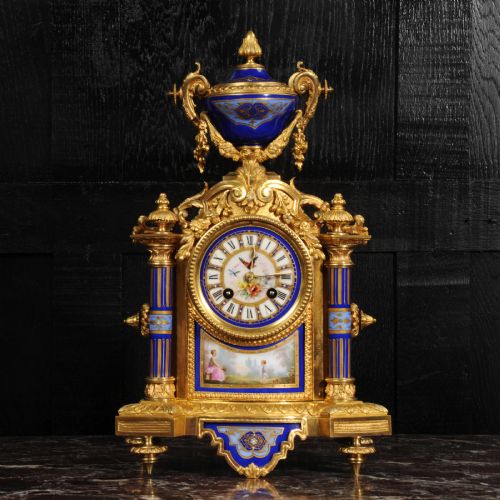
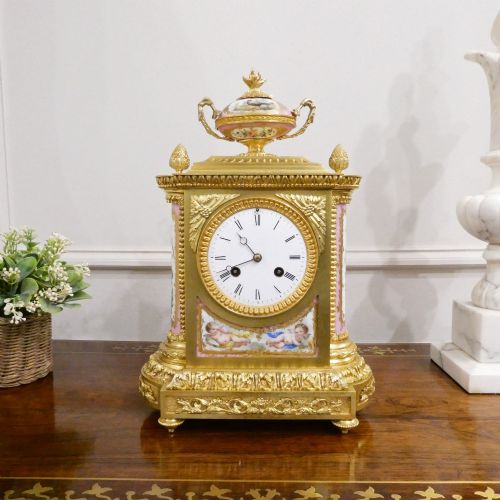
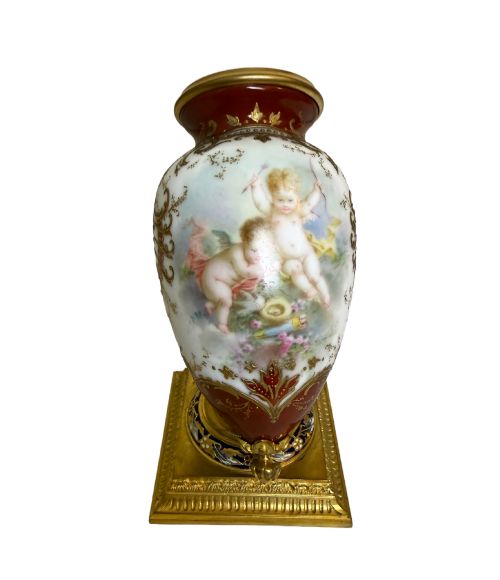
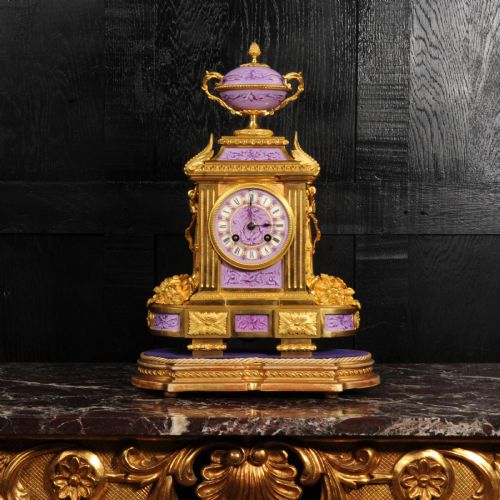
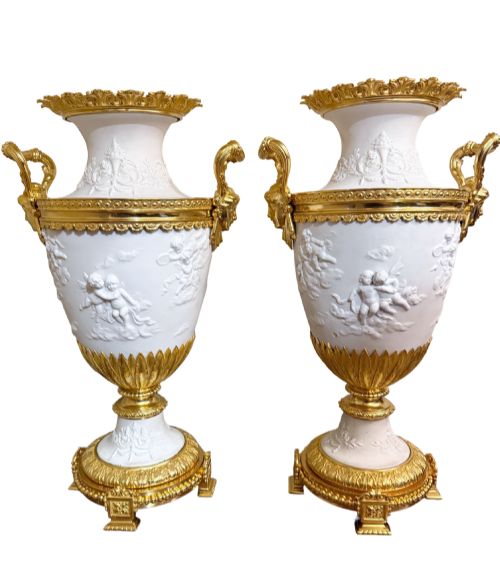
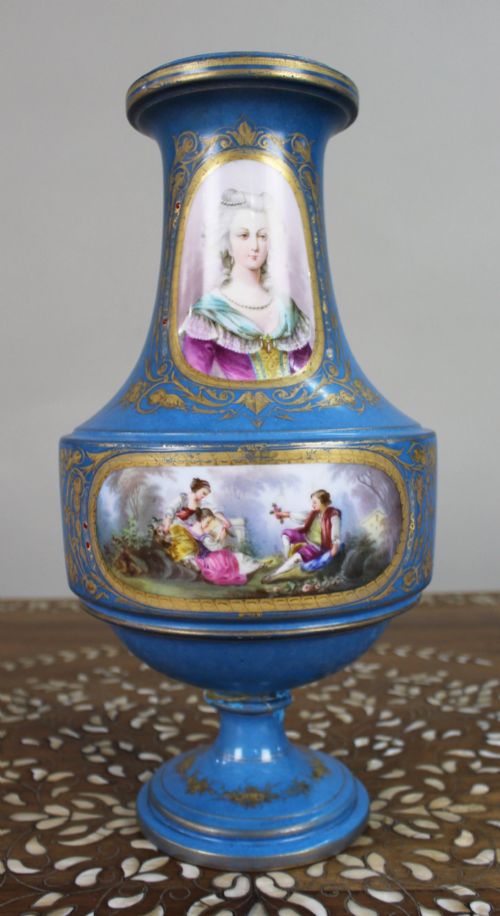
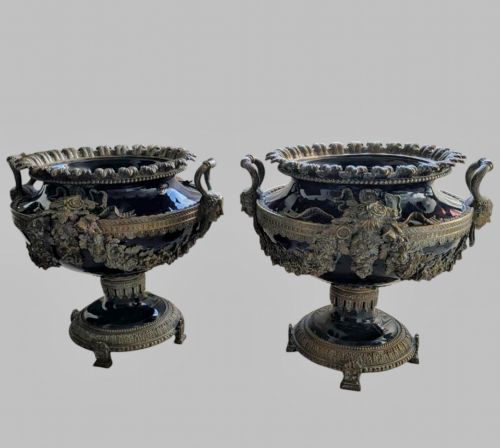
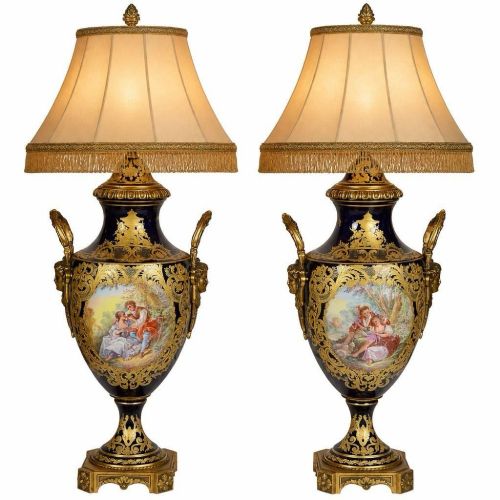
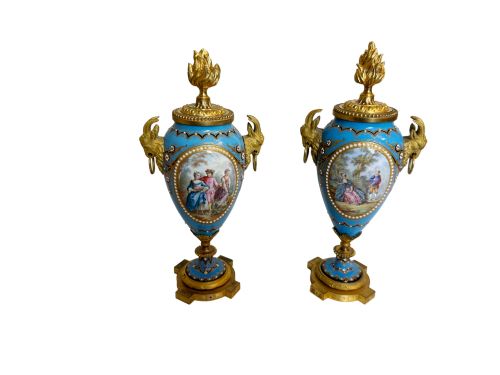
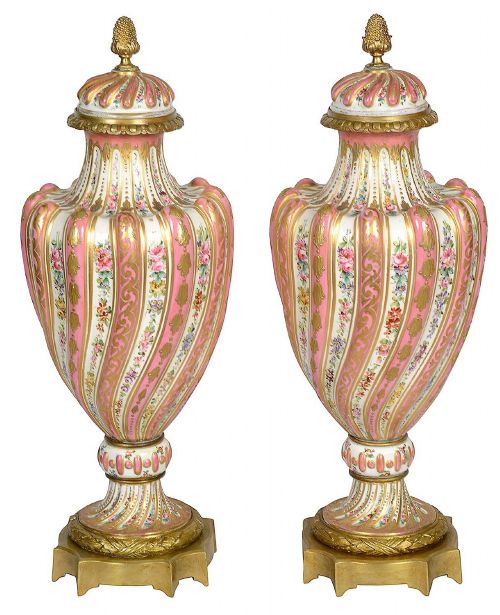
These sevres porcelain urns bring nineteenth-century French decoration into a room through hand-painted scenes, rich coloured glazes, and heavy ormolu mounts.
Sevres Porcelain Urns
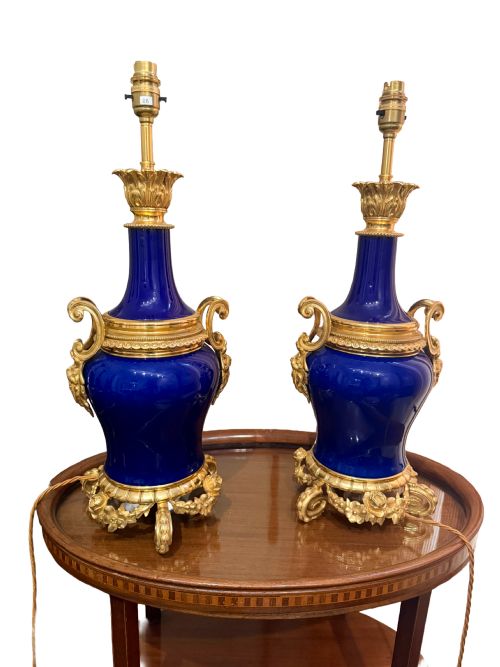
When you search for sevres porcelain urns, you are looking at nineteenth-century French decorative objects that mimic the rich output of the royal factory. The pieces on this page lean heavily towards nineteenth-century production, spanning the 1850s to the early 1900s, often taking the form of lidded vases, table lamps, and mantel clocks.
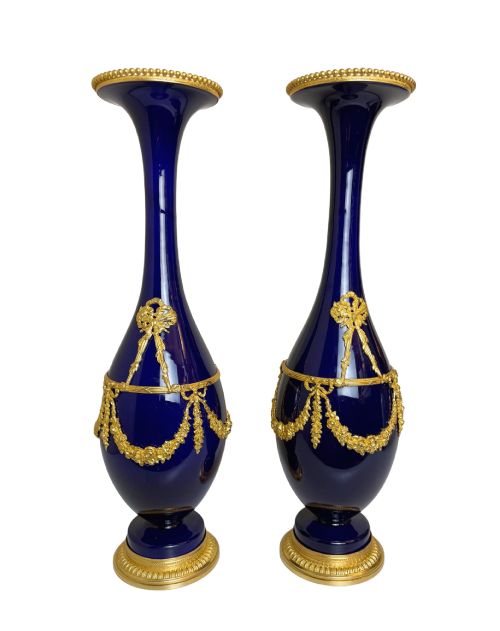
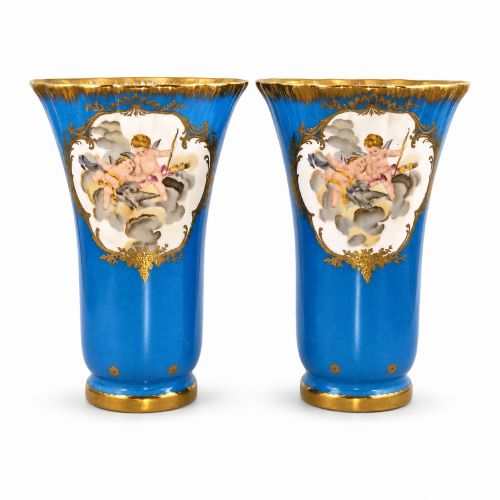
Makers working during the Napoleon III period and the later decades of the nineteenth century produced these urns to satisfy a strong demand for French Rococo Revival and Louis XVI styles. You will frequently encounter pairs of lidded vases finished in vibrant shades like bleu céleste and cobalt blue, mounted with elaborate gilt bronze or ormolu trim.
Materials and construction
The foundation of these pieces is high-fired ceramic or porcelain, frequently glazed in striking colours and decorated with hand-painted pastoral scenes or floral motifs. Workshops combined this ceramic body with cast ormolu and gilt bronze mounts, securing handles, bases, and rims with precision.
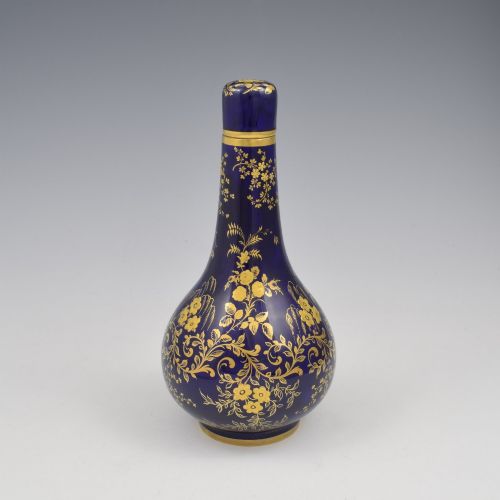
Makers applied gold leaf and enamel details over the glaze to highlight the neoclassical and rococo ornamental themes. The metalwork was typically cast, chased, and gilded, then fitted securely to the porcelain bodies of the urns and clocks.
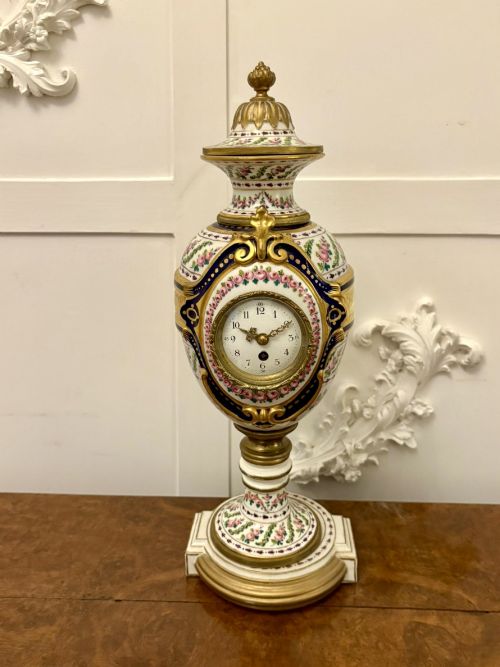
Some nineteenth-century makers built clocks directly inside the porcelain urn bodies, turning timekeeping into a very colourful domestic surprise.
Assessing the work
Quality in these urns rests upon the crispness of the bronze casting and the precision of the hand-painted decoration on the ceramic body. Pieces featuring finely chased ormolu mounts and detailed, multi-coloured enamel work sit firmly at the upper end of the scale.
The depth of the porcelain glaze also dictates worth, with rich bleu céleste grounds and clean gilding showing superior workshop standards. Simpler moulded forms without hand-painted details represent the more standard commercial output of the period.
Japy Freres·Jean-Baptiste Delettrez·Achille Brocot·Samson Paris·Vincenti of Paris
The Sevres Porcelain Urns Glossary
- Ormolu
- A metallic alloy resembling gold, used for furniture mounts and decorative hardware on nineteenth-century pieces. It provides a bright golden surface when polished and chased.
- Bleu céleste
- A striking sky-blue ceramic ground colour associated with royal French porcelain factories. This bright hue frequently serves as the backdrop for painted panels and gilt details.
- Garniture set
- A matching group of ornamental objects, typically comprising a central clock flanked by matching urns or candelabra. These sets were designed to adorn nineteenth-century mantelpieces.
- Cassolette
- A decorative vessel shaped like an urn, often featuring a reversible lid that transforms the piece from a vase into a burner. They frequently incorporate classical ormolu mounts.
- Chasing
- The manual technique of refining metal casts using small punches and hammers to create texture. High-quality ormolu mounts display crisp, defined details through this work.
Sevres Porcelain Urns: Frequently Asked Questions
What period are these urns from?
Most pieces originate from the nineteenth century, particularly the middle and later decades between 1850 and 1900. Makers in France produced them during the Napoleon III and Louis XVI revival eras.
Dates cluster heavily around the 1860s to 1890s, capturing the height of historicist decorative arts in Europe.
Are all these pieces made by the royal factory?
Only a fraction originate from the historic royal establishment, while the majority are nineteenth-century interpretations made by other Parisian factories and makers.
Potteries such as Samson in Paris and various independent workshops produced these decorative urns in the established taste of the eighteenth century.
How were these urns used originally?
They served as grand decorative centerpieces for drawing rooms, dining tables, and mantelpieces in wealthy nineteenth-century homes. Many were manufactured as matched pairs or integrated into clock garnitures.
Some lidded versions and cassolettes functioned theoretically as perfume burners, though their primary role was visual display.
How do I care for ormolu and porcelain?
Keep the pieces away from direct sunlight to protect the hand-painted enamel scenes and rich blue glazes from fading over time. Dust the ormolu gently with a soft, dry cloth without using abrasive metal cleaners.
Harsh chemical polishes can strip the original gilding from the bronze mounts, so gentle dusting remains the safest maintenance method.