



Sevres Porcelain Lights
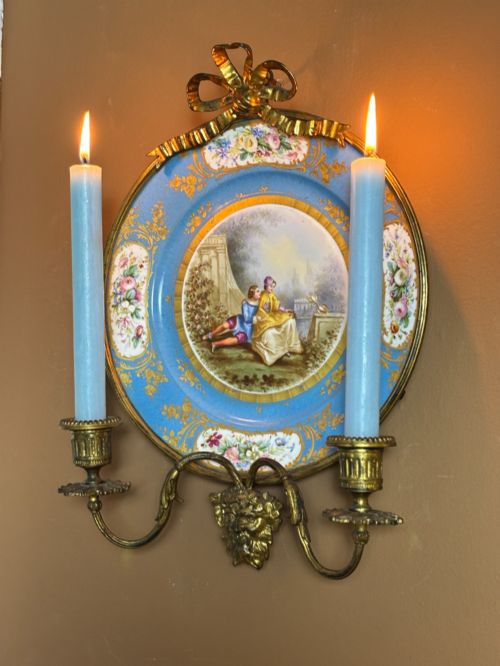
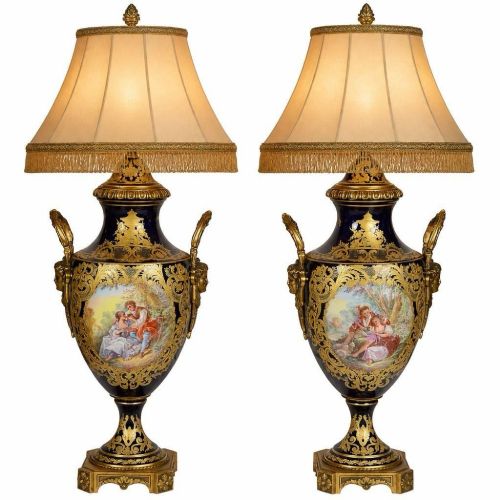
These sevres porcelain lights bring opulent nineteenth-century French styling into a room through hand-painted ceramics and gilt mounts.
Sevres Porcelain Lights
When you search for sevres porcelain lights, you encounter nineteenth-century French illumination pieces including table lamps, wall sconces, candelabra, and converted oil lamps. The examples on this page predominantly date between eighteen-seventy and nineteen-hundred, capturing late nineteenth-century French decorative aesthetics.
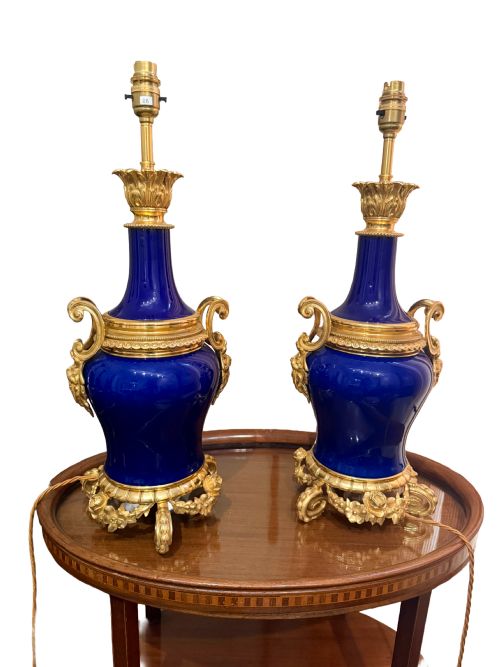
You will frequently meet pairs of table lamps and wall sconces featuring cobalt blue, bleu celeste, or bleu royale porcelain bodies mounted in gilt bronze or ormolu. These works often draw upon French Rococo Revival, Louis XVI, and Napoleon III styles.
Many of these lighting fixtures began life as decorative vases or oil lamps before receiving wiring and ormolu mounts later in their history. The integration of porcelain and metalwork defines the visual character of the category.
How they were made
Makers shaped the ceramic bodies from fine porcelain, frequently applying rich blue glazes and hand-painted details depicting portraits or pastoral scenes. Workshops then combined these ceramic elements with cast ormolu, gilt bronze, and brass mounts.
Craftsmen utilised specialised techniques such as pate sur pate, building up delicate white porcelain reliefs against coloured backgrounds. Metal components were intricately cast and gilded to frame the ceramic sections securely.
Sevres Porcelain Lights Retail Price Guide 2026
Typical asking prices for sevres porcelain lights among the pieces listed under this phrase on Sellingantiques today, from the lower quarter to the upper quarter. They describe what is for sale here now, not the wider market.
The listings on this page span the nineteenth century, featuring materials such as porcelain, ormolu, gilt bronze, fabric, silk, brass, and enamel.
What varies in quality
The precision of the hand-painted decoration and the depth of the porcelain glaze set finer pieces apart from simpler productions. Superior examples display crisp brushwork on portraits and botanical motifs rather than flat, mechanical transfer printing.
The weight, chasing, and crispness of the ormolu and gilt bronze mounts determine the overall calibre of the fixture. Heavy, sharply detailed metal castings that complement the ceramic body without obscuring it represent the higher end of the range.
The Sevres Porcelain Lights Glossary
- Ormolu
- Gilded bronze used for decorative mounts and fittings. This technique was widely utilised on nineteenth-century French furnishings and lighting.
- Pate sur pate
- A ceramic decorating technique where wet porcelain slip is applied in successive layers to create a low relief cameo effect. It translates from French as paste on paste.
- Bleu celeste
- A pale turquoise blue glaze famously associated with eighteenth and nineteenth-century French porcelain production. It provides a striking contrast to gilt bronze mounts.
- Candelabra
- Branched lighting fixtures designed to hold multiple candles or electric lamps. They frequently incorporate porcelain vases as their central support.
- Louis XVI style
- A neoclassical design movement characterised by straight lines, symmetry, and classical motifs. This style heavily influenced French decorative arts during the nineteenth century.
Sevres Porcelain Lights: Frequently Asked Questions
Are these lamps originally electrified?
Most pieces from this period were originally created as oil lamps, candelabra, or decorative vases before being converted for electricity at a later date.
Wiring is typically modern to ensure safety, while the antique porcelain and ormolu mounts remain undisturbed.
How do I identify Louis XVI style?
Louis XVI style pieces show restraint, symmetry, and classical architectural details like fluting and urns rather than the asymmetry of earlier Rococo designs.
On these lights, you will see it in the disciplined arrangement of the ormolu mounts and the balanced proportions of the porcelain body.
Where should I place a candelabra?
These substantial pieces suit sideboards, mantlepieces, or large entrance tables where their height and gilt details can catch the light.
Ensure they have adequate space around them so the hand-painted porcelain panels remain visible from multiple angles.
What is pate sur pate?
Pate sur pate involves building up layers of white slip on a dark ceramic ground to create translucent, cameo-like sculptural designs.
It requires immense skill from the ceramic artist and indicates a higher tier of nineteenth-century production.