
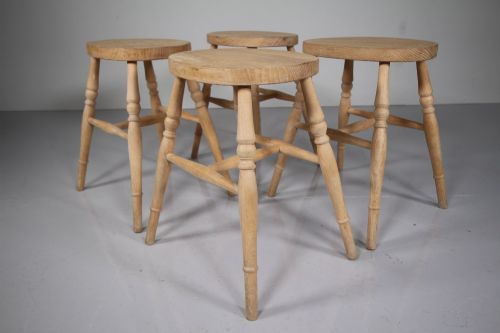


Set of Oak Stools
These set of oak stools bring honest timber and solid utility into a room, spanning rustic country forms and refined revival designs.
Set of Oak Stools
A set of oak stools encompasses everything from sturdy joint stools and dining seats to library steps and dressing table accompaniments. When you search for a set of oak stools, you encounter diverse forms shaped by centuries of British cabinet-making, ranging from seventeenth-century Yorkshire back stools to twentieth-century Cotswold School designs.
The pieces appearing on this page highlight both formal Edwardian dining sets and robust rustic iterations. Dining groups and matching multi-piece suites demonstrate how these seats served functional households alongside more decorative pursuits.
Origins stretch across multiple eras, including the nineteenth century, Edwardian period, and nineteen-thirties. Buyers frequently find matching sets of three, four, or more pieces that reflect traditional craftsmanship and regional British styles.
Materials and construction
The primary timber across these pieces is oak, frequently complemented by secondary woods such as elm, fruitwood, and walnut in specific multi-material examples. Craftsmen utilised traditional joinery techniques, building joint stools and back stools to withstand generations of heavy domestic use.
Surface treatments and hardware introduce subtle variations in texture and finish. Brass accents and fabric upholstery occasionally appear alongside exposed golden oak grains and polished wooden surfaces.
Listings feature oak alongside elm, walnut, and fabric elements, spanning nineteenth-century library steps to nineteen-thirties Cotswold School dining sets.
Judging quality in oak seating
Quality rests upon the integrity of the timber and the honesty of the construction. Pieces displaying tight grain, substantial proportion, and uncompromised structural joints command greater respect than later imitations.
The distinction between a standard utility stool and an exceptional workshop-produced piece lies in the hand-finished details and the consistency across the entire group. Matching sets that retain their original surfaces and uniform proportions demonstrate superior provenance.
Liberty·David Oakleafman Langstaff
The Set of Oak Stools Glossary
- Joint stool
- A traditional wooden stool constructed with mortise and tenon joints rather than turned legs pegged into a seat. These sturdy pieces formed common household seating before chairs became ubiquitous.
- Back stool
- An early form of seating resembling a stool with the addition of a low back, bridging the gap between a stool and a dining chair. They frequently appear in seventeenth and eighteenth-century Yorkshire groupings.
- Cotswold School
- A twentieth-century design movement rooted in the arts and crafts tradition, emphasising visible hand-tooling and honest construction in native timbers like oak. Pieces from this tradition showcase vernacular simplicity.
- Moorish Revival
- An architectural and decorative style popular in the nineteenth century that incorporated Islamic design motifs into British furniture and interiors. Such pieces often feature intricate geometric fretwork.
- Golden oak
- A descriptor for oak timber possessing a warm, honeyed tone, often achieved through age, waxing, or specific finishing methods applied during the Edwardian and later periods.
Set of Oak Stools: Frequently Asked Questions
How are joint stools different from standard stools?
Joint stools utilise rigid pegged mortise and tenon joinery rather than turned legs fitted into a solid seat board. This method creates a rigid frame capable of supporting considerable weight.
Historically, these pieces served multiple domestic functions in early British homes, acting as seats, small tables, or even steps when required.
How do I care for antique oak furniture?
Antique oak benefits from consistent indoor humidity and protection from direct heat sources that can dry out the timber. Applying a traditional beeswax polish maintains the natural lustre of the wood without building up synthetic residue.
Avoid chemical cleaners, using instead a soft, dry cloth to remove dust from carved details and joined surfaces.
What periods do these oak stools represent?
The pieces span from the seventeenth century through the Victorian and Edwardian eras into the mid-twentieth century. Each period brings distinct stylistic influences, from plain seventeenth-century utility to arts and crafts revival work.
Twentieth-century examples often reflect Cotswold School ideals or regional country workshop traditions.